THE QUICK ANSWER
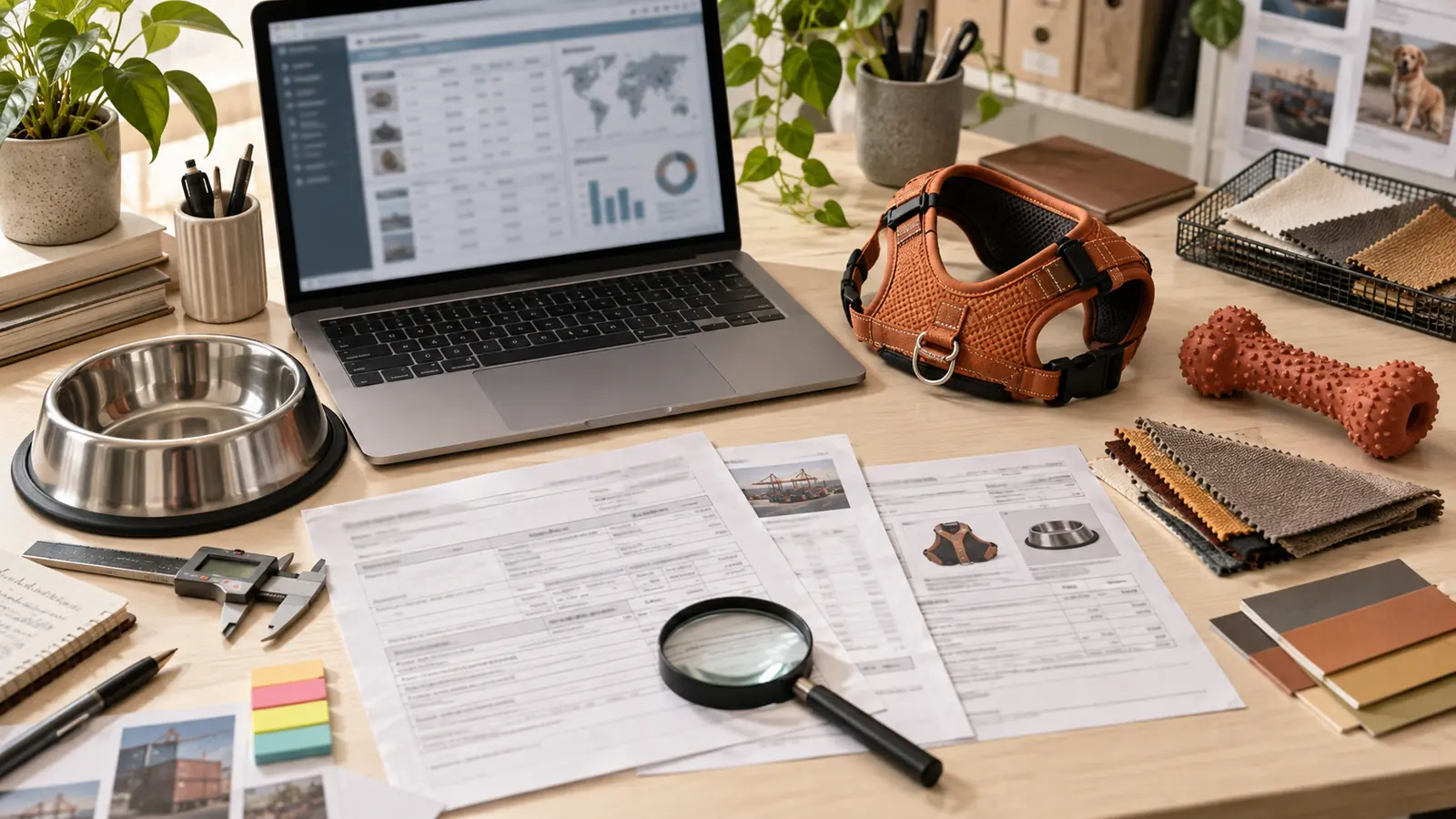
Short answer: start with the exact product, market and time period, then build an evidence chain from public records, the physical product and documents supplied for the transaction. A factory name found in a shipment database, marketplace listing or social post is only a lead. It does not prove that the facility makes every product for a brand, still holds the relationship, owns the design, or produced the item you are evaluating.
Begin with a product, not a brand name
Large pet brands rarely use one manufacturer for every harness, toy, bowl, bed and carrier. Production can change by product family, material process, destination market, season, order size and year. Begin with an exact SKU, product photograph, model name, packaging version and approximate sale date. Record the question you are actually trying to answer: the legal manufacturer named on the label, the factory that performed final assembly, the exporter shown in a customs record, the design owner, or the company responsible for regulatory compliance. Those roles can belong to different businesses. If the research question stays broad, apparently conflicting records may all be correct because they describe different products or different points in the supply chain.
Separate the roles that a record can identify
A useful evidence table has separate columns for brand owner, legal manufacturer, importer, exporter, production facility, component supplier, responsible person and testing applicant. Do not place every company name under “manufacturer.” A customs ruling may identify an importer and describe manufacturing steps without naming the current production factory. A recall may identify an importer, distributor or manufacturer as the responsible firm for that event. A trademark database identifies ownership of a mark, not who sewed a harness or moulded a toy. A laboratory report identifies the applicant and tested sample; it does not automatically prove ongoing mass-production responsibility. Keep each name attached to the role the source actually states.
Use company filings for ownership and material relationships
Public-company filings can establish legal entities, subsidiaries, acquisitions, contract-manufacturing dependence and material supplier risks. Search the SEC EDGAR database by the brand owner’s legal name, then review the latest annual report and relevant exhibits. Search within filings for terms such as manufacturer, supplier, contract manufacturing, sourcing, inventory, concentration and intellectual property. Filings normally describe business risk at a high level and may not name individual factories. Treat a disclosed relationship as evidence only for the entity, scope and reporting period stated. Private companies will have less public information, so absence from EDGAR is not evidence that a company or supplier does not exist.
Read customs material with narrow expectations
Customs sources can show how a product was described for tariff classification, where substantial transformation was considered to occur, or which company requested a ruling. The U.S. Customs and Border Protection rulings database is a primary source for individual determinations. Search by product description, material, requester and ruling number. A ruling can explain whether webbing was cut and sewn, whether metal was formed, or where components were assembled, but it may concern one model at one moment. Commercial shipment databases can generate leads, yet names may refer to exporters, freight agents or trading entities. Verify any lead with another independent source and a product-specific date.
Check recalls and safety alerts without overstating them
The U.S. Consumer Product Safety Commission recall database and the European Commission Safety Gate can connect a product description, model, responsible economic operator and corrective action. These records are valuable because they are dated and product-specific. They must be handled neutrally: a recall record is evidence about the named product and event, not proof that every product from a brand or factory is unsafe. It may identify an importer or distributor rather than the physical factory. Match model numbers, photographs, materials and date ranges before drawing a connection. Keep safety research separate from supplier marketing and never turn an unrelated recall into a claim about a current quotation.
Use trademarks and patents for ownership, not production
The WIPO Global Brand Database and national intellectual-property databases help confirm who owns a brand name, logo or registered design. Patent and design records may show inventors, applicants, assignees and drawings that clarify product development history. None of these fields proves who manufactures the current product. A brand can own a design and contract production to multiple facilities; a manufacturer can develop a platform while the buyer owns only its artwork. Use intellectual-property records to identify legal names and relationships that deserve further checking, then return to product labels, transaction documents and factory evidence to answer the manufacturing question.
Inspect the product and packaging as controlled evidence
A physical sample can supply model numbers, batch references, country-of-origin statements, importer or responsible-person details, care labels, material claims and regulatory identifiers. Photograph every side of the product and package, then transcribe identifiers exactly. Compare them with the current online listing and the version shown in public records. Packaging is not infallible: labels can be old, generic or applied by a distributor. Its value comes from creating precise search terms and a dated product version. For a private-label project, approve the same identifiers in the product specification and packaging artwork so a later inspector can trace finished goods back to the correct order.
Ask the supplier for a traceable evidence pack
For a live sourcing decision, public research should lead to a direct evidence request. Ask for the contracting company’s registration details, responsible production location, processes performed there, outsourced steps, bill of materials, approved sample reference, quality plan and reports relevant to the exact model and material. Match the legal names across quotation, contract, invoice and payment beneficiary. During a live video review, follow one product flow from labelled material through work in progress, inspection and packing. A certificate, photograph or general factory profile that cannot be tied to the quoted SKU should remain background context, not approval evidence.
Treat famous-brand questions as hypotheses
Questions such as “Who makes this brand’s harness?” are legitimate research questions, but they are easy to answer badly. Search the exact product name and version, the legal brand owner and the relevant date. Record each source separately and label what it proves. If the strongest evidence is a marketplace claim or an exporter name in a commercial database, report it as an unconfirmed lead. Do not contact a factory while pretending to represent the brand, publish personal information, or describe a confidential relationship as fact. The correct conclusion may be that the manufacturer cannot be verified from public records. That is a useful result because it prevents speculation from becoming procurement evidence.
Do not infer proprietary material formulas from appearance
A public product page may identify a broad material such as natural rubber, stainless steel, polyester webbing or silicone. It rarely discloses a full compound, coating, grade, adhesive system or supplier formulation. Similar appearance and feel do not establish identical material. For a new product brief, define the performance, care, dimensions and destination requirements you need, then request a material declaration and relevant testing for your own proposed construction. Reverse-engineering claims about a famous brand’s formula should be avoided unless the brand or an authoritative record publishes the information. Even then, describe the published scope and date rather than implying access to a confidential recipe.
Manufacturing cost cannot be copied from a branded retail price
A retail price does not reveal manufacturing cost. It includes brand positioning, design, development, tooling, testing, packaging, freight, duties, warehousing, marketing, channel margin, returns and overhead in proportions that are not public. Even two visually similar harnesses can use different webbing, padding, hardware, stitch construction, size splits, inspection plans and order quantities. To estimate a new project, issue one controlled brief and ask suppliers to quote the same specification, quantity and trade term. Separate tooling, sample, packaging and freight lines. Any number presented without those inputs is an assumption, not a verified cost for the branded product.
Use an evidence grade and stop when the chain breaks
Grade each claim by proximity to the fact. Strong evidence includes a current product label, signed transaction document, official filing or authority record that names the exact model and role. Supporting evidence includes dated factory records, a continuous live review and a report traceable to the approved sample. Weak evidence includes marketplace descriptions, unsourced supplier lists, social posts, image similarity and search snippets. Require at least two independent sources when making a public statement about another company’s manufacturing relationship. If dates, models or legal roles do not align, write “not verified” and list the missing evidence instead of filling the gap with a likely-sounding conclusion.
How Catidog applies the method
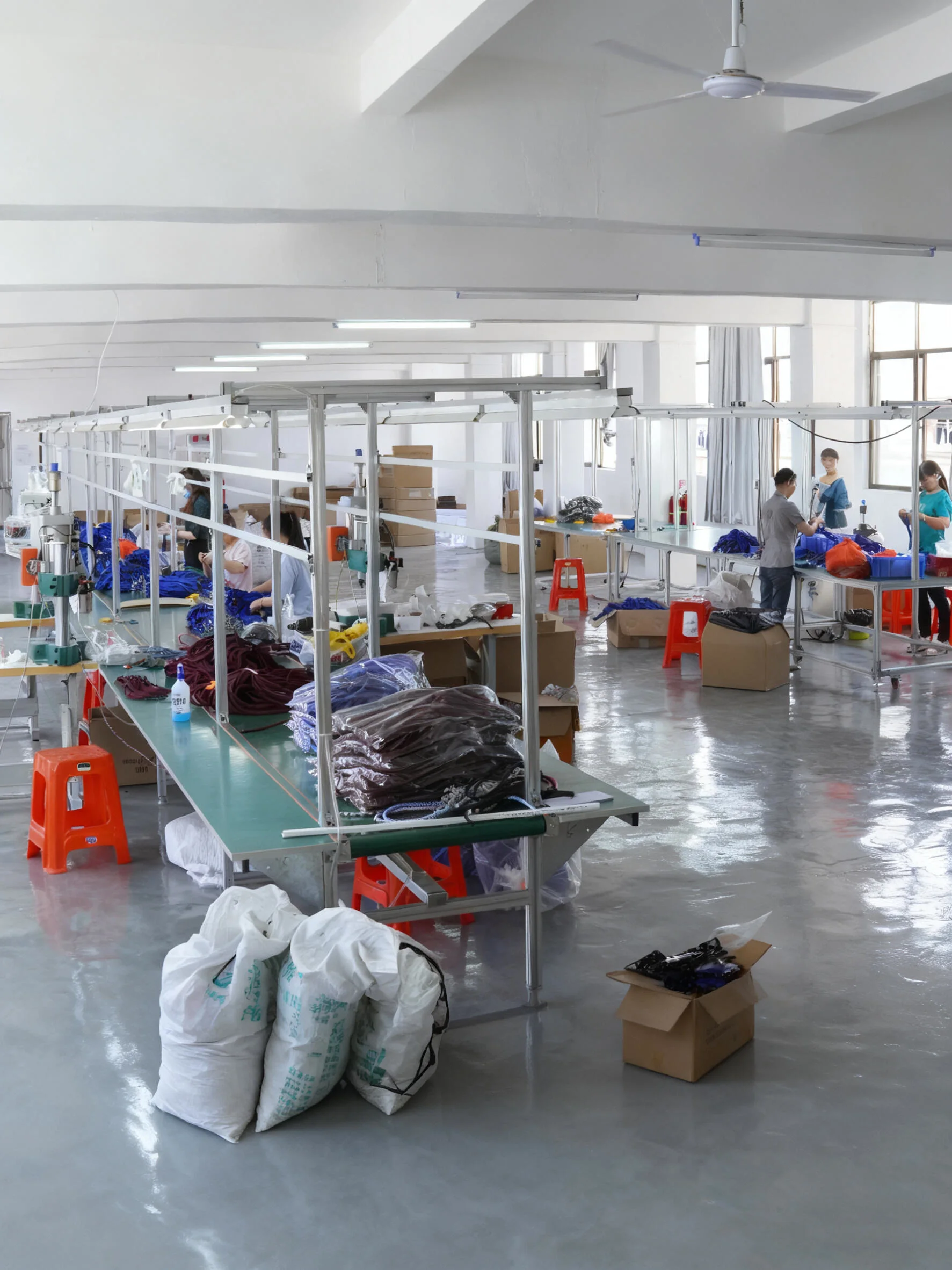
Catidog uses the same product-specific discipline for its own quotations. Xiamen Seamdance Supply Chain Management Co., Ltd. is the legal operating entity shown in the website footer. Different sewn, moulded, metal and upholstered products may use different responsible facilities, so the quotation identifies the applicable production scope and any specialist steps. Typical MOQ is 100–500 units. Stock-item custom samples can be prepared within 7 days after artwork and details are confirmed, while fully custom samples can be prepared within 15 days after specification confirmation. Standard bulk production targets within 15 days from the agreed trigger; customized orders are confirmed against quantity, specification and packaging. Buyers can use the supplier verification page and contact form to request product-specific evidence.
A useful comparison
| Source | What it can support | What it cannot prove alone |
|---|---|---|
| Company filing | Legal entities, subsidiaries and disclosed sourcing risk | The current factory for every SKU |
| Customs ruling | Product description, tariff reasoning and named requester | A complete or current supplier list |
| Recall or Safety Gate alert | Named product, event and responsible operator | That every product from the company has the same issue |
| Trademark or patent record | Ownership, applicants, assignees and design history | Who currently performs production |
| Product and packaging | Model, batch, origin and operator identifiers | That every printed statement is current |
| Supplier evidence pack | Contracting party, facility, process and project records | Facts outside the stated model, period and scope |
Explore private-label product options.
Sources and research context
Sources reviewed 2026-09-23. Community excerpts are anecdotes. Manufacturer guidance applies to that manufacturer’s products. Shortlists are editorial comparisons without hands-on comparative testing or verified sales rankings.
- U.S. Securities and Exchange Commission · EDGAR company filings search
- U.S. Customs and Border Protection · Customs Rulings Online Search System
- U.S. Consumer Product Safety Commission · Recalls
- European Commission · Safety Gate alerts
- World Intellectual Property Organization · Global Brand Database
TURN THE ANSWER INTO AN OEM BRIEF