
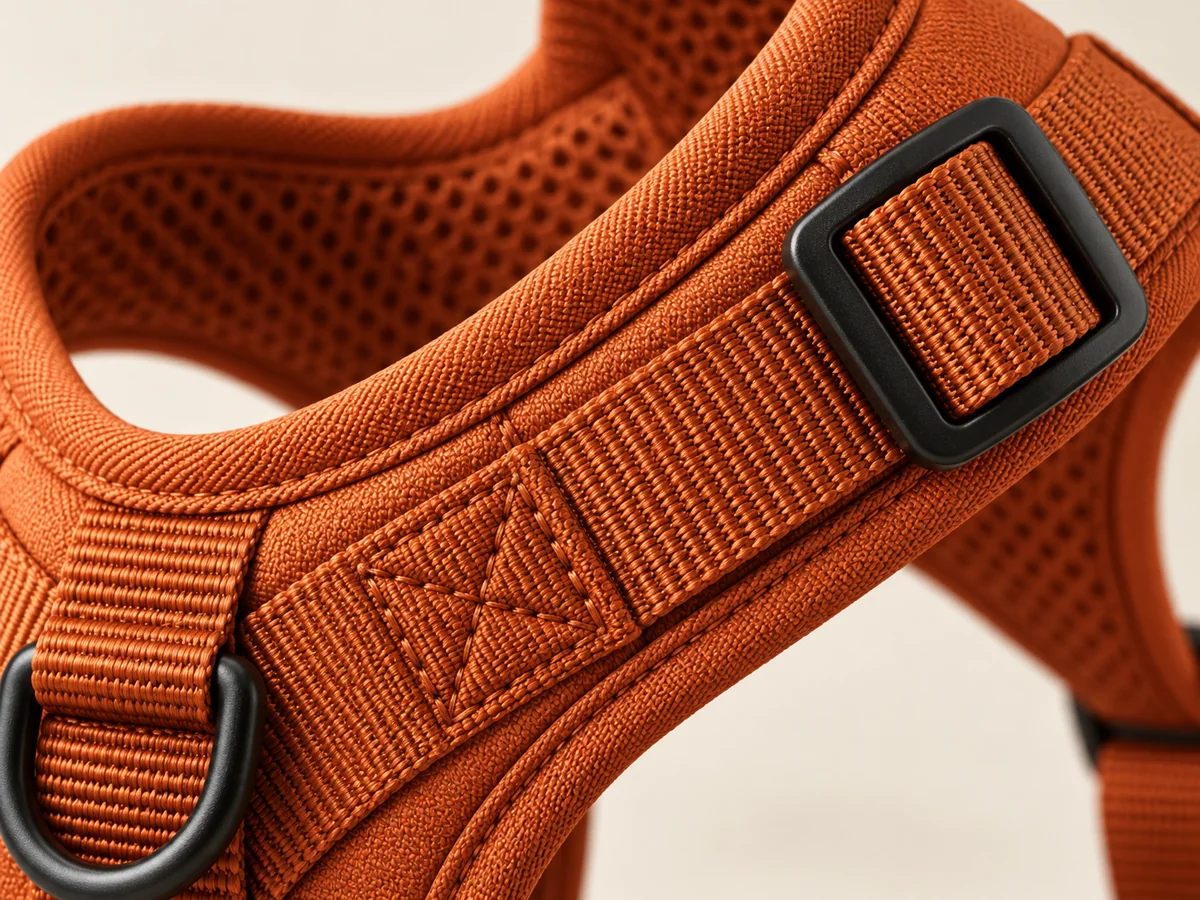
Walking accessories
For a dog harness, leash or collar, discuss the pattern, webbing, padding, hardware and stitching. Ask how dimensions and color references will be recorded across sizes and matching items.
Explore development optionsPET ACCESSORIES FACTORY / OEM PRODUCTION
See supplied production footage and learn how to review materials, sewn construction, molded components, approved samples, quality records and supplier responsibilities for your custom pet product range.
Tell us what you’re building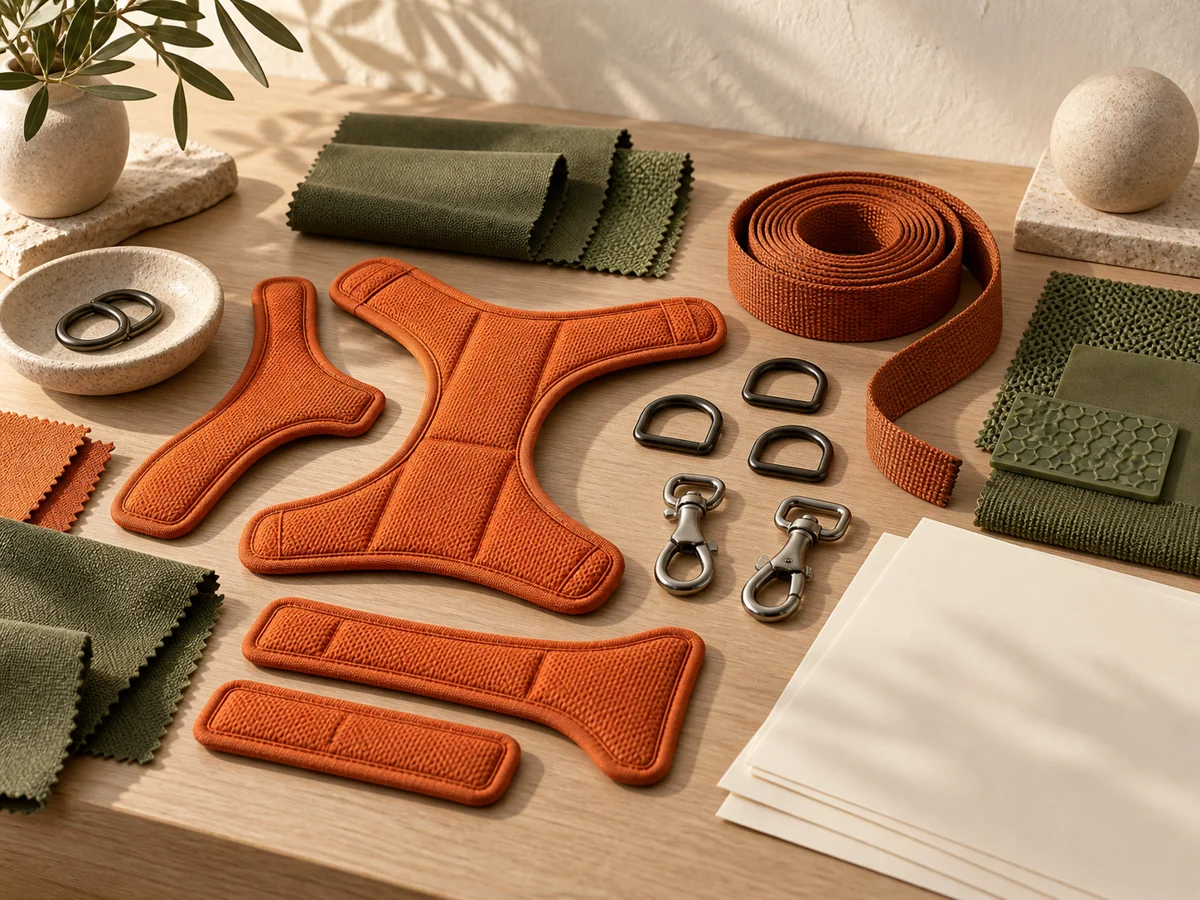
FACTORY PHOTO JOURNAL
Production media and material planning layouts.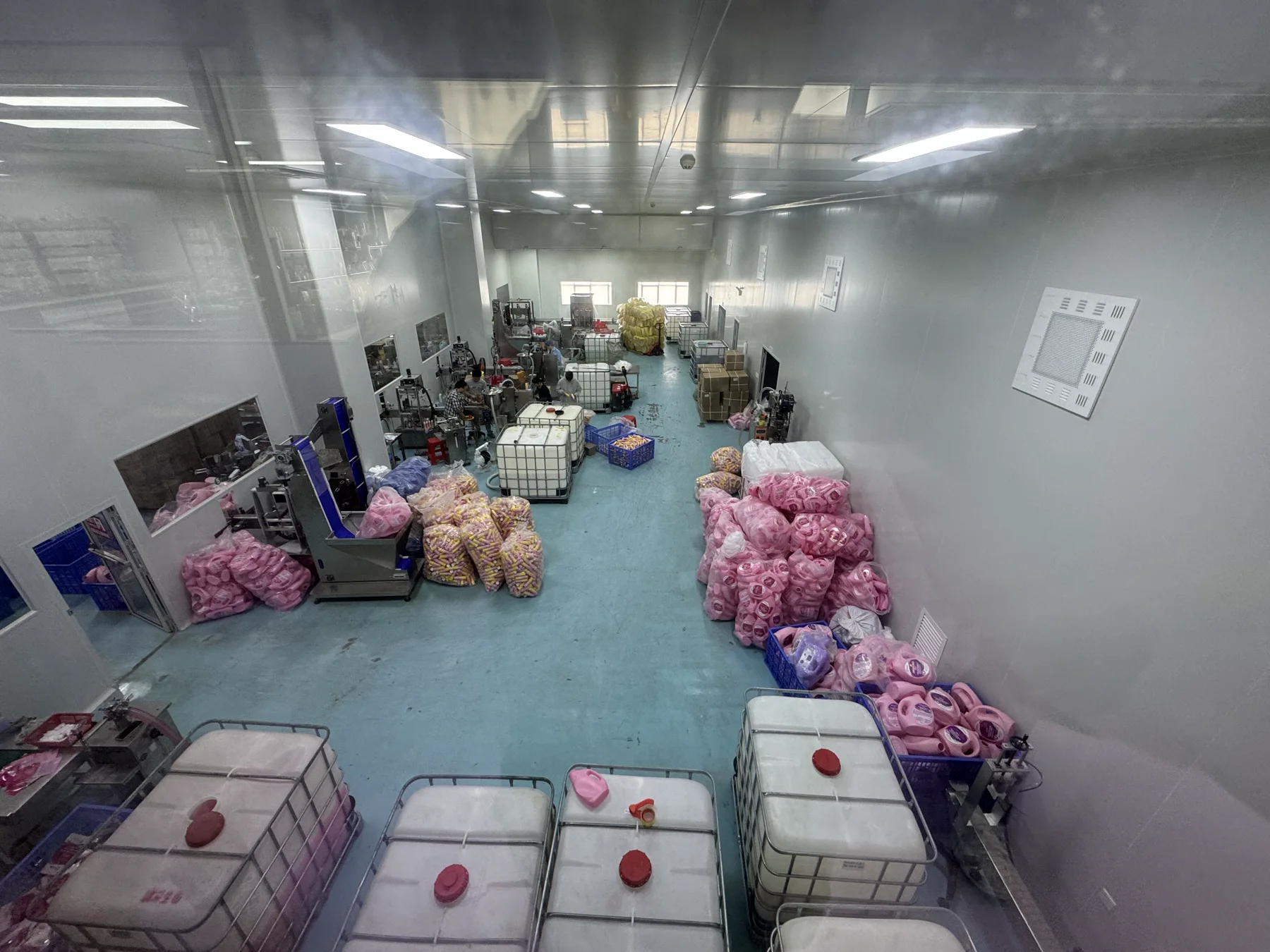
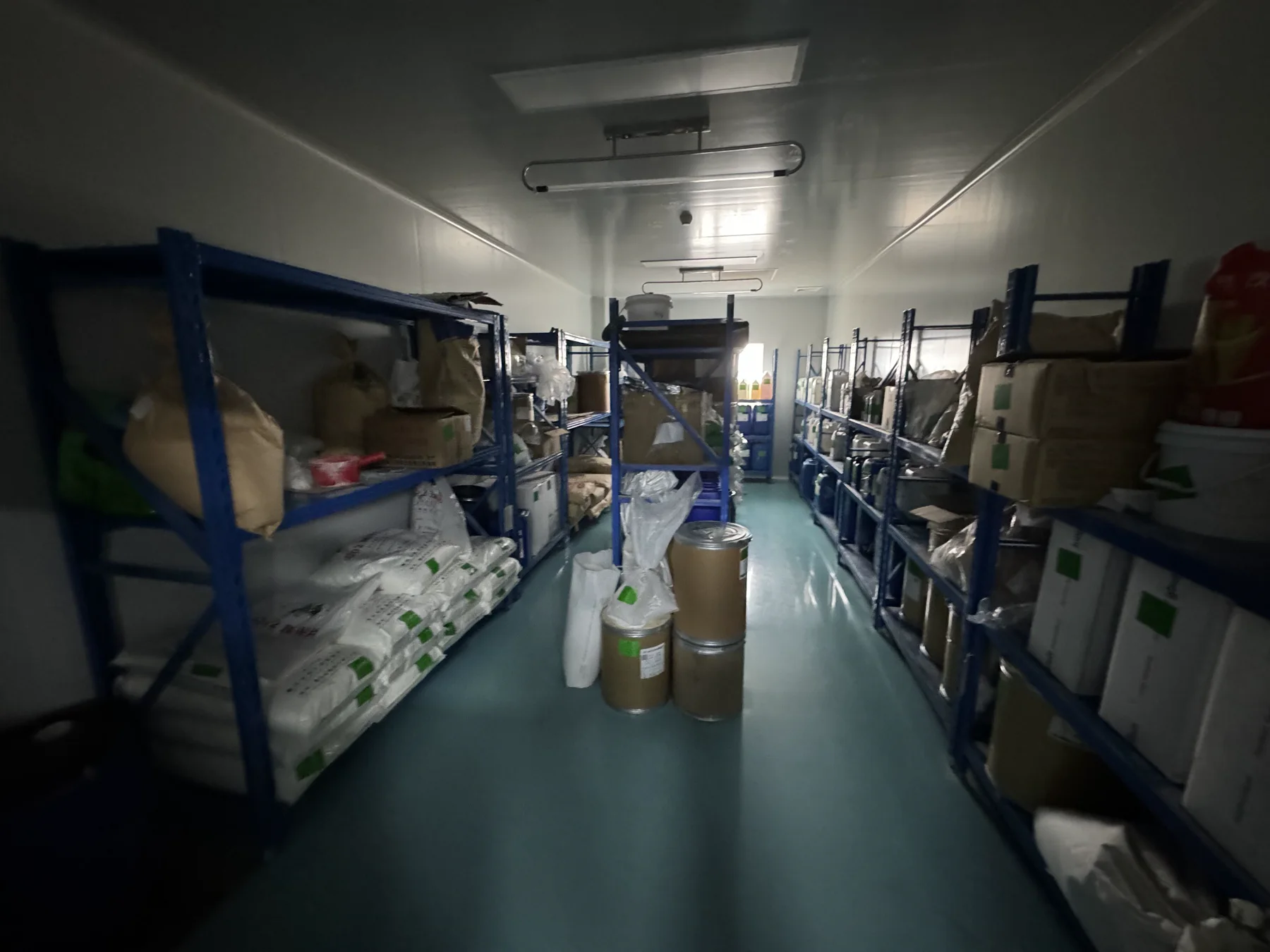
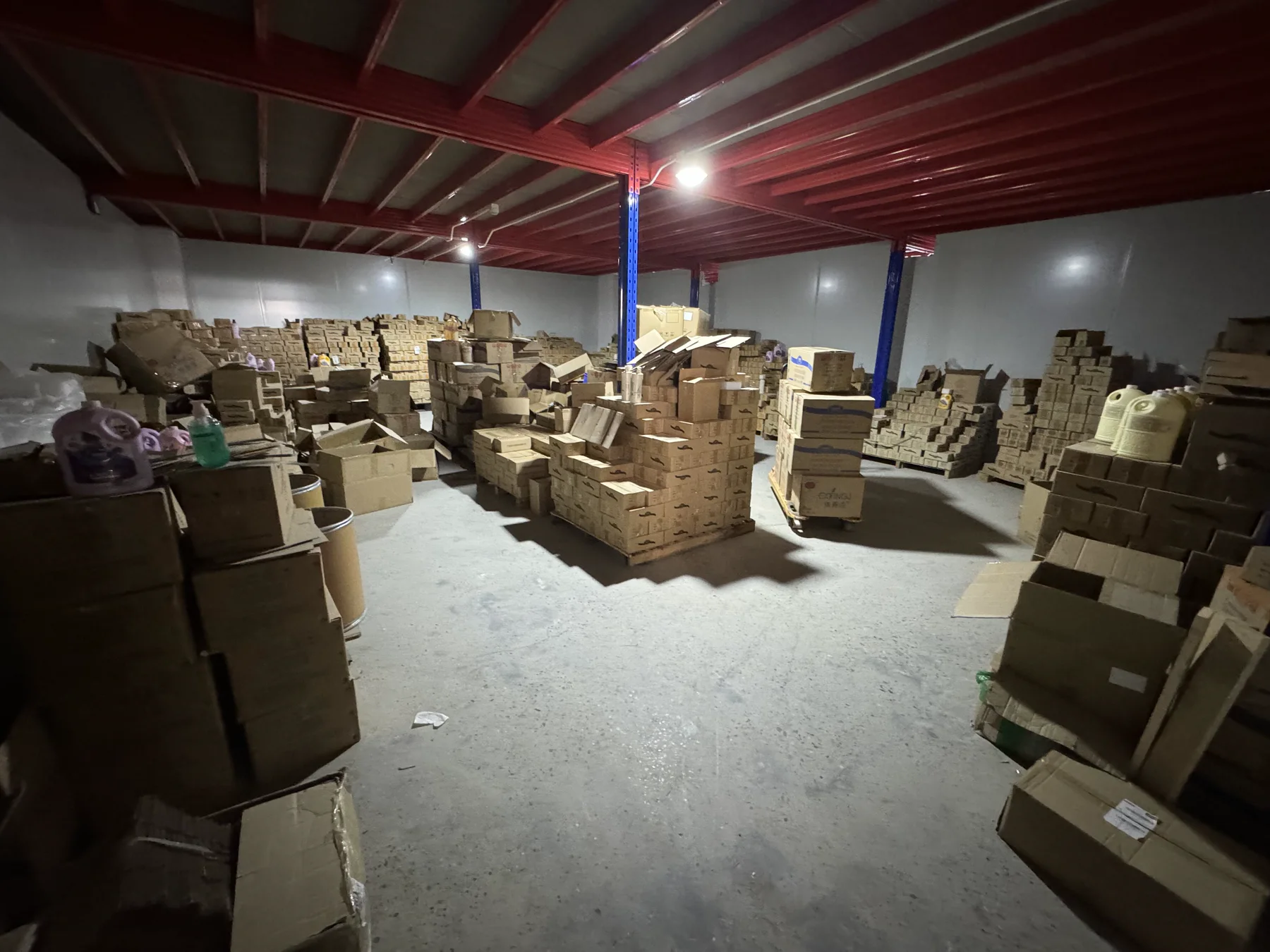
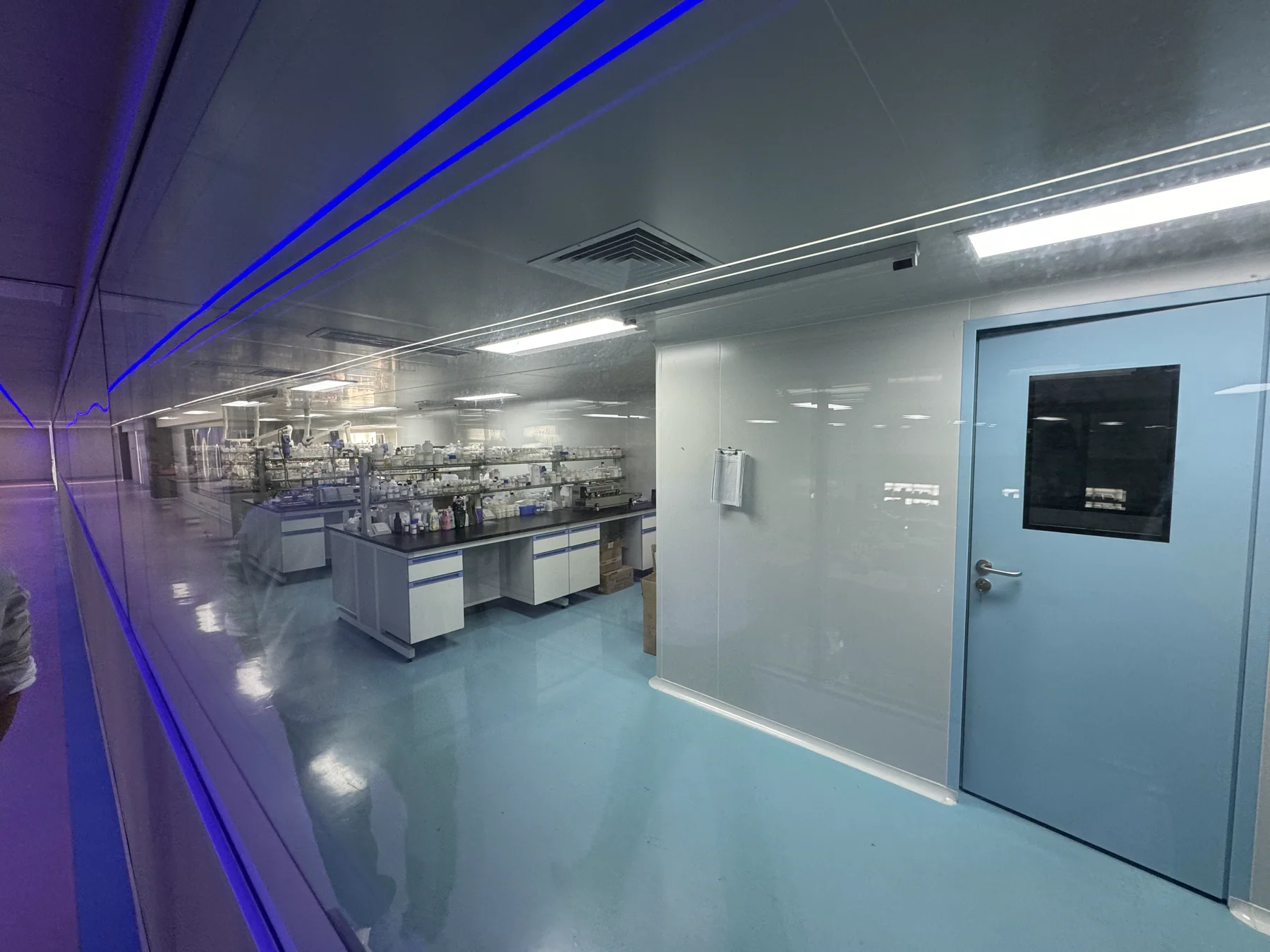
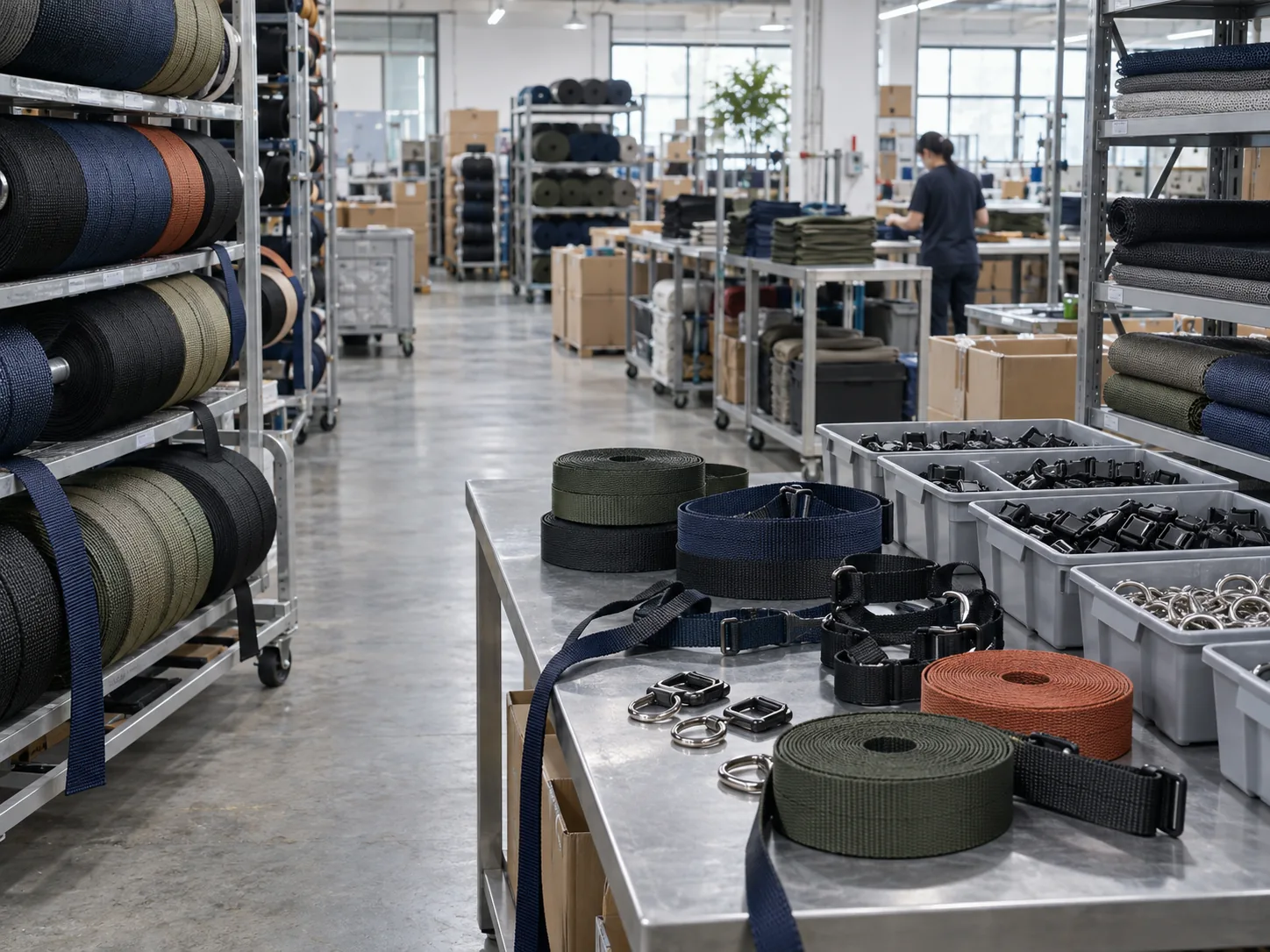
FACTORY PHOTO JOURNAL
FACTORY PHOTO JOURNAL
THE QUESTIONS BEHIND THE PRODUCT
If you are comparing pet accessories manufacturers, start with the business and the process behind each proposal. Ask who contracts with you, where your chosen product is made and which operations are performed in-house or by a partner.
A sewn dog harness, a silicone feeding mat and a removable-cover bed call for different materials and production processes. A single collection can involve more than one specialist facility. What matters is a clear responsibility for the finished specification, quality records and change approvals.
Our catalogue gives you a structured starting point for that conversation. Review the product-specific development options, build a shortlist and request a proposal that identifies the actual production arrangement for each item.
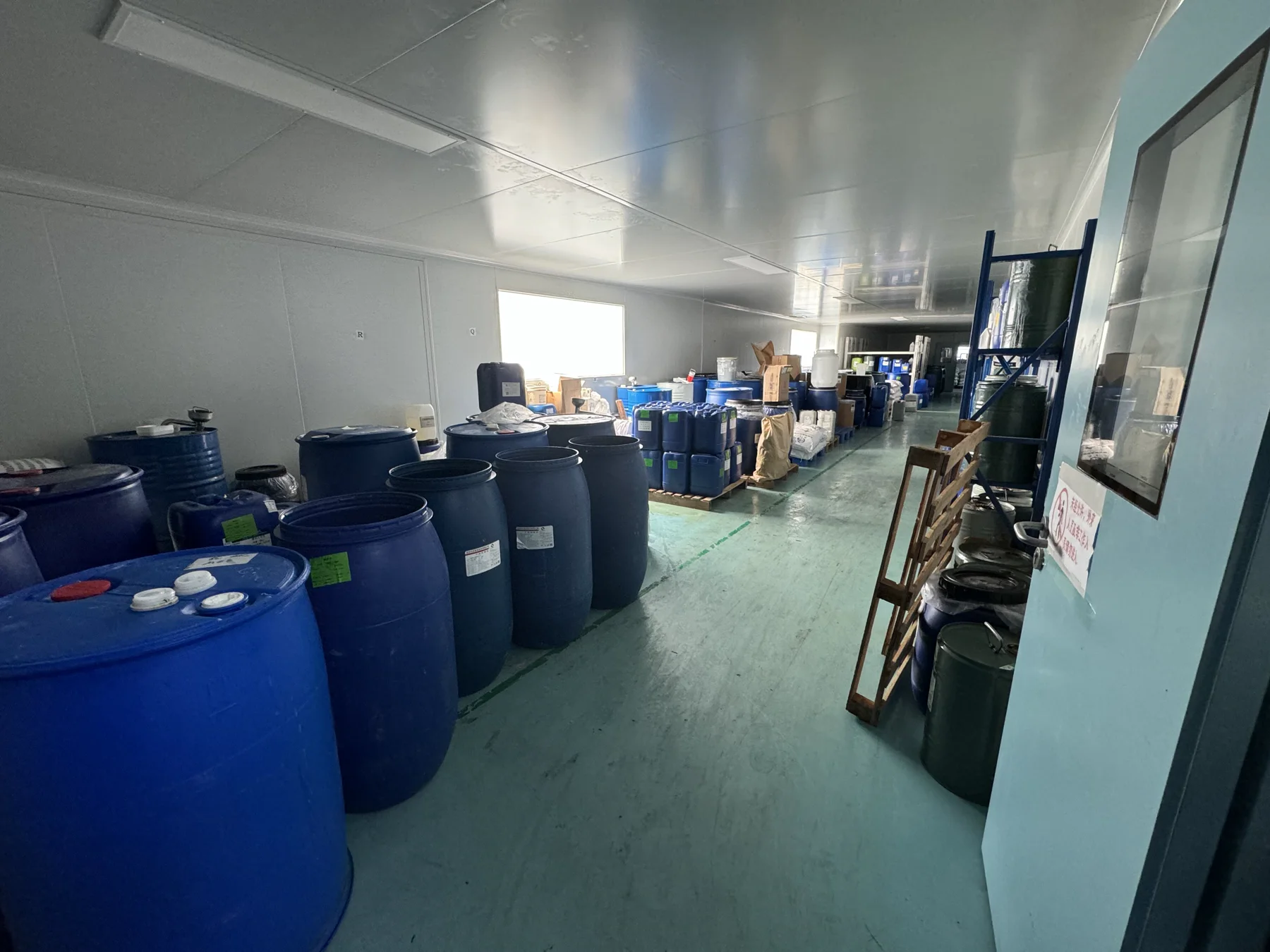
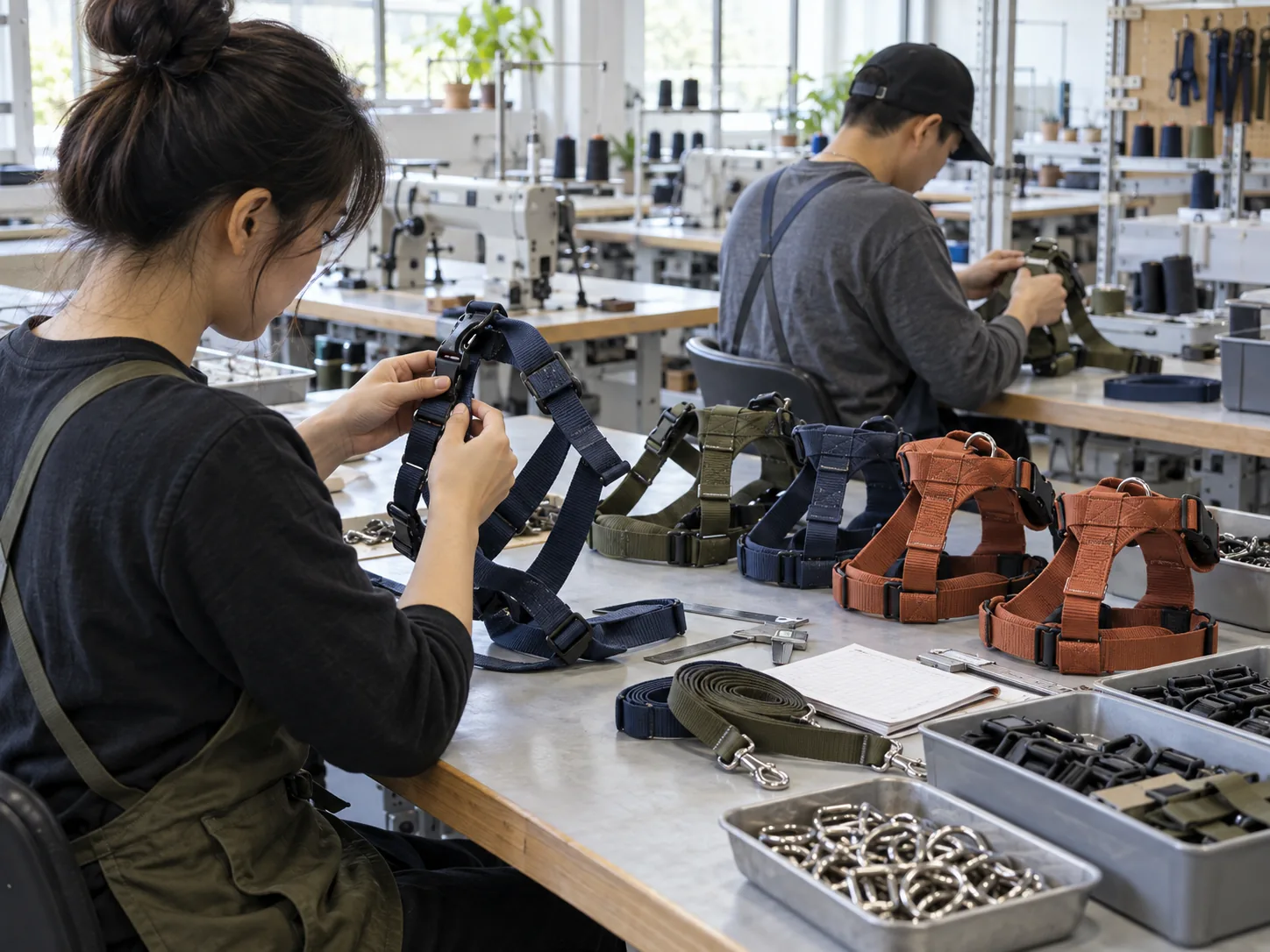
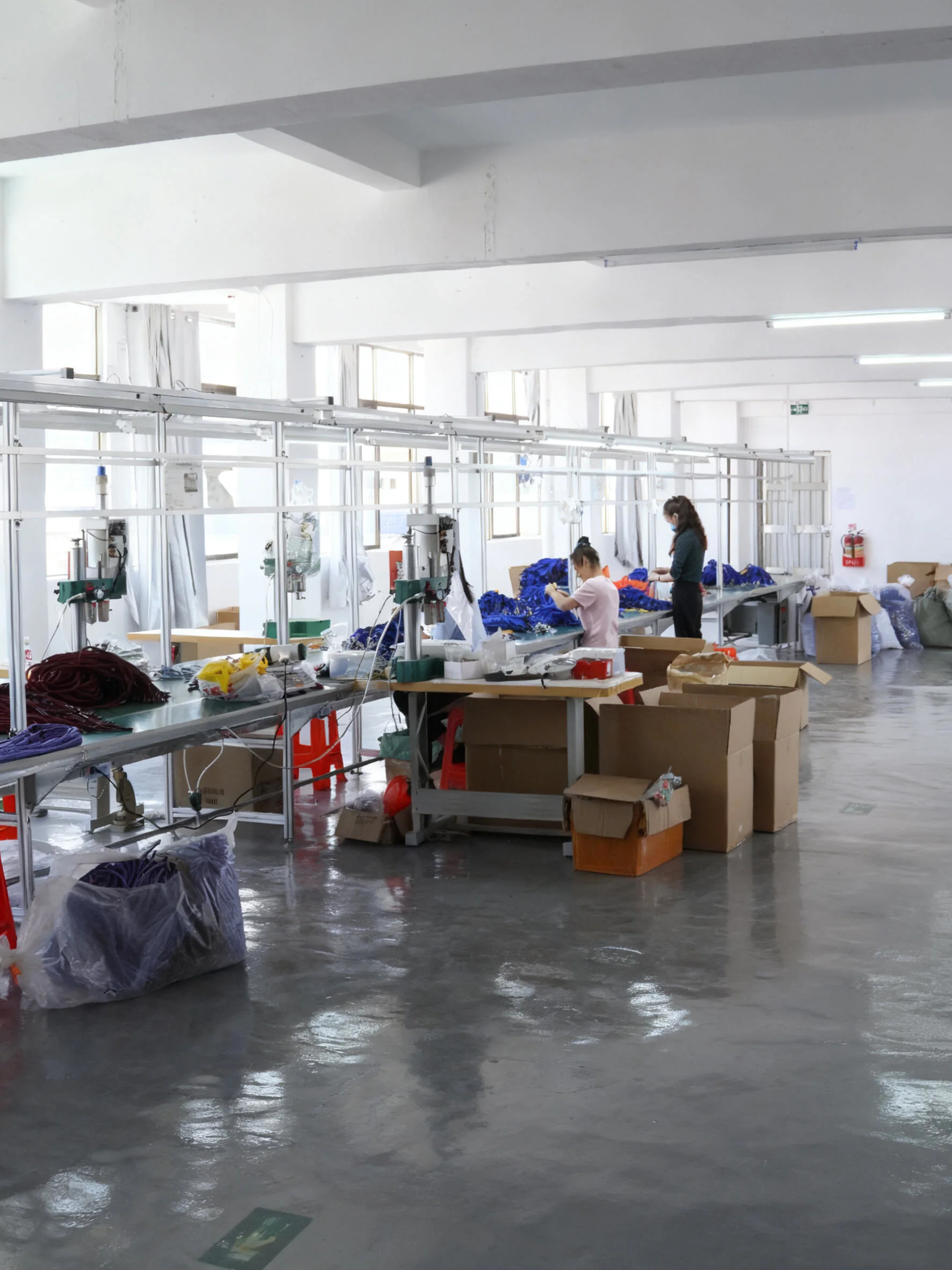
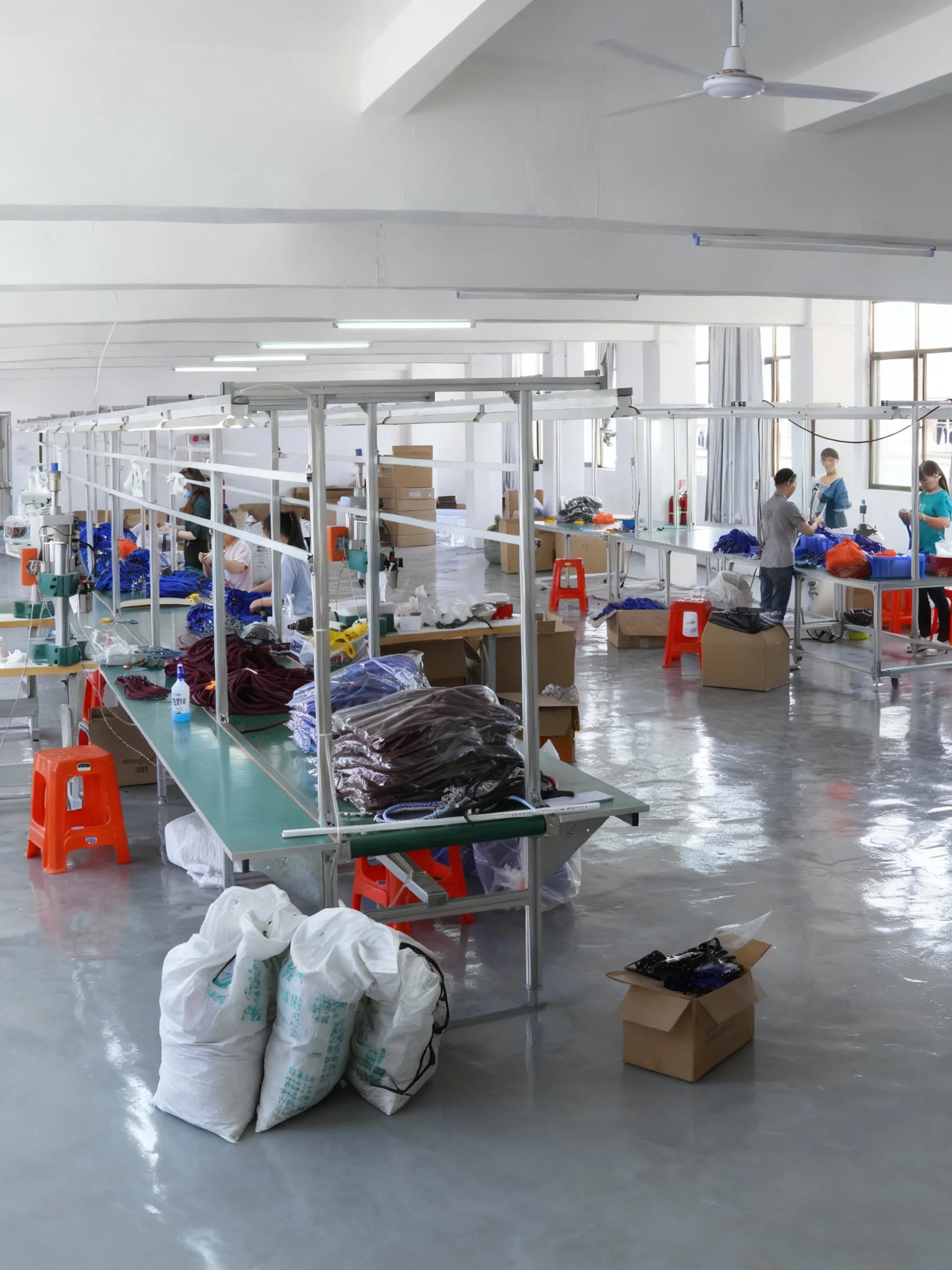
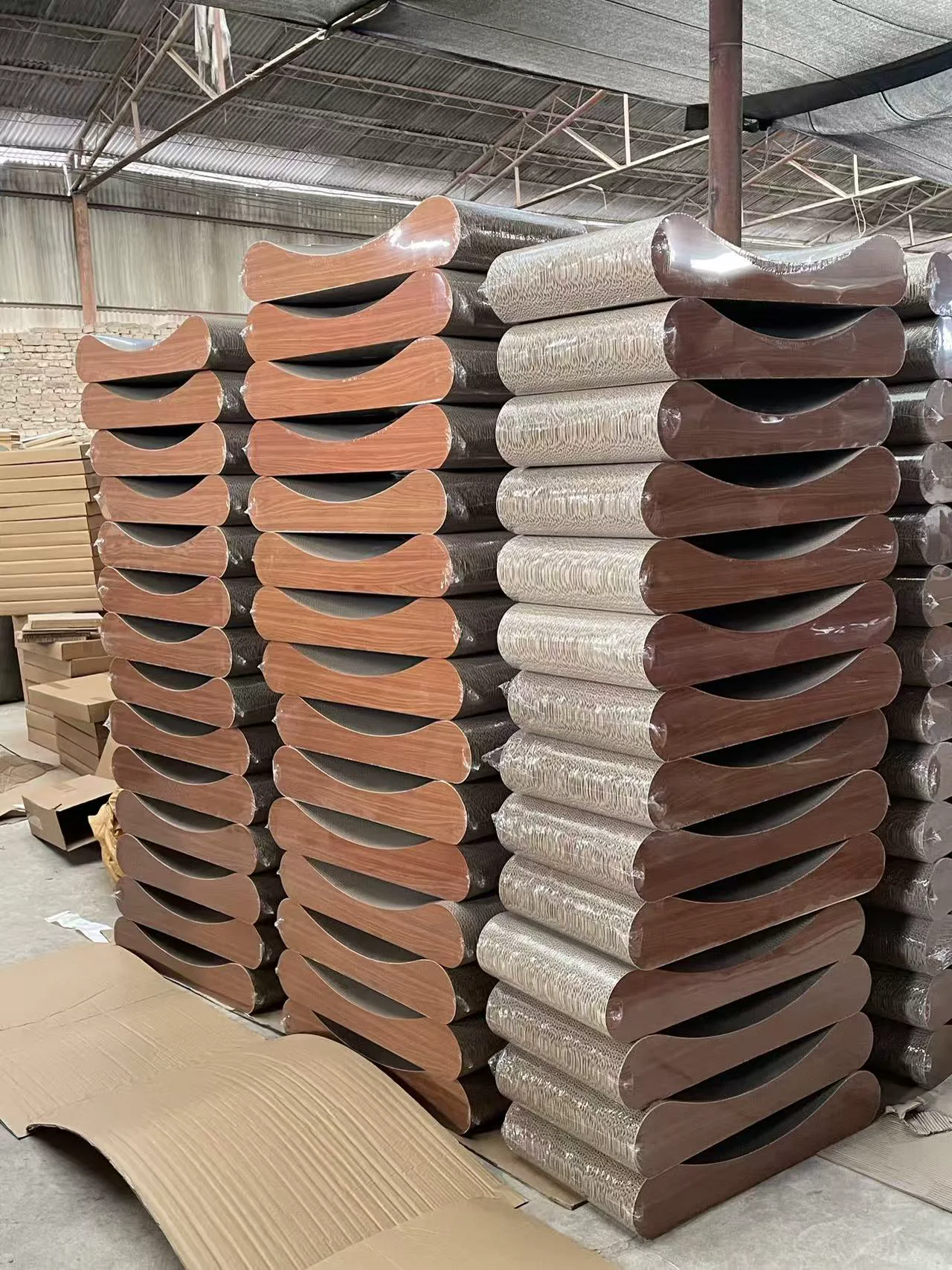
The supplied factory media above shows pet-accessory materials, machinery, sewing, assembly and production-floor activity. The responsible facility, line assignment, capacity, materials, testing, certifications, pricing and availability are confirmed for each product in the written quotation.
ANONYMOUS CUSTOMER DEVELOPMENT CASE
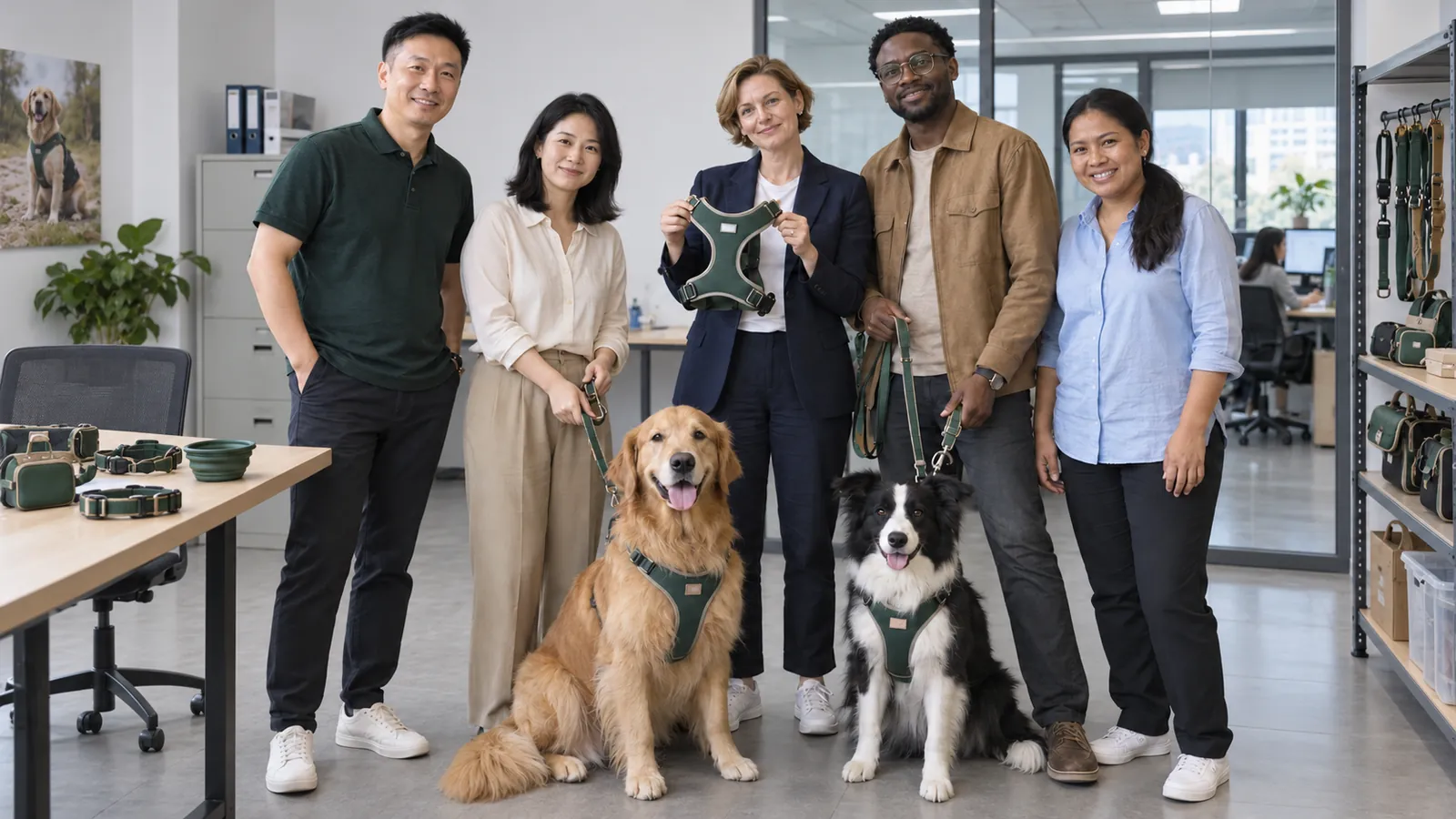
This walking-accessories project shows how one coordinated range moved through product review, material and trim comparison, sample measurement, sewn production and workmanship review.
The public record is intentionally limited to the stages shown. The customer’s identity, pricing, quantities and non-public specification remain confidential. These images document a project process; they are not a certification or laboratory test report.
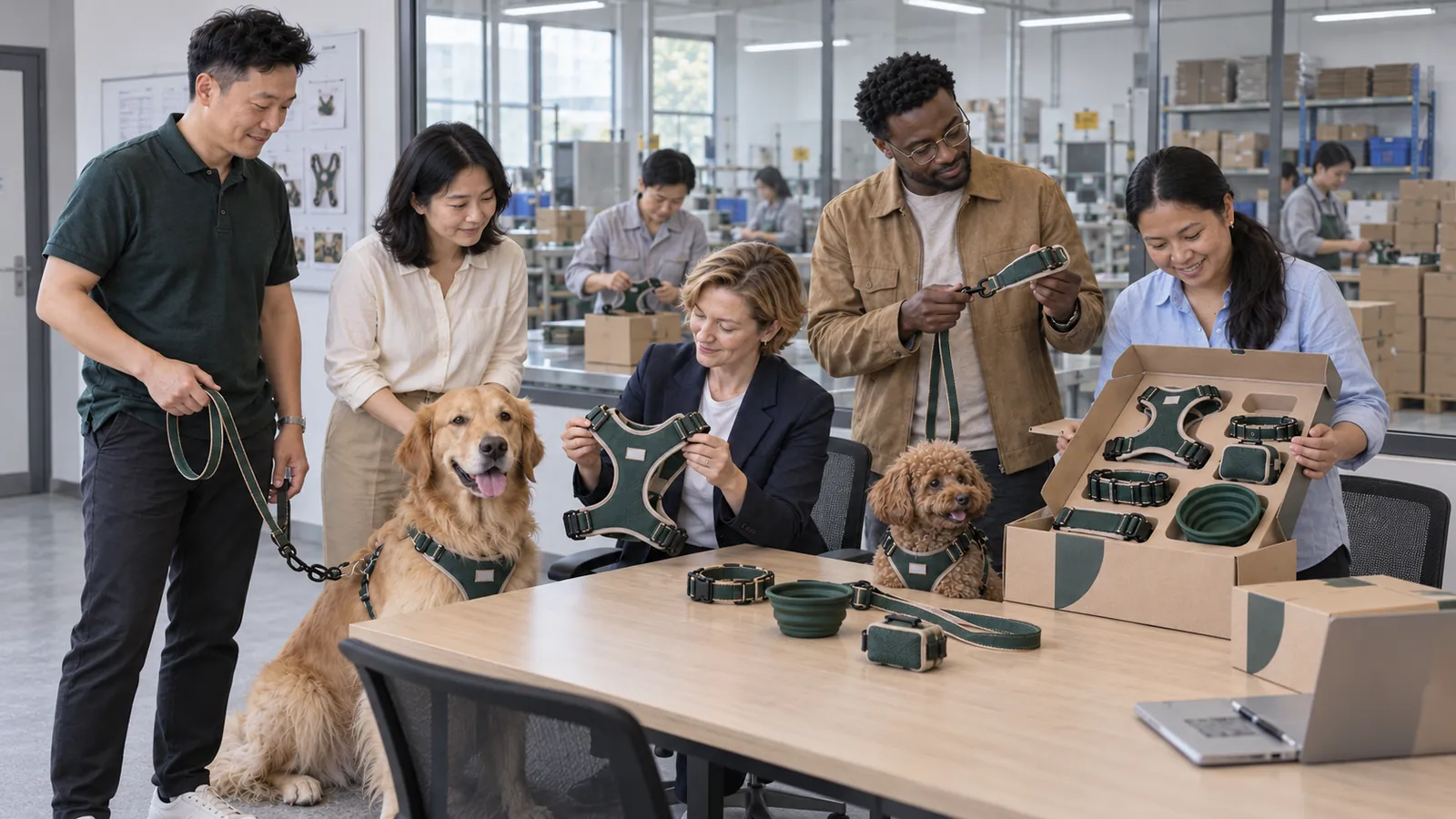
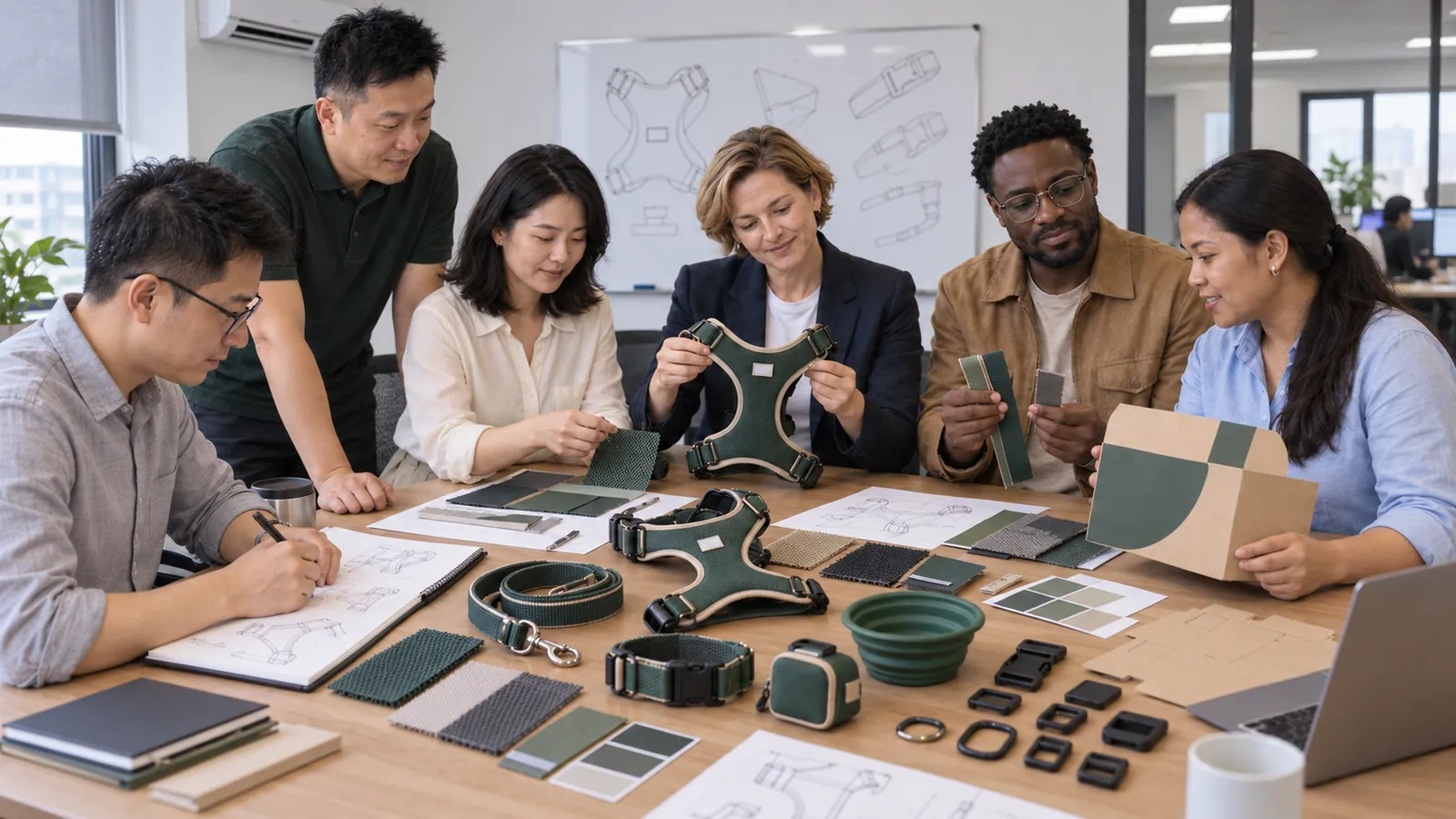
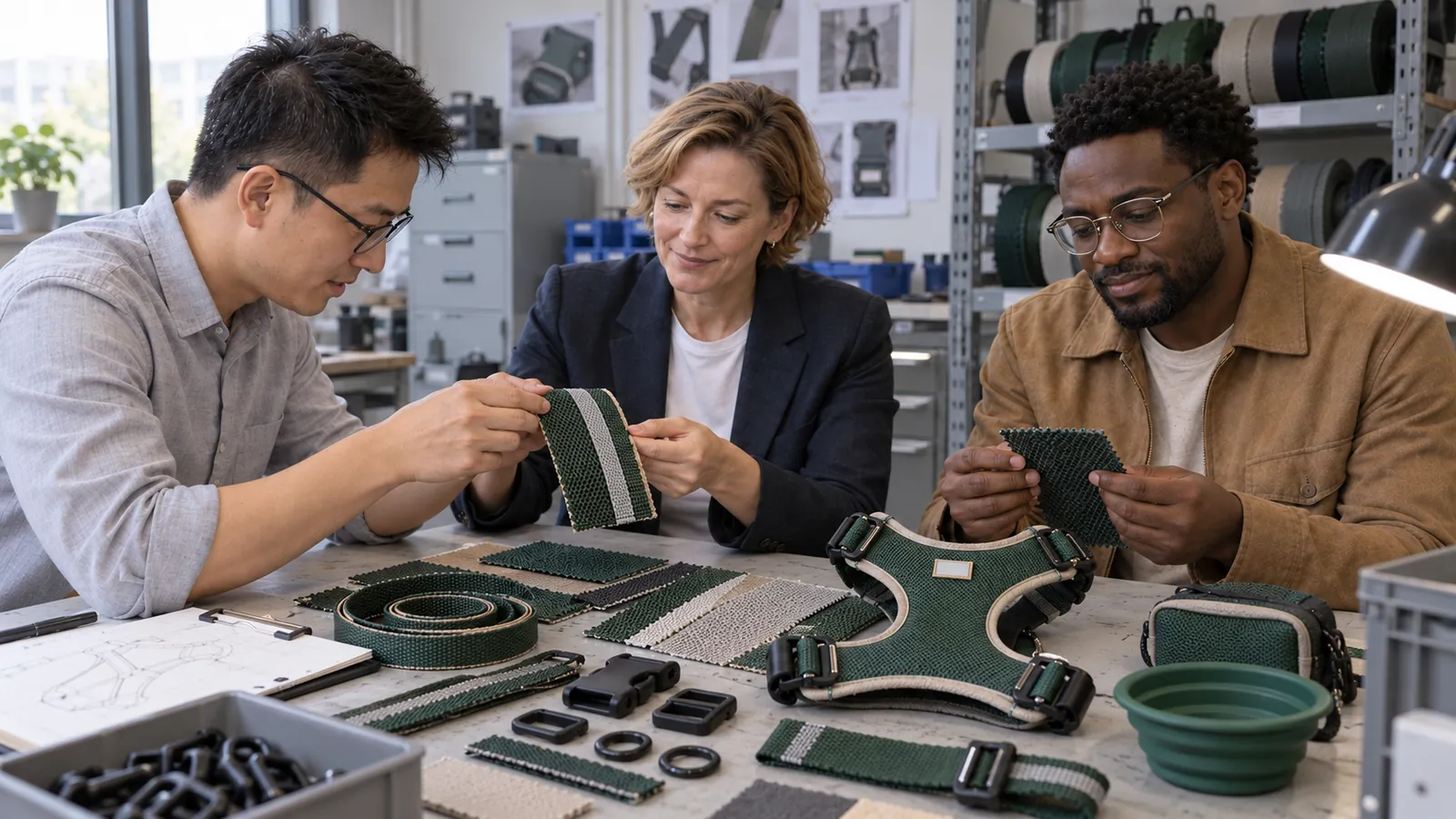
The project team compared the harness, leash, collar, portable bowl, accessory pouch and packaging direction as one coordinated range.
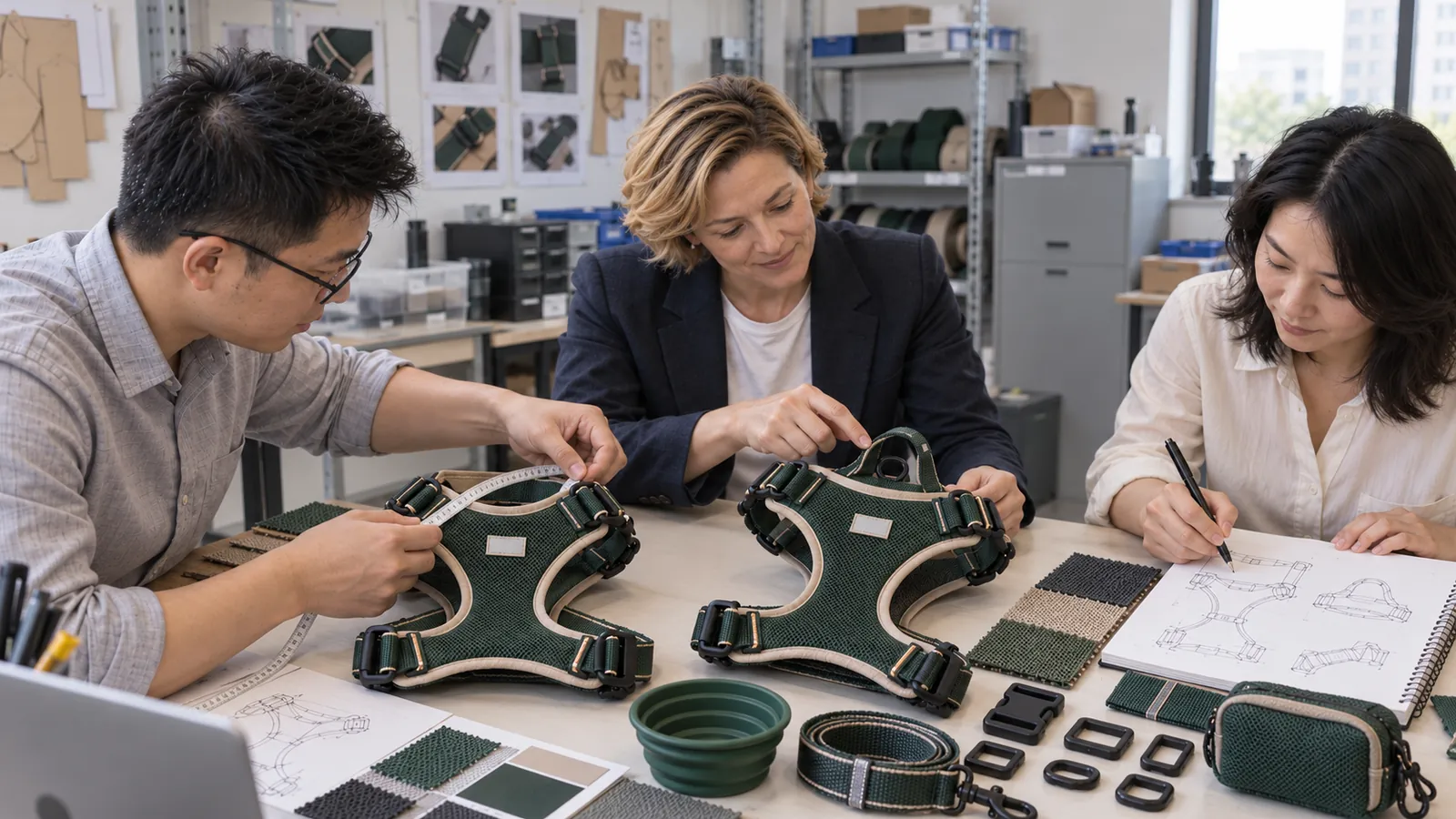
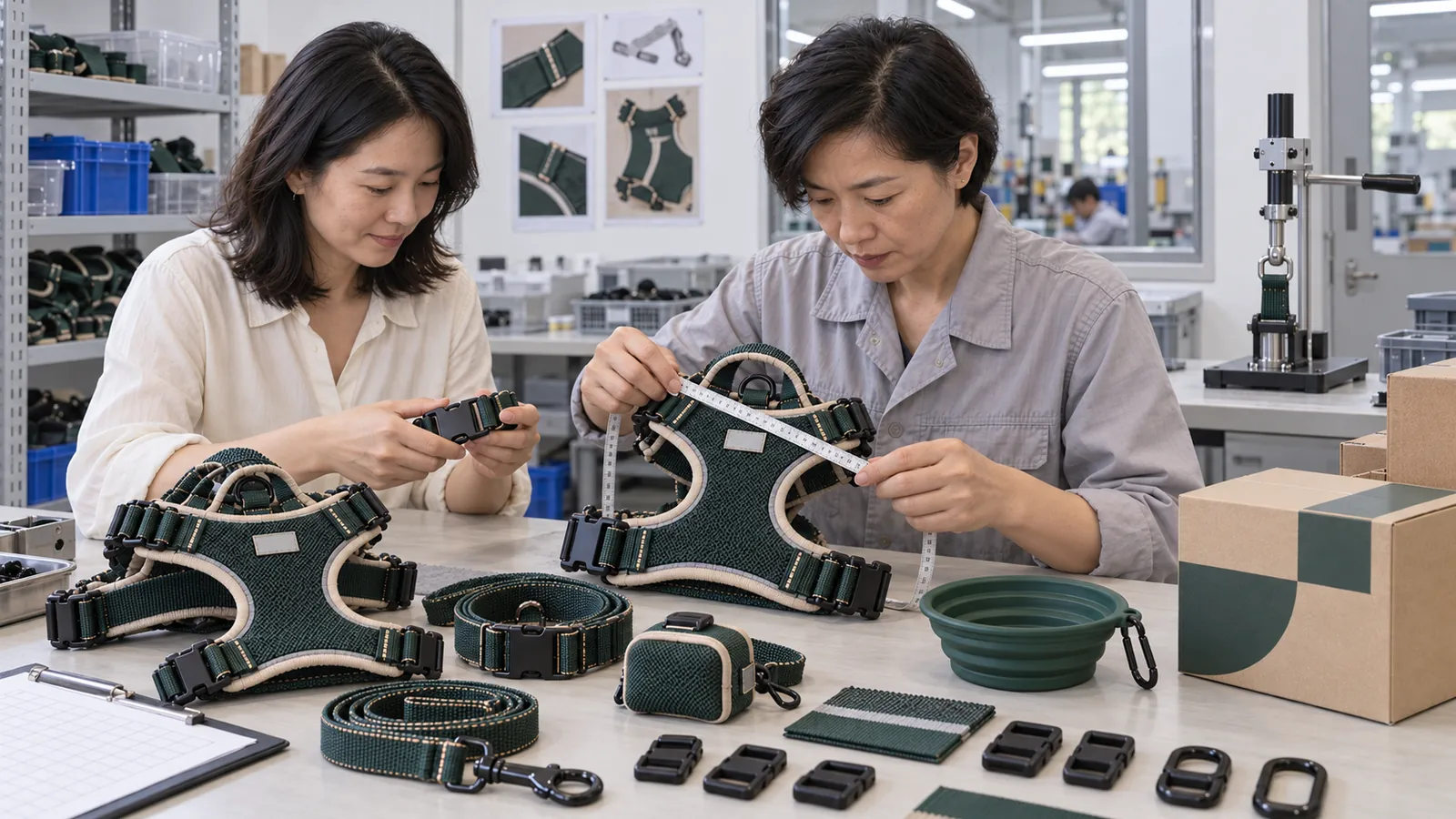
Harness dimensions, adjustment points, binding and hardware placement were reviewed against the project reference.
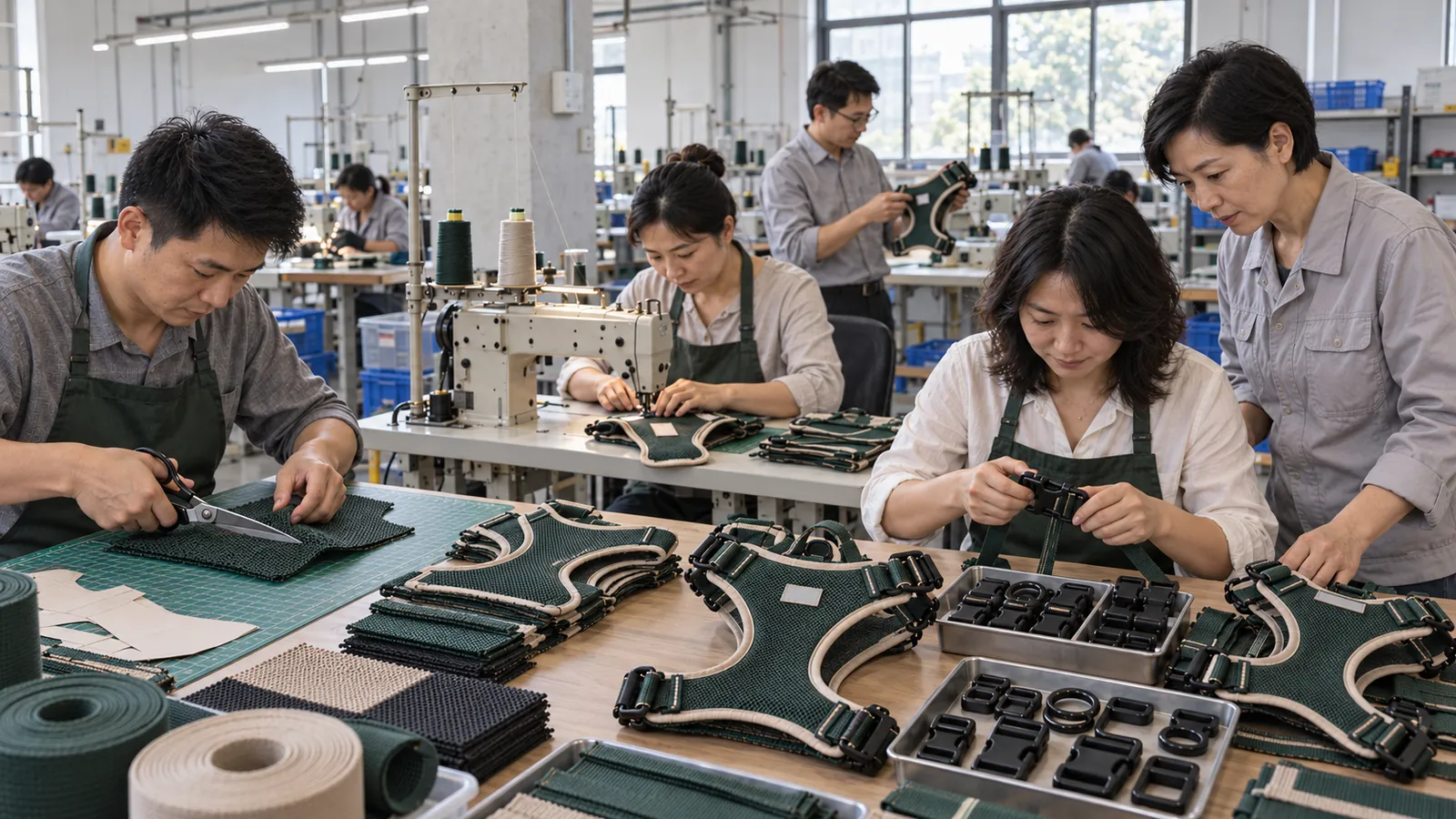
Cutting, sewing and hardware assembly were documented for the harness construction shown in this project.
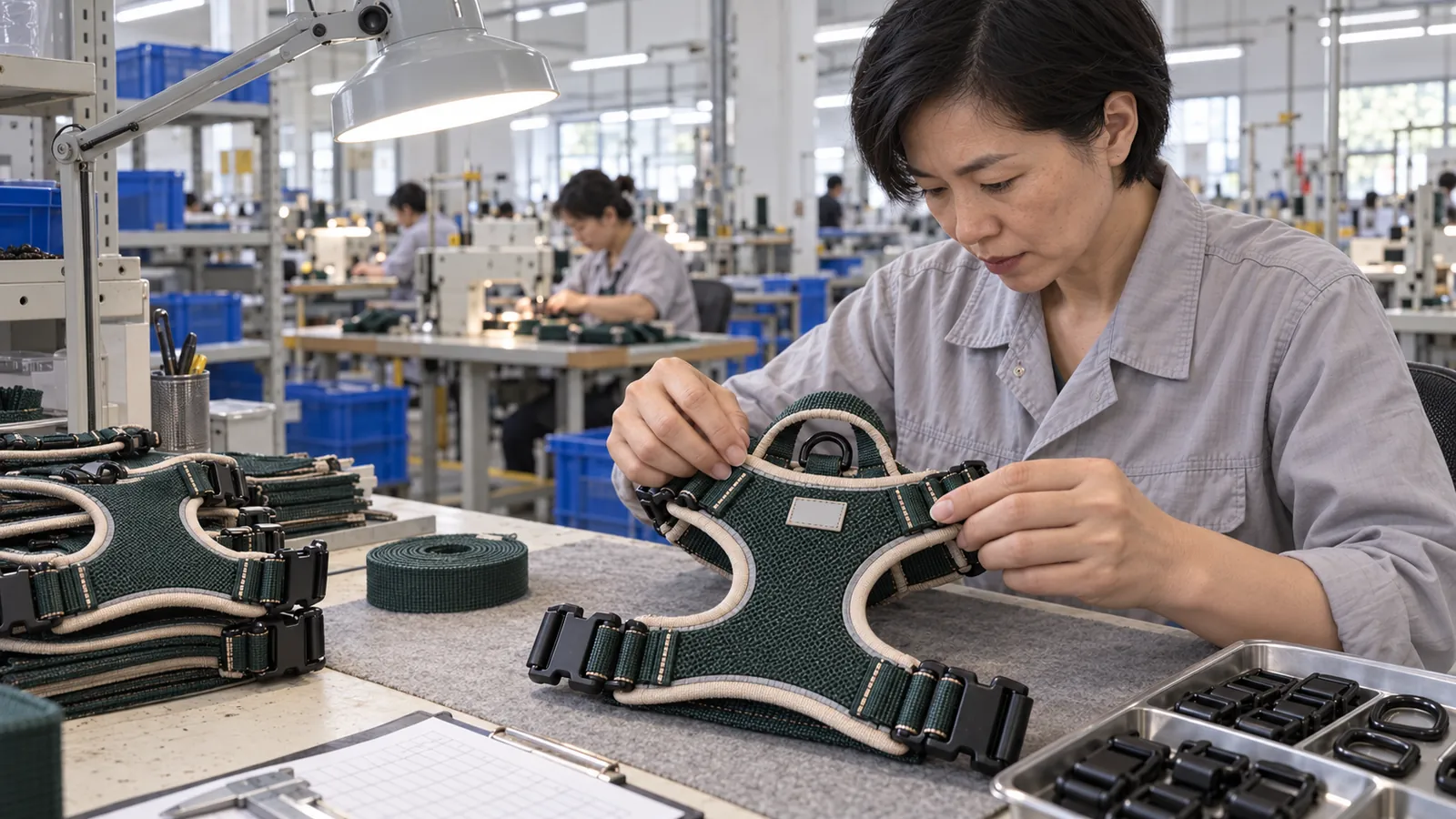
The finished harness was reviewed for stitching, edge binding, buckle placement and visible construction details.

BUILD A REVIEWABLE WALKING BRIEF
PRODUCTION RESPONSIBILITY BY PRODUCT FAMILY
Every quotation should identify the actual production location, any specialist process and the party responsible for final inspection and shipment release.
| Product family | Production model disclosed | Evidence to confirm for your order | Final responsibility |
|---|---|---|---|
| Harnesses, leashes and collars | Supplied factory media shows material handling, sewing and assembly for pet accessories. | Contracting entity, exact facility, line capacity, approved materials and product-specific checks. | Named in the written quotation and inspection plan. |
| Bowls, silicone mats and molded parts | Metal forming, silicone molding or component work may involve a specialist production facility. | Facility identity, material grade or formulation, tooling scope and relevant product records. | Named in the written quotation and inspection plan. |
| Beds, crate mats and pet textiles | Cut-and-sew, filling and upholstery steps are assigned according to the approved construction. | Facility identity, fabric and fill references, care test, packed dimensions and release criteria. | Named in the written quotation and inspection plan. |
THREE PRODUCT FAMILIES. SPECIFIC QUESTIONS.
For a dog harness, leash or collar, discuss the pattern, webbing, padding, hardware and stitching. Ask how dimensions and color references will be recorded across sizes and matching items.
Explore development options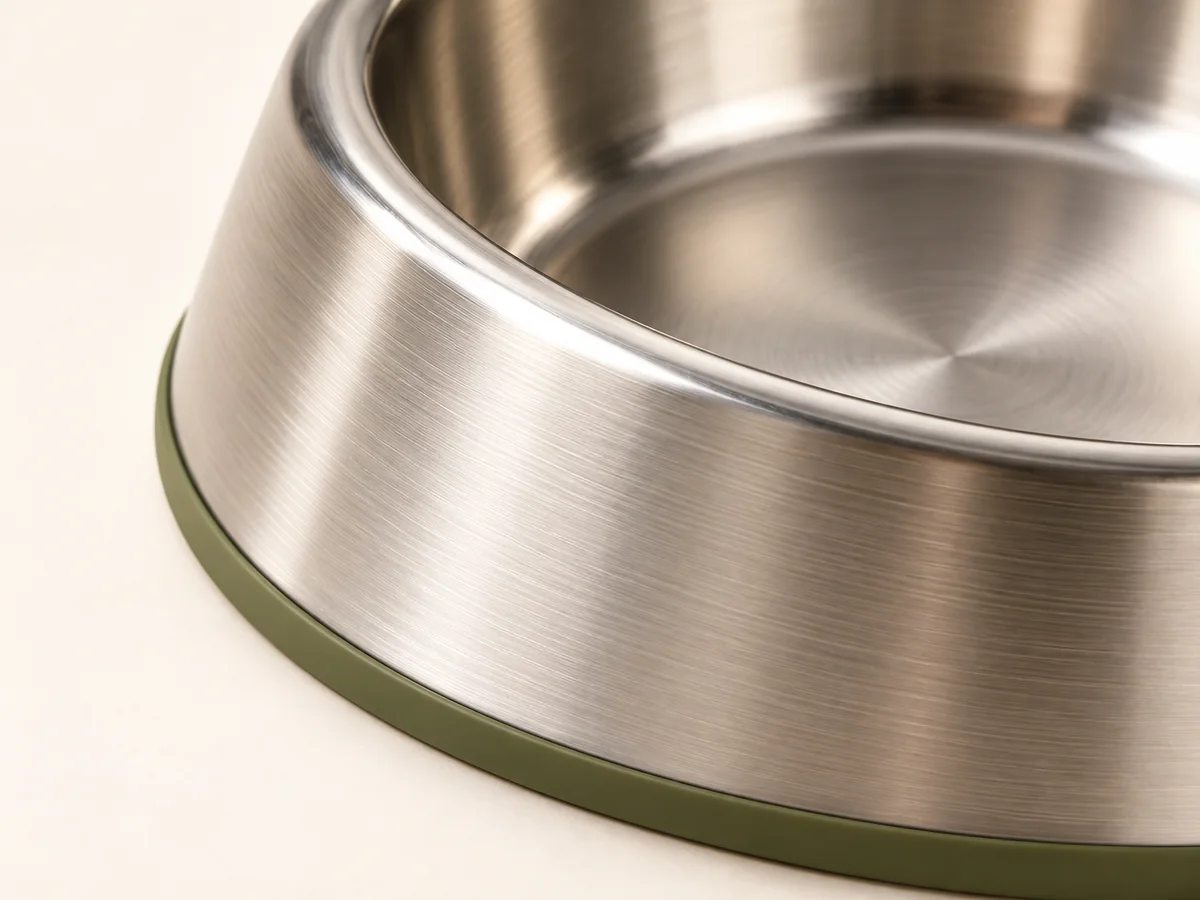
For a pet bowl or feeding mat, define the material, usable capacity, base and finish. Review documentation and care requirements for the complete product, including attached components.
Explore development options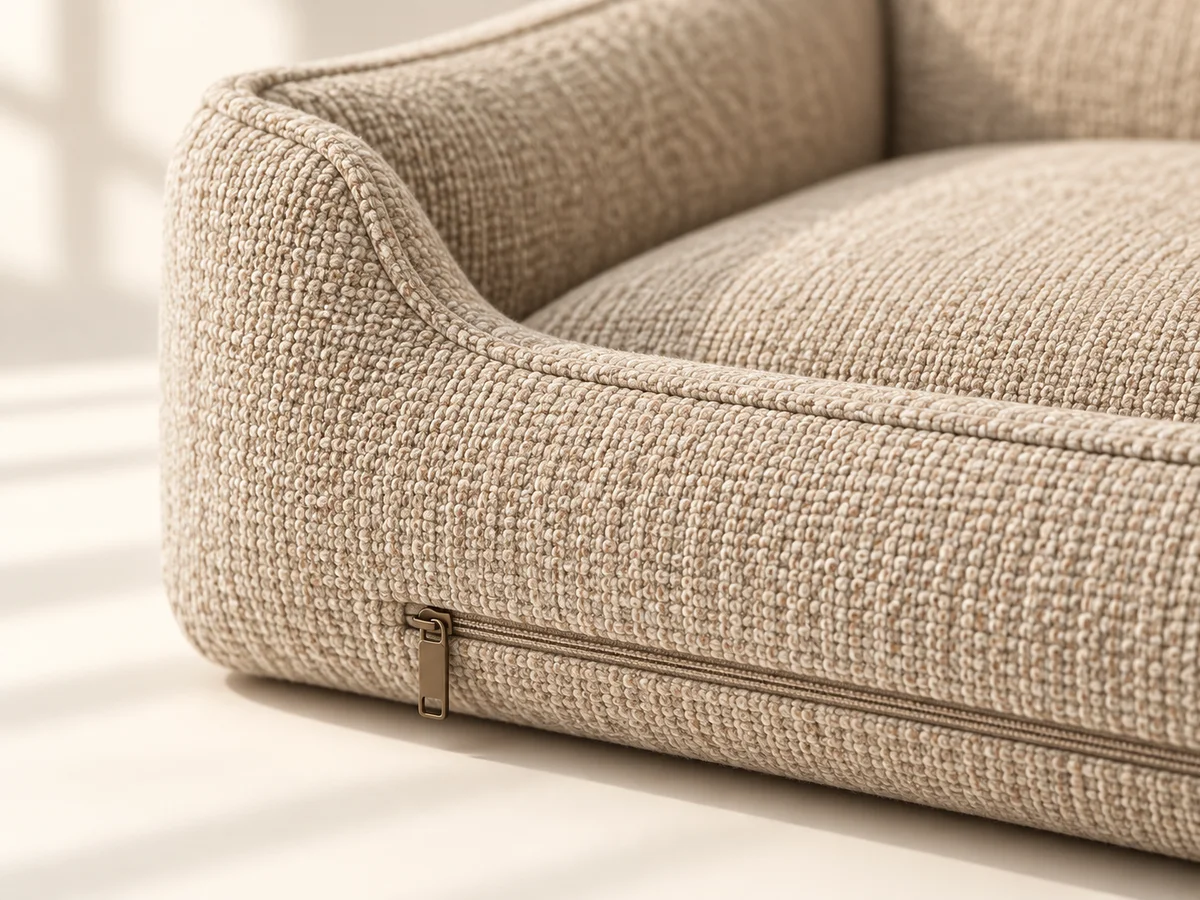
For a dog bed, crate mat or blanket, clarify cover construction, fill, dimensions and care. Review packed size and how the product recovers after your proposed packaging method.
Explore development optionsWHAT YOU SHOULD BE ABLE TO REVIEW
Use the same evidence request with every shortlisted supplier. Ask what is available, what requires additional work and what is outside the proposed scope.
Download review checklistRequest the contracting company, facility address, operating model and an explanation of any outsourced steps. Agree which party takes responsibility for your order.
Keep material references, dimensions, construction, branding and packaging in a versioned specification. Identify the physical sample used as the production reference.
Ask for the records and test scope relevant to the exact material and finished item. Check dates and model identification before relying on a report for a product claim.
Agree the inspection point, acceptance criteria, reporting and release process. Material or component substitutions should require recorded approval.
BUYER QUESTIONS / DIRECT ANSWERS
The company premises cover 300 m², and the factory covers 3,000 m². Product-specific production responsibility, processes and capacity are confirmed in the quotation.
No. Different pet accessories require different processes, equipment and specialist controls. Sewn webbing, moulded silicone, metal bowls and upholstered beds may be produced in different responsible facilities. Catidog identifies the applicable facility, outsourced steps and final inspection responsibility in the product-specific quotation and quality plan.
Harnesses, leashes, collars, textile carriers, beds, mats, apparel and many soft toys are primarily sewn products. Their briefs should control fabric or webbing, thread, seam type, stitch pattern, reinforcement, hardware attachment and tolerances, while any moulded or metal parts are documented separately.
A specialist facility is needed when the product depends on mould tooling, injection or compression equipment, metal forming, welding, polishing or another process outside a sewing line. The quotation should state who performs that process, which sample represents it and who accepts the finished item.
Catidog remains responsible for the agreed final inspection and release path stated in the quotation or quality plan, even when a partner facility performs a specialist process. The buyer should see who checks incoming components, in-process work, finished goods and any failed-lot disposition.
Factory evidence should match the quoted product and include the legal contracting entity, responsible production location, processes performed there, outsourced steps, approved sample, specification revision, inspection criteria and report scope. General factory photographs or unrelated certificates do not prove responsibility for a particular SKU.
A GOOD PARTNERSHIP STARTS WITH HELLO.
YOUR NEXT COLLECTION / CATIDOG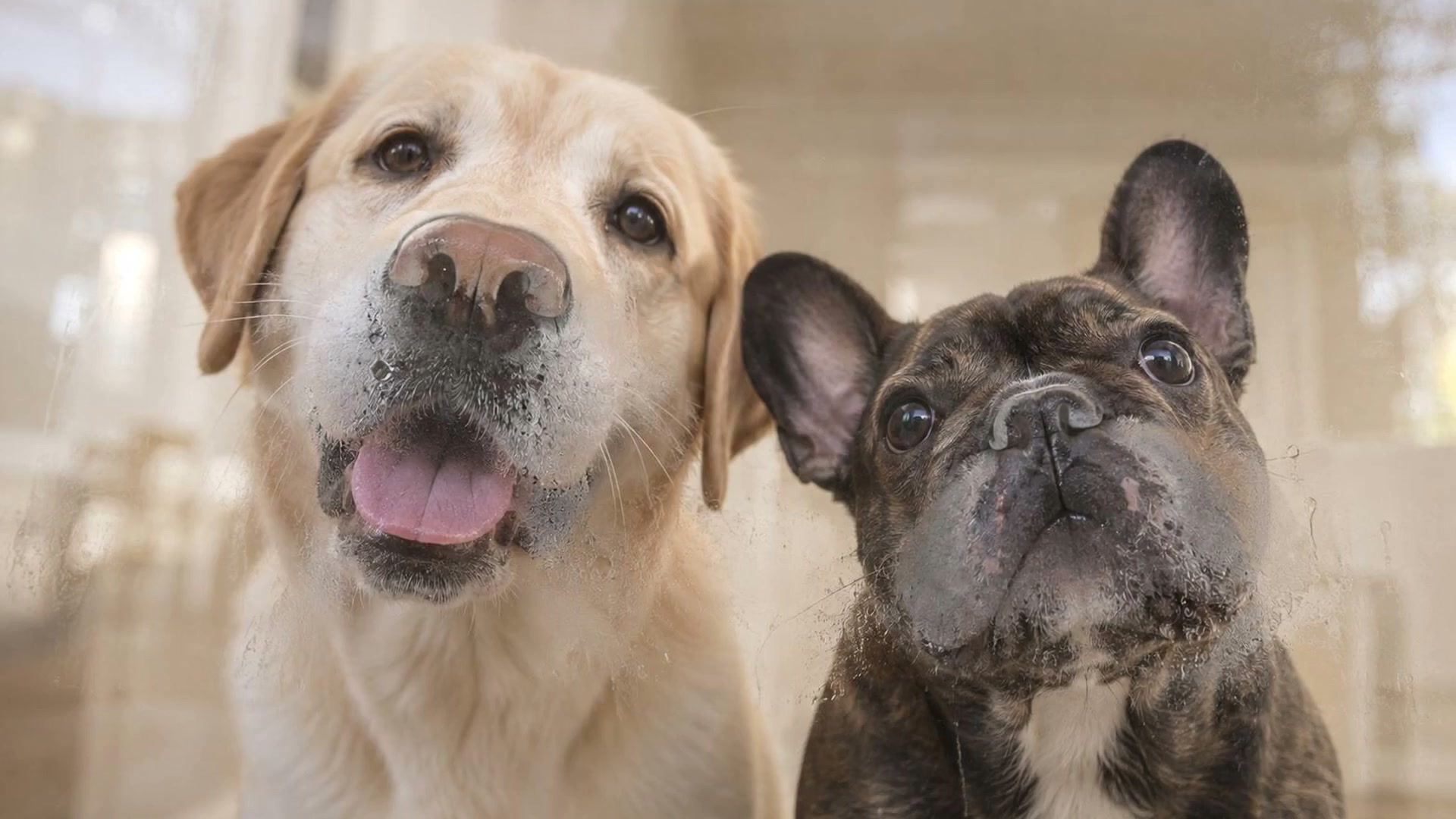
Private-label pet accessories. Every quotation names the facility that makes the item.
Request a QuoteYOUR BRAND. A MORE CONSIDERED COLLECTION.
For pet brands, retailers and importers building a recognizable collection, the value is in the connection: coordinated products, clear specifications and a useful next conversation.
LET’S TALK ABOUT YOUR COLLECTION