THE QUICK ANSWER
Start a private-label play range with the rope chew toy and the snuffle mat, which need no mould, then add the cat teaser wand, whose attachments become the reorder. The treat dispensing toy and the cat scratching post come later: the dispenser’s aperture is tooling, and the post’s height and base weight drive freight. All five are in Catidog’s catalogue, typically from 100–500 units per product.
THE NUMBERS
- 5 products
- in Catidog’s play catalogue, ranked here by their role in a first private-label range. Catidog play catalogue
- 100–500 units
- typical minimum per product, confirmed in the quotation by color, size split, customization and packaging. Catidog commercial terms
- 7 / 15 days
- to prepare a stock-item custom sample and a fully custom sample. Catidog commercial terms
- 15 days
- for standard bulk production after the agreed production trigger. Catidog commercial terms
How this list is ranked
Toys that need no mould come first, because a brand can prove demand before paying for tooling. The products that reorder well follow, then the ones that need a mould or carry freight weight. Each entry names the first decision and the risk to control. This is an editorial ranking from our own development practice, not a sales ranking or a durability test.
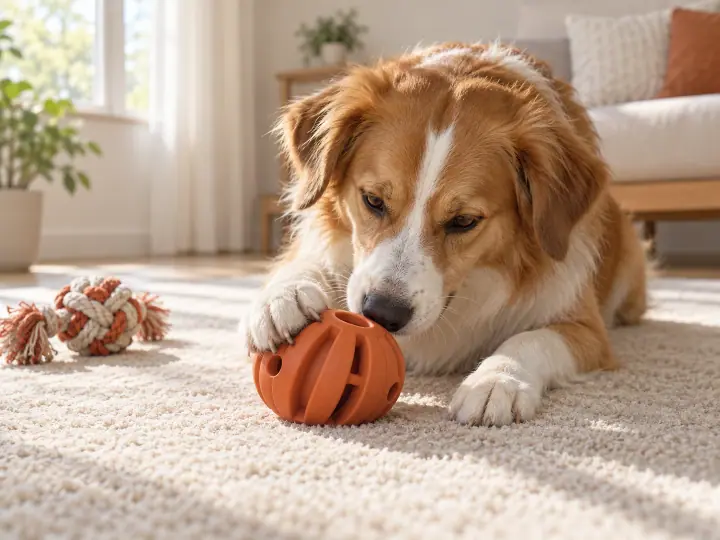
1. Rope chew toy: fiber content is the safety story
A braided rope with tied knots and no tooling. Fiber content and knot construction decide both durability and the safety story, so confirm the cotton blend, rope diameter and knot count before pricing. Check knot slip under pull, fiber shedding and colorfastness, and avoid calling any chew toy indestructible.
2. Snuffle mat: density does the work
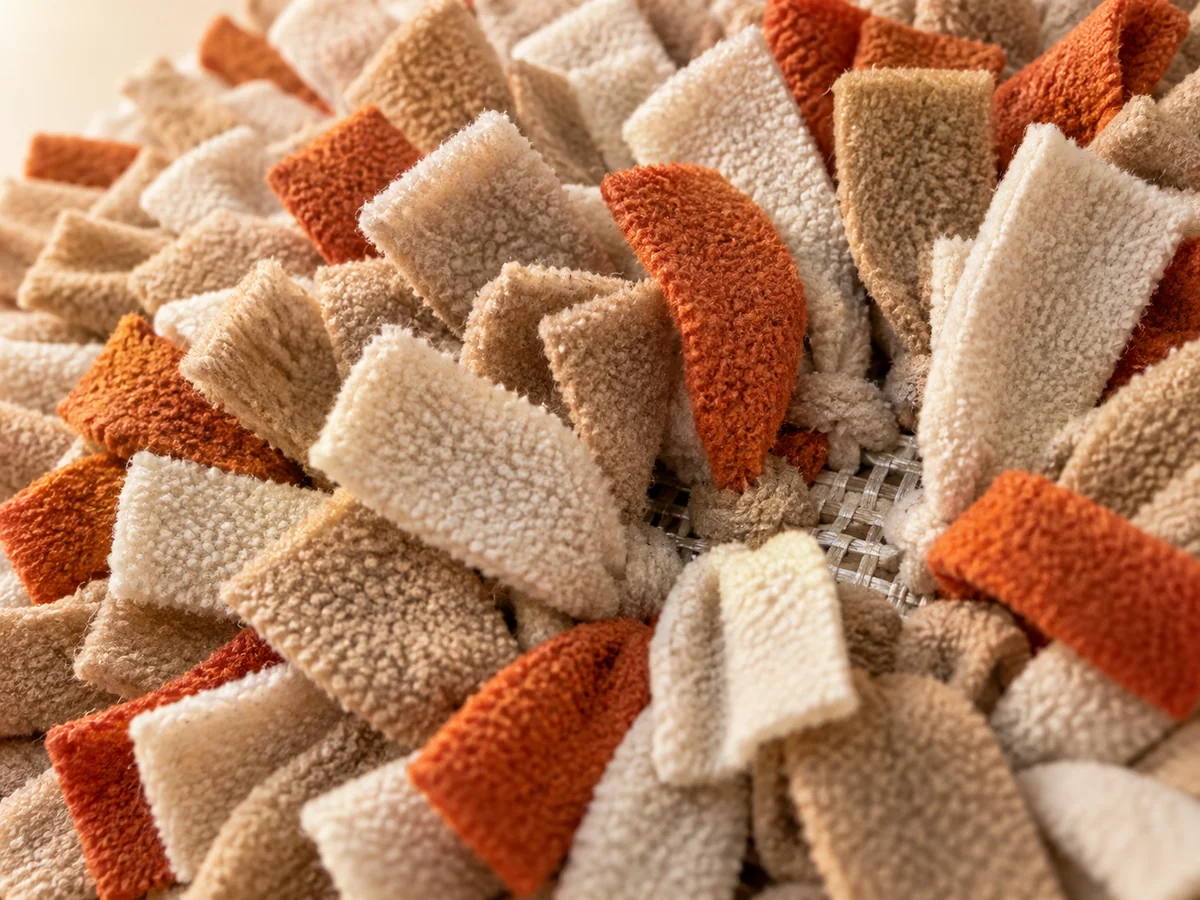
Fabric strips knotted to a mesh base, again with no mould. Strip density is what makes the mat work, and density is fabric consumption, which makes it the cost driver too, so decide it first. Check strip retention, wash behavior and base distortion.
3. Cat teaser wand: the attachment is the SKU
The wand is a carrier; the attachment is what sells and what gets reordered. Plan the attachment range and the connector before the wand itself, and check connector retention, rod set and attachment shedding, because a lost attachment is the usual complaint.
4. Treat dispensing toy: the aperture is tooling
The dispensing aperture is the whole design. Tune it against the treat size the range targets and lock it, because it is part of the mould. Check the dispensing rate, a drop test and cleaning access before approving the tool.
5. Cat scratching post: height and stability
Height and base stability are the two reasons a post gets used instead of the sofa, and both are dimensions that drive the freight cost. Decide the post height, sisal type, base weight and assembly, then run a tip test under lateral load and check sisal retention.
What Catidog needs to quote the range
Send the toys you want from this list, the materials and colors, the treat or attachment sizes where they apply, the logo method, the packaging and the destination. Typical minimums are 100–500 units per product, confirmed by product, color, size split, customization and packaging. Stock-item custom samples are prepared within 7 days and fully custom samples within 15 days; standard bulk production runs within 15 days of the agreed production trigger, and orders ship by sea freight, air freight or express courier.

A useful comparison
| Rank | Product | Role in the range | Decide first | Risk to control |
|---|---|---|---|---|
| 1 | Rope chew toy | No-mould starter | Fiber blend and knots | Fiber shedding; “indestructible” claims |
| 2 | Snuffle mat | No-mould enrichment | Strip density | Strip retention |
| 3 | Cat teaser wand | Reorder driver | Attachment range and connector | Lost attachments |
| 4 | Treat dispensing toy | Tooled enrichment | Aperture against treat size | Dispensing rate |
| 5 | Cat scratching post | Bulky | Height and base weight | Tipping; freight cost |
The ranked products, in order.
1. Rope chew toy — materials, customization and sample checks 2. Snuffle mat — materials, customization and sample checks 3. Cat teaser wand — materials, customization and sample checks 4. Treat dispensing toy — materials, customization and sample checks 5. Cat scratching post — materials, customization and sample checksSources and research context
This guide sets out our own product development practice rather than external research. It makes no market, clinical or comparative-performance claim, and every figure named here is confirmed per order in the written quotation and specification.
How we research and writeTURN THE ANSWER INTO AN OEM BRIEF