THE QUICK ANSWER
Yes, if the collar is a quick-release (breakaway) type with no elastic, fitted snugly and backed up by a microchip. In a randomized trial of 538 cats, 72.7% wore a collar for six months and 3.3% caught one on a foreleg, in the mouth or on an object, so fit and a buckle that actually releases matter as much as the word “breakaway”.
THE NUMBERS
- 72.7%
- of 538 cats in a randomized trial wore their collar for the full six months. Lord et al., JAVMA 2010
- 3.3%
- of the cats caught a collar on a foreleg, in the mouth or on an object during the trial. Lord et al., JAVMA 2010
- 19%
- of 138 lost cats in an Ohio study had any identification when they went missing. Lord et al., JAVMA 2007
- 15%
- of cats in a US national survey had been lost at least once in the previous five years. Weiss et al., Animals 2012
Why vets recommend a collar, even for indoor cats
Indoor cats get out. In a US national telephone survey, 15% of cats had been lost at least once in five years, and a quarter of those were never found. In an Ohio study of 138 lost cats, only 19% had any identification when they went missing. The authors of the 2010 collar trial concluded that, because even house cats can become lost, veterinarians should recommend identification collars for all cats, with a microchip as backup because collars can come off.
What the trial measured
Researchers randomly assigned 538 client-owned cats, about three in four of them described by their owners as indoor-only, to one of three collars: a plain plastic buckle, a breakaway plastic buckle or an elastic stretch collar. After six months 391 cats (72.7%) were still wearing their collar, and 477 of the 478 microchips scanned still worked. Owners’ expectations, and how often the collar had to be put back on, predicted success more than the type of collar did.
What happened in the 3.3%
Eighteen cats caught a collar: ten in the mouth, five with a foreleg through it and three on an object. The published results report that in the incidents involving breakaway collars, the buckle did not release. All three snags on objects involved elastic collars, which stretch instead of opening, and elastic collars also accounted for most of the fraying found at six months. Mouth incidents happened a median of five days after fitting, so the first week deserves close watching.
How to choose and fit a collar
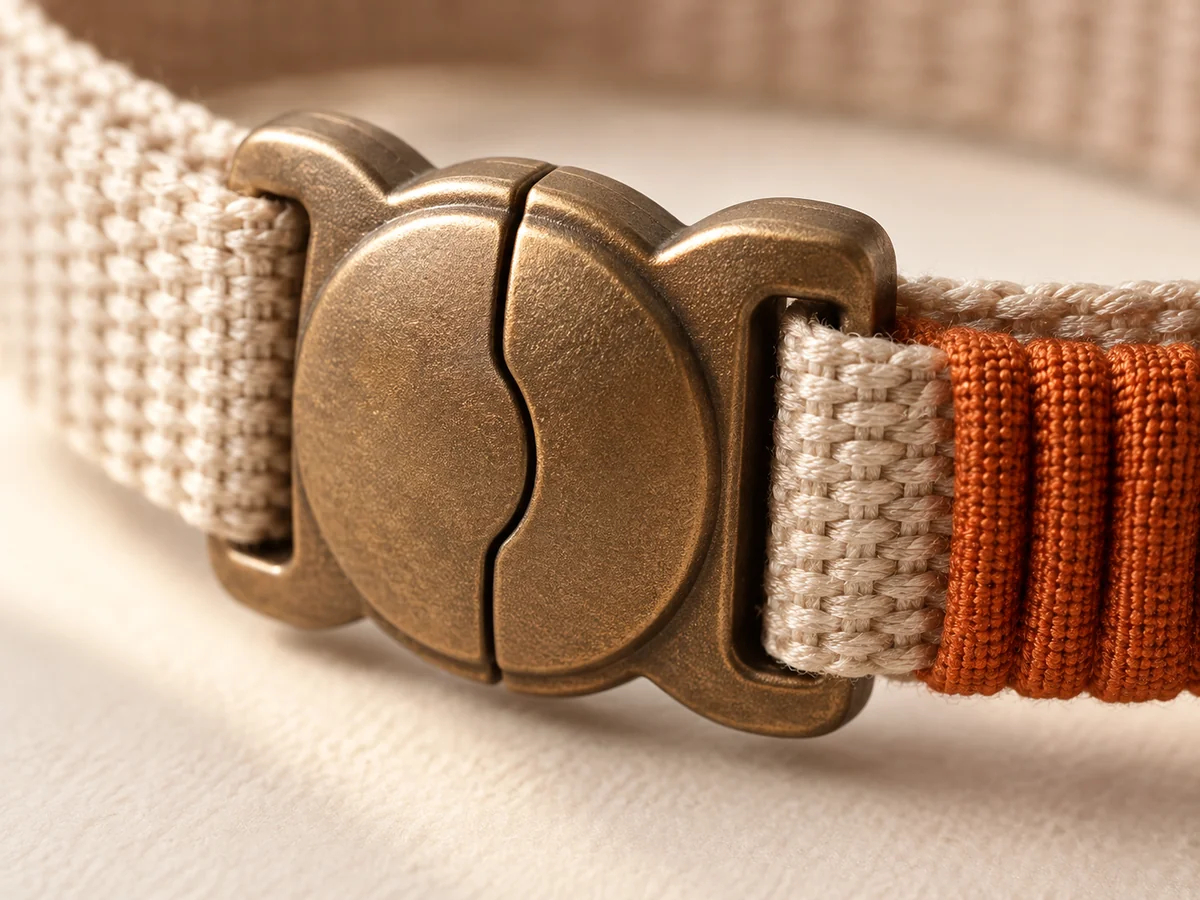
International Cat Care advises a collar with a snap-open buckle designed to release a trapped cat, and never one with an elastic section. It should be snug enough that only one to two fingers fit underneath, rechecked a few minutes after fitting. A bell, if used, should be completely sealed so claws cannot catch in it. The same guidance describes microchipping as the safest and most permanent form of identification.
What a private-label cat collar should specify
Specify the release force of the breakaway buckle and the method used to test it, and repeat the test after wear and washing, because the trial shows a breakaway label alone does not guarantee a release. Leave out elastic sections. Put fit instructions on the pack: one to two fingers, recheck after fitting, supervise the first days. Use sealed bells only. Avoid “100% safe” or “prevents strangulation”; “designed to release under tension” is a claim a sample can be tested against.

A useful comparison
| Collar type | What the trial observed | Specification response |
|---|---|---|
| Plain plastic buckle | Stayed on most often; not designed to release | Not for unsupervised wear |
| Breakaway buckle | Came off more often; did not release in the recorded snags | Specify and test release force, including after wear |
| Elastic stretch collar | All three object snags; most of the fraying | Leave out elastic sections |
Explore private-label product options.
No-pull dog harness — materials, customization and sample checks Standard dog leash — materials, customization and sample checks Adjustable webbing collar — materials, customization and sample checksSources and research context
Sources reviewed 2026-09-18. Community excerpts are anecdotes. Manufacturer guidance applies to that manufacturer’s products. Shortlists are editorial comparisons without hands-on comparative testing or verified sales rankings.
- Lord LK et al. · Evaluation of collars and microchips for visual and permanent identification of pet cats · Journal of the American Veterinary Medical Association, 2010
- Lord LK et al. · Search and identification methods that owners use to find a lost cat · Journal of the American Veterinary Medical Association, 2007
- Weiss E, Slater M, Lord L · Frequency of lost dogs and cats in the United States and the methods used to locate them · Animals, 2012
- International Cat Care · Should my cat wear a collar? (updated September 2025)
TURN THE ANSWER INTO AN OEM BRIEF