THE QUICK ANSWER
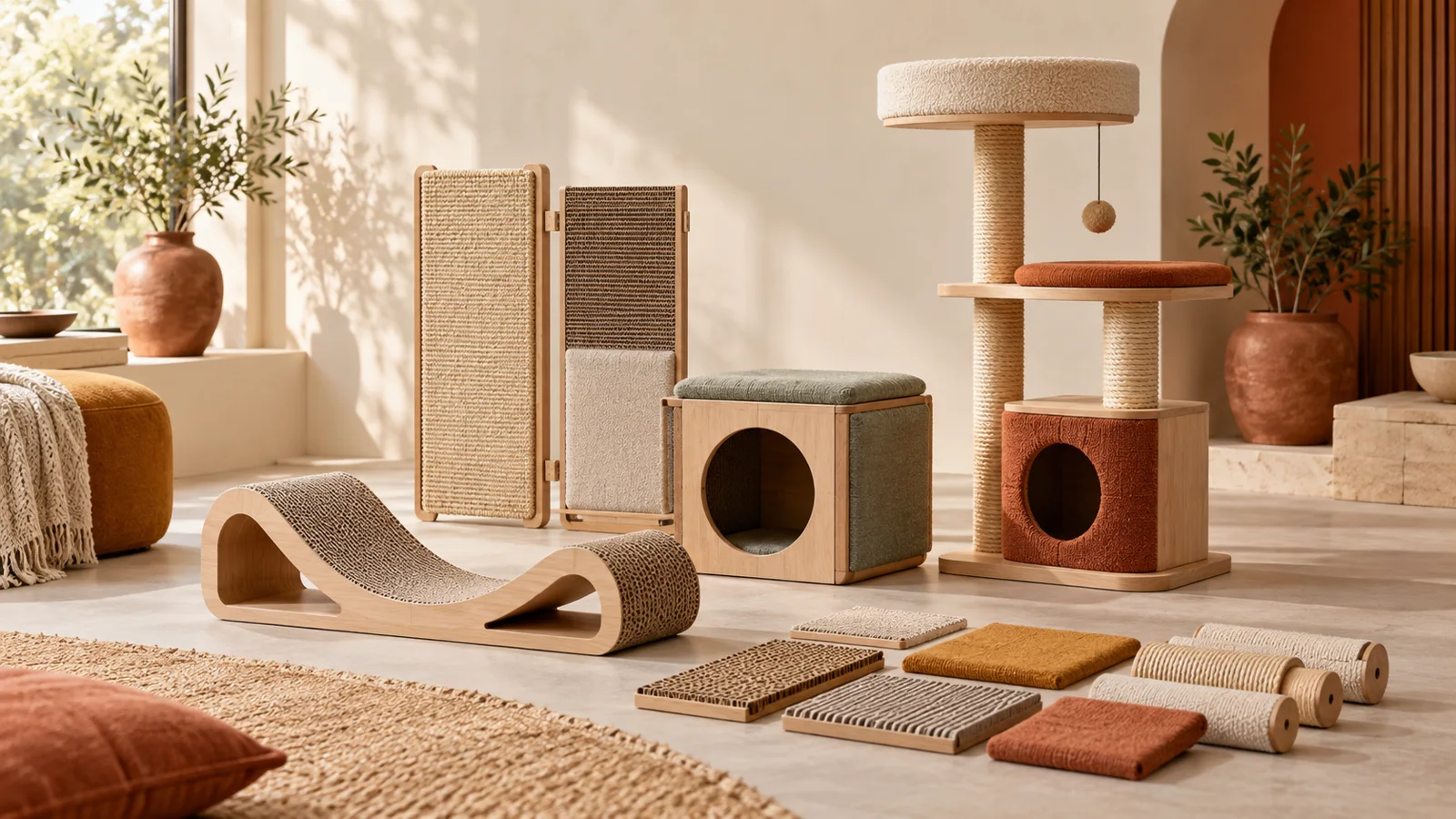
Cat scratching is normal behavior, and feline guidance recommends scratching surfaces, elevated safe places and separated resources. A custom cat scratcher or cat tree brief should define posture, usable scratching height, base stability, surface direction, replaceable wear parts, anchoring options and packed assembly—not simply a decorative silhouette.
Which behaviors should the product support
Horizontal scratching, vertical stretching, climbing, perching and hiding are different functions. Choose the primary behavior for each SKU and give the cat enough usable area to perform it. A small decorative patch may look sufficient in a render but fail during real use.
How should stability be reviewed
Record footprint, height, center of mass, wall-anchoring method and fastener access. Test the assembled sample on the intended floor and inspect wobble after repeated use. Instructions should identify every fastener and retightening step.
Why modular wear parts matter
Sisal, cardboard and textiles wear before the structural frame. Replaceable panels or posts can reduce whole-product disposal and create a clearer after-sales offer, provided dimensions and fasteners remain compatible.
What should packaging prove
Flat-pack design can reduce volume but increases assembly responsibility. Review carton protection, hardware count, tool requirements, step order and final stability after a typical customer assembly.
Why a cat may ignore a scratching post
Start with the places and directions the cat already chooses. A post can be ignored because it moves under load, is too short for a full stretch, sits away from the cat’s normal route, or presents a horizontal surface when the cat prefers vertical scratching. Change one variable at a time and place an acceptable scratcher close to the existing scratching location before moving it gradually.
Cardboard, sisal or fabric?
Cardboard is light and replaceable but produces debris and wears quickly. Sisal rope or fabric offers a durable, high-friction surface when the wrap and ends stay secure. Carpet or other fabric can feel familiar but may make it harder to distinguish permitted surfaces from household furnishings. Material preference and orientation interact, so compare a stable horizontal option with a stable vertical one rather than assuming a rejected shape proves a rejected material.

A useful comparison
| Design layer | Decision |
|---|---|
| Behavior | Scratch, climb, perch, hide or combination |
| Structure | Footprint, height, load path and anchor |
| Wear surface | Material, orientation and replacement |
| Pack-out | Parts, hardware, instructions and carton |
Sources and research context
Community excerpts are anecdotes. Manufacturer guidance applies to that manufacturer’s products. Shortlists are editorial comparisons without hands-on comparative testing or verified sales rankings.
- Feline Veterinary Medical Association · Meeting the Environmental Needs of Your Cat (2026)
- Feline Veterinary Medical Association · Setting Up the Environment for Success
- Reddit · r/CatAdvice · Products owners wish they bought sooner (February 2026)
- Cats Protection · Cats and play
TURN THE ANSWER INTO AN OEM BRIEF