THE QUICK ANSWER
Select a logo method by material, product geometry, expected wear, cleaning and desired visual weight. Woven labels suit sewn goods; transfer or screen print can cover larger graphics; embossing or debossing works with moldable or leather-like parts; laser marking can suit compatible metal. Every method needs artwork limits, position, color, durability review and an approved sample.
Woven and printed labels
Define finished label size, fold, edge, stitch position, ground color and text legibility. Check how the label feels against the pet and whether it distorts the soft product.
Transfer and screen printing
Record artwork size, ink or film system, substrate, cure conditions and wash or abrasion review. Fine lines and large solid areas may reproduce differently, so approve the actual material and color.
Embroidery and rubber patches
Embroidery adds thread, backing and stitch density to a textile construction; a rubber patch adds a molded component and an attachment method. For embroidery, approve the digitized file, finished size, thread colors, reverse-side comfort and whether the fabric puckers. For a patch, define material, thickness, color, edge, logo relief and whether it is sewn, bonded or mechanically fixed. Check the complete attachment after the product’s intended care method.
Embossing, debossing and molded marks
Depth, draft, radius and part thickness affect legibility. Clarify whether branding is part of a shared mold, removable insert or separate patch, and who owns any custom tooling.
Laser and metal marking
Finish, coating and substrate can change the result. Approve contrast and position on the actual hardware, then confirm that branding does not interfere with moving parts or inspection.
Build one approval record
The approved record should connect the logo file and revision to the product SKU, method, substrate, finished dimensions, placement measurements, colors and sample version. Add the relevant review method: wash cycles for a label, abrasion for a print, attachment for a patch, or contrast and coating condition for a laser mark. Packaging artwork is a separate approval because its material, print process and regulatory copy differ from the product mark.
Choose by product, not by collection slogan
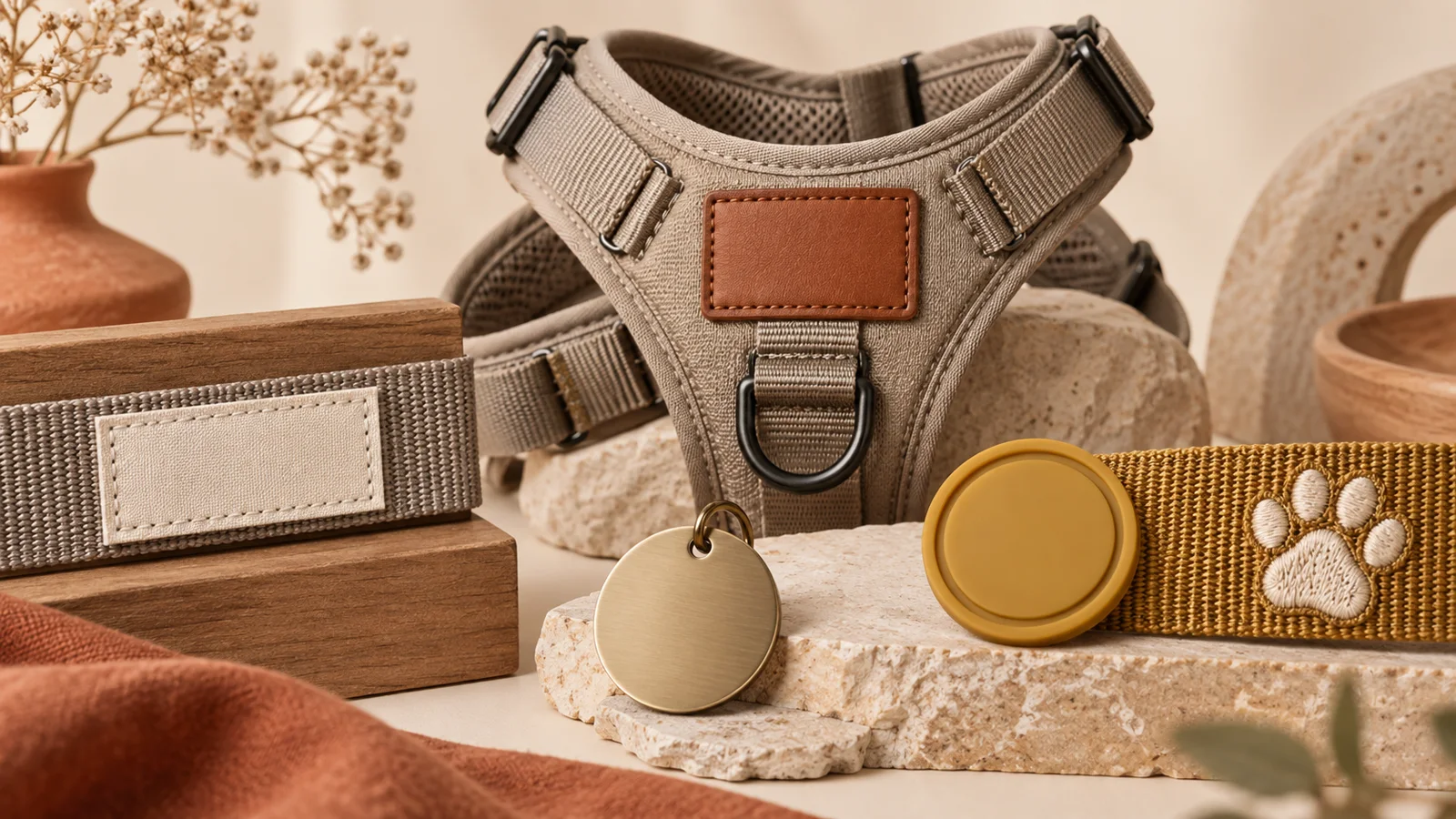
A coordinated range does not require one logo process on every item. A woven label may suit a harness, laser marking a steel bowl and embossing a silicone mat. Keep the identity consistent through artwork, scale, color direction and placement logic while allowing the construction to determine the method. Ask the quotation to list each method by SKU so tooling, setup charges and approval samples are visible.

A useful comparison
| Method | Typical substrate | Approval focus |
|---|---|---|
| Woven label | Webbing and textiles | Edge, stitch and legibility |
| Print or transfer | Fabric and webbing | Color, adhesion and wash |
| Embroidery | Textiles and padded panels | Digitizing, puckering and reverse-side comfort |
| Rubber patch | Sewn goods and molded details | Relief, edge and attachment |
| Emboss/deboss | Molded or patch parts | Depth, tooling and wear |
| Laser mark | Compatible metal | Contrast, finish and placement |
Sources and research context
Community excerpts are anecdotes. Manufacturer guidance applies to that manufacturer’s products. Shortlists are editorial comparisons without hands-on comparative testing or verified sales rankings.
- Google Search Central · Structured data guidelines
- European Chemicals Agency · REACH communication for substances in articles
TURN THE ANSWER INTO AN OEM BRIEF