THE QUICK ANSWER
Ask what the minimum is counted against before the budget is fixed: per style, per color, or per color and size together. Ask whether a per-color minimum applies to dyed or molded material or to finished units, and ask for any mold or tooling charge to be quoted separately per item. Our typical MOQ is 100-500 units, confirmed by product, color, size and customization. Send the assortment as a grid and ask for the quotation to come back on it.
A minimum is a number and a unit
A quotation can publish the number without the unit, and the unit is the part that decides your budget. Ask for both in one sentence: state the minimum order quantity, and state whether it is counted per style, per color, or per color and size together. Send that line before the budget is signed off, not after artwork, samples and a launch date are already committed. Our own published range is 100-500 units, typical, confirmed by product, color, size and customization. Read that as a range, not as an answer to your question, because it is a band and you asked about a unit. A good reply names the unit in the same sentence as the number. A deflection repeats the number, or gives a total for the whole order when you asked how the total is built. The unit belongs in the written quotation, against your specific brief.
Count the cells before you read any number
Four colors across three sizes is twelve cells, whatever the minimum turns out to be. That is arithmetic on your own assortment, not a term: which end you land on, and whether the minimum is counted per cell at all, is what the quotation has to tell you. Then run the second count. Twelve cells is twelve SKUs to list, photograph, barcode, receive and reorder. If the plan is one marketplace listing and two wholesale accounts, the number of cells your channel can absorb in a season may bind tighter than any minimum. Decide the cell count against the channel first. Then ask what each cell costs to open, cell by cell rather than as one total.
Walking: dyed material or finished units
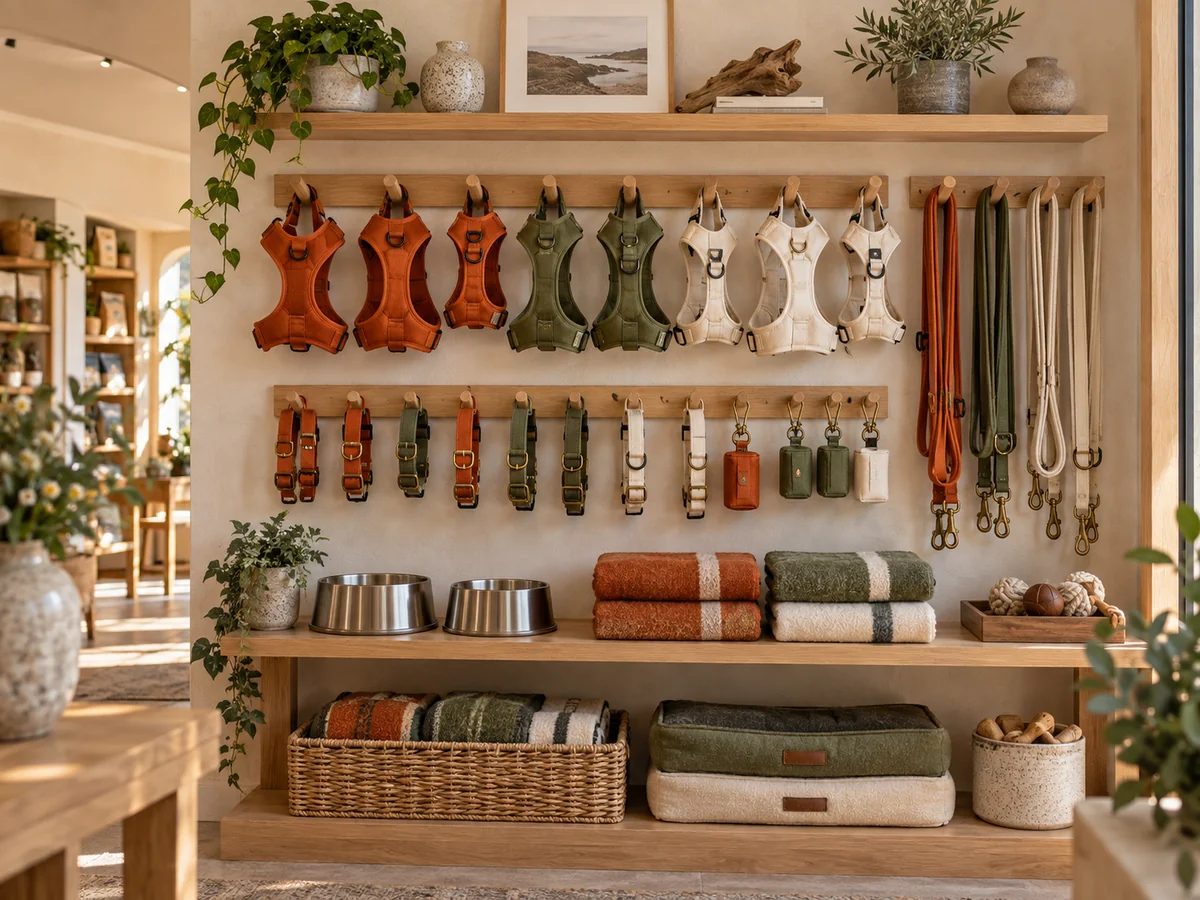
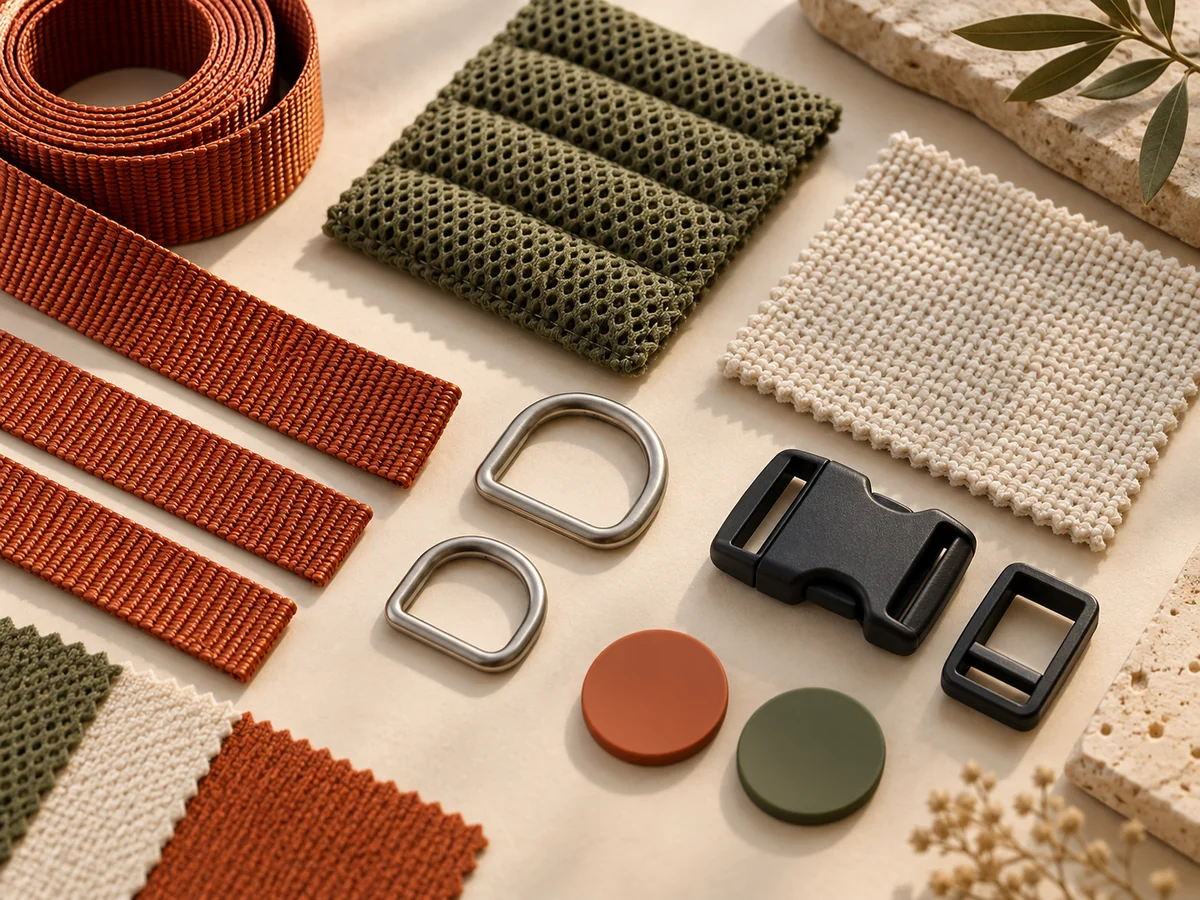
A minimum stated on webbing is a different constraint from a minimum stated on finished harnesses, and that distinction deserves its own line in the RFQ: if a minimum applies per color, does it apply to the dyed material or to the finished units? Ask it, and ask whether sizes that share one webbing width can draw on the same dyed material or cannot. Do not assume either way; the quotation answers it for your brief. Two more questions belong in the same paragraph. Ask whether the graded size run is cut in one lay or cut per size, and ask whether that answer changes the minimum or the price at all. Ask whether hardware finish carries a minimum of its own. Then agree explicitly whether the harness, leash and collar in a coordinated set are booked from one dye lot, a decision that is easier to make before the colors are approved than after.
Feeding: an existing tool or a new one
Which items run on an existing tool, and which need a new one? Put that question in writing, and ask for any mold or tooling charge to be quoted separately from unit price, item by item, so a charge that applies once sits on a different line from the price that applies to every unit. Do not assume one size equals one tool: ask whether a single tool carries more than one size, or more than one cavity. Our stainless bowl is a drawn shape with a rolled rim, specified by capacity, so ask whether each capacity needs tooling of its own. The elevated stand is specified by stand height per size, aperture diameter and footprint, in bamboo, MDF, powder-coated steel or moulded PP, so ask whether height and frame material count as one variable or two. For a molded part, ask whether a color change on the same tool carries a minimum, and whether base color and printed or etched artwork count separately.
Resting: fill weight and carton volume
Beds carry two cost drivers that minimums do not describe. Ask for fill weight and packed carton volume per size, stated in the quotation beside the unit price. Both sit on our own development sheet for the bolster bed, where fill weight and carton compression have to be confirmed for freight quoting. Volume matters because carriers may compare actual weight against dimensional weight and bill on the greater of the two. Start with the largest size when you check this, and ask for it priced delivered, not only ex-works. Ask as well whether the removable cover and the fill insert are counted as one variable or two, since the bed is specified as a zipped cover over a separate insert. A good answer gives a figure per size. A deflection gives one carton for the range, or defers volume to the forwarder after the order is placed.
The three lines to paste into the RFQ
Paste them rather than asking in a follow-up, because a follow-up arrives after the quotation has been built. One: state the minimum order quantity, and state whether it is counted per style, per color, or per color and size. Two: if a minimum applies per color, state whether it applies to the dyed or molded material or to the finished units. Three: state any mold or tooling charge separately from unit price, per item. Then attach the assortment as a table, sizes down and colors across, unit counts in the cells, optional cells marked optional, and ask for the quotation to come back on that same table. A good answer fills every cell and names the unit it counted against. A deflection returns one number with no unit, quietly fills the cells you left blank, or answers on its own format instead of yours.
When the grid is bigger than the channel
The question is not which variable to cut but which cut changes the total. Ask it plainly: if we drop this color, or run it in one size only, what changes in the minimum, and what changes in the unit price? Ask for both numbers, because a cut can move one and leave the other where it was, and only the supplier can tell you which. Ask as well what the unit price would be at the lowest quantity acceptable for your specification. Whatever comes back, the same price, a different one, or a reason it cannot be quoted, you can weigh it against the cost of carrying cells that do not sell. Our supplier checklist tells you to ask whether quantities apply per style, color or size. This article is what to do with the answer: the unit goes in the quotation, the variables in the specification, the agreed grid in the order.

A useful comparison
| Question to ask | Answers you may get | What it changes | Where it belongs |
|---|---|---|---|
| State the MOQ, and state whether it is counted per style, per color, or per color and size. | Per style; per color; per color and size; a total across the order | Four colors in three sizes is either one line or twelve cells | Written quotation |
| If a minimum applies per color, does it apply to the dyed or molded material or to the finished units? | Material; finished units; both, at different figures | Whether sizes sharing one material or one tool can draw on the same minimum | Written quotation |
| State any mold or tooling charge separately from unit price, per item. | A separate line per item; folded into unit price; not applicable to this item | Which part of the price you pay again on the reorder | Written quotation |
| Does a single tool carry more than one size, or more than one cavity? | One tool per size; one tool across several sizes; multi-cavity | Whether adding a size adds tooling, or does not | Specification, then the quotation |
| Are the cover and the fill insert counted as one variable or two? | One; two; fill fixed per size | How many cells a bed range actually has | Specification |
| State fill weight and packed carton volume per size. | Both per size; per style only; on request later | What the largest size costs delivered rather than ex-works | Specification, then the freight quote |
| Is the harness, leash and collar set booked from one dye lot? | One lot; separate lots; not controlled either way | What the set is checked against when it arrives | Order record |
| If we drop this color, or run it in one size, what changes in the minimum and in the unit price? | Both change; one changes; neither changes | Whether cutting the grid reduces the order or only the range | Revised quotation |
Explore private-label product options.
No-pull dog harness — materials, customization and sample checks Standard dog leash — materials, customization and sample checks Adjustable webbing collar — materials, customization and sample checksSources and research context
Sources reviewed 2026-09-14. Community excerpts are anecdotes. Manufacturer guidance applies to that manufacturer’s products. Shortlists are editorial comparisons without hands-on comparative testing or verified sales rankings.
How we research and writeTURN THE ANSWER INTO AN OEM BRIEF