THE QUICK ANSWER
Do not answer the magnet email with a metallurgy lesson, and do not concede the grade. A hand test is not what either of you agreed to measure the goods against. Send the specification your quotation fixes, then ask the factory for a dated written material statement covering the run that shipped against your order. Our own catalogue line — 304 stainless steel, silicone or rubber base ring — is a starting point. The grade for your order is confirmed in the written quotation.
When the magnet email arrives
A customer writes: my magnet sticks to this bowl, so it is not 304. Two questions are now open and they are different. Did the product change? Or was the listing copy always looser than the specification? The listing copy cannot answer either one, because the listing copy is the thing in question. So send less. Send the specification your quotation fixes — capacity, dimensions, how the base is attached — and say the alloy is being confirmed in writing with the factory. Do not restate the grade until you can show a document for the run they bought from. Then open a separate thread with the factory and ask for the record, not for reassurance. "Is it 304?" invites a yes. "Send the material statement covering the run shipped against purchase order 4417" produces a document, or produces the real answer.
Why a magnet is not the test
We do not settle a grade question with a magnet, and you should not have to either. A hand test is one person's observation of one unit in a kitchen. The quotation is what both sides agreed to measure the goods against, and the quotation names the grade. That is the document a dispute gets read against, so that is where the argument belongs. Now price the alternative. You accept the customer's result, correct the listing in public, and refund. The factory then sends a written material statement naming the alloy for that run. The correction is already published, and you have paid refunds before the record existed, on product whose grade you had not yet checked. Treat the magnet as the trigger to request the record. Answer the customer once the record is in front of you, not before.
A catalogue line is not your order record
Our development page for the stainless bowl states the material as 304 stainless steel with a silicone or rubber base ring. The same block carries a limit line: steel grade and food-contact records are confirmed in the quotation. Both sentences are ours and they belong together. A catalogue line tells you what a product is built from so you can start a specification. It does not name your run, and it is not evidence in a customer dispute. The order record is the other document, and we publish no inventory of what it holds: beyond our MOQ range, sample timing and shipping, what your order covers is confirmed in the written quotation. So ask before you approve, and have the answers written in — which approved sample your run is measured against, and what you are told if the steel supplier changes. Quantity works the same way: our published MOQ is typically 100 to 500 units depending on the product and the customization, while the number that binds your order is the one in the quotation.
Name the gauge, not just the grade
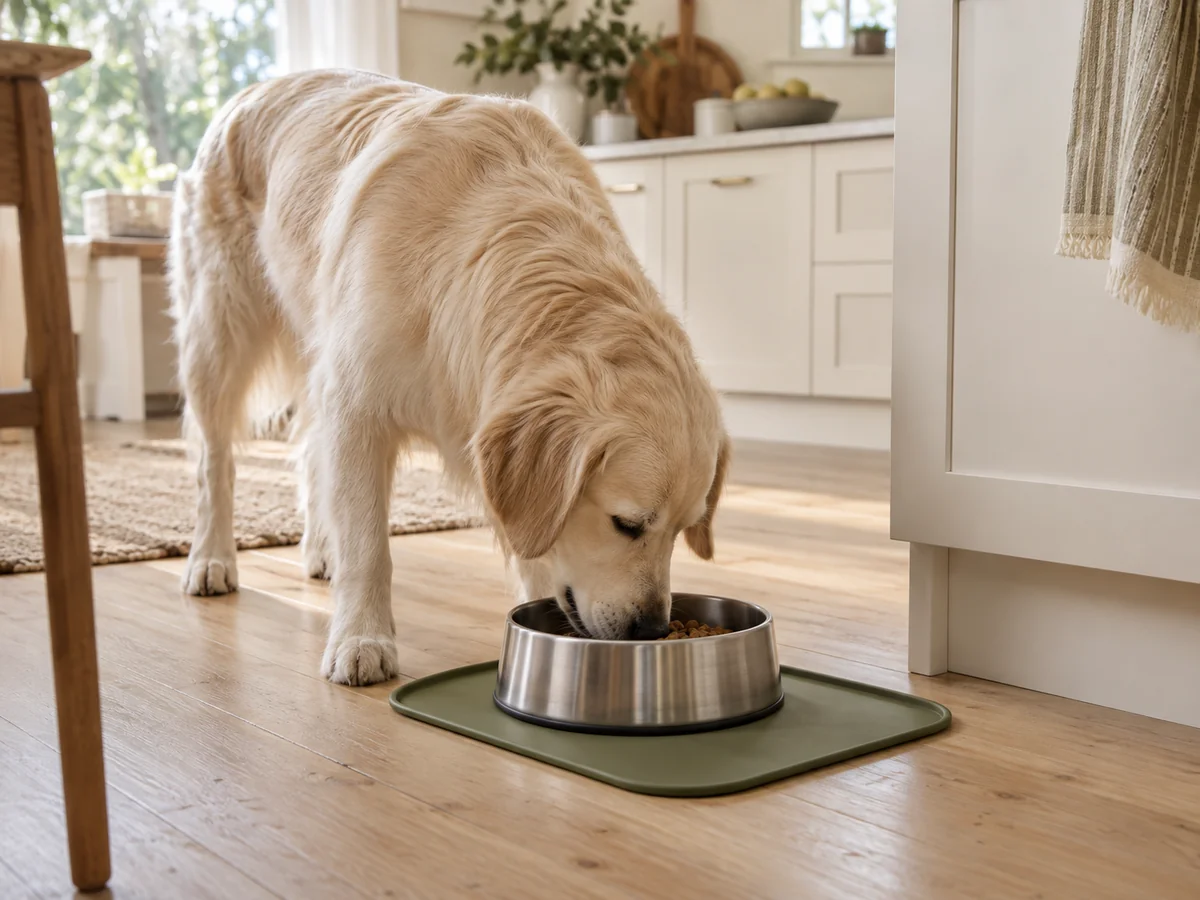
"304" fills one line of a specification. The development record for this bowl lists six items to fill in: capacity, top diameter, height, steel gauge, finished weight and packed carton volume. Gauge is a separate line and it is easy to skip, because the grade feels like the whole material question. Two factories quoting a bowl with no gauge stated are not quoting the same product, and the cheaper quotation is not evidence of a cheaper trick. Ask for a figure in millimeters, written into the quotation. Do the same for the non-slip base: name how it is attached, and name the dishwasher cycle count the sample was checked against, because our own check line for this bowl is rim burr, base adhesion after dishwasher cycles and weight tolerance. If a field is blank in the quotation, it is not part of what you approved.
Ask before the sample clock starts
Confirmation is when the grade becomes yours, and it is also when the clock starts. Our published terms: a custom sample on a stock item within 7 days once artwork and details are confirmed, and a fully custom sample within 15 days once the specification is confirmed. Anything you want the record to cover belongs inside that specification, not bolted on afterwards. So ask the document questions before confirmation. What written material statement will accompany production? What does it name, and what is it tied to — your approved sample, your purchase order, or neither? Which food-contact records are being quoted for this item, and what scope do they cover: the steel, the base ring, the etched or printed mark? Put the answers in the quotation. An evidence requirement added after approval changes what the factory agreed to make.
Who arranges the testing
Be exact about roles, because this is where sourcing advice goes vague. We coordinate documentation and third-party testing. We do not perform independent laboratory work, and nothing on this site reports comparative testing of our own. Final compliance responsibility and evidence scope sit in the order record. So if your market or your customer wants more than a supplier statement, settle the mechanics while nobody is arguing. Name who arranges the laboratory work and who holds that account. Name which unit is analyzed and who pulls it. Name who pays. Name what happens to the shipment if a result disagrees with the supplier statement. Write those four answers into the quotation. Arranged after a complaint, the same work produces a result that arrives after the listing is live and after the customer has already been answered.
What the listing page may say
The page may state the specification the quotation fixes and the record supports: the named grade, the gauge figure, the capacity, how the base is attached. It may not state a conclusion nobody documented for this exact item. Not a grade you inferred because the sample felt heavy. Not a food-safety conclusion. Not a durability result nobody tested. When a line is loose, rewrite it rather than defend it: "premium stainless" becomes the fields you actually agreed. Care wording follows the same rule. Our record for this bowl reads dishwasher safe, confirm the base survives the stated cycle count — so the page can state the cycle count you confirmed, and nothing past it. Then apply one test to every sentence on that page. If a customer asks how you know, can you send the document the same day?
A useful comparison
| What you ask for | An answer that settles nothing | An answer you can use | Where it is fixed |
|---|---|---|---|
| Steel grade | "It's stainless" | The grade named in writing against your order | Written quotation |
| Steel gauge | "Standard thickness" | A figure in millimeters | Written quotation |
| Material statement | "Yes, it's 304", in an email | Dated, names the alloy, tied to your run | Order record |
| Food-contact records | "It's food safe" | Named scope: item, components, who arranges | Written quotation |
| Base attachment | "Non-slip base" | Method named, plus the cycle count checked | Sample review and quotation |
| Laboratory analysis | "We can test" | Who arranges, who pays, what happens if results disagree | Order record |
| Sample timing | "Soon" | Within 7 days, stock item, after artwork and details; within 15 days, fully custom, after specification | Published terms |
| A change of steel supplier | "We'd tell you" | Ask before approval: what you are told, and when | Written quotation |
Explore private-label product options.
Stainless steel pet bowl — materials, customization and sample checks Silicone feeding mat — materials, customization and sample checks Collapsible travel bowl — materials, customization and sample checksSources and research context
This guide sets out our own product development practice rather than external research. It makes no market, clinical or comparative-performance claim, and every figure named here is confirmed per order in the written quotation and specification.
How we research and writeTURN THE ANSWER INTO AN OEM BRIEF