THE QUICK ANSWER
Disposable pads are a repeat consumable sold on absorbency and shipped by volume; washable pads are a sewn textile sold on how many washes they survive. Start with disposable pads in two or three sizes if your customers need frequent replacement, and add a washable pad when they ask for reuse and you can back a wash-cycle claim. Either way, state the test volume and method behind any absorbency figure, and do not call either product “eco-friendly” without evidence.
Who uses pads
The American Kennel Club describes puppy pads as tricky in house training but useful for owners who cannot get home often during the day and for very small dogs where winters are severe. That is the buyer both formats serve; the difference is what the customer replaces, and how often.
Disposable pads: a converting line
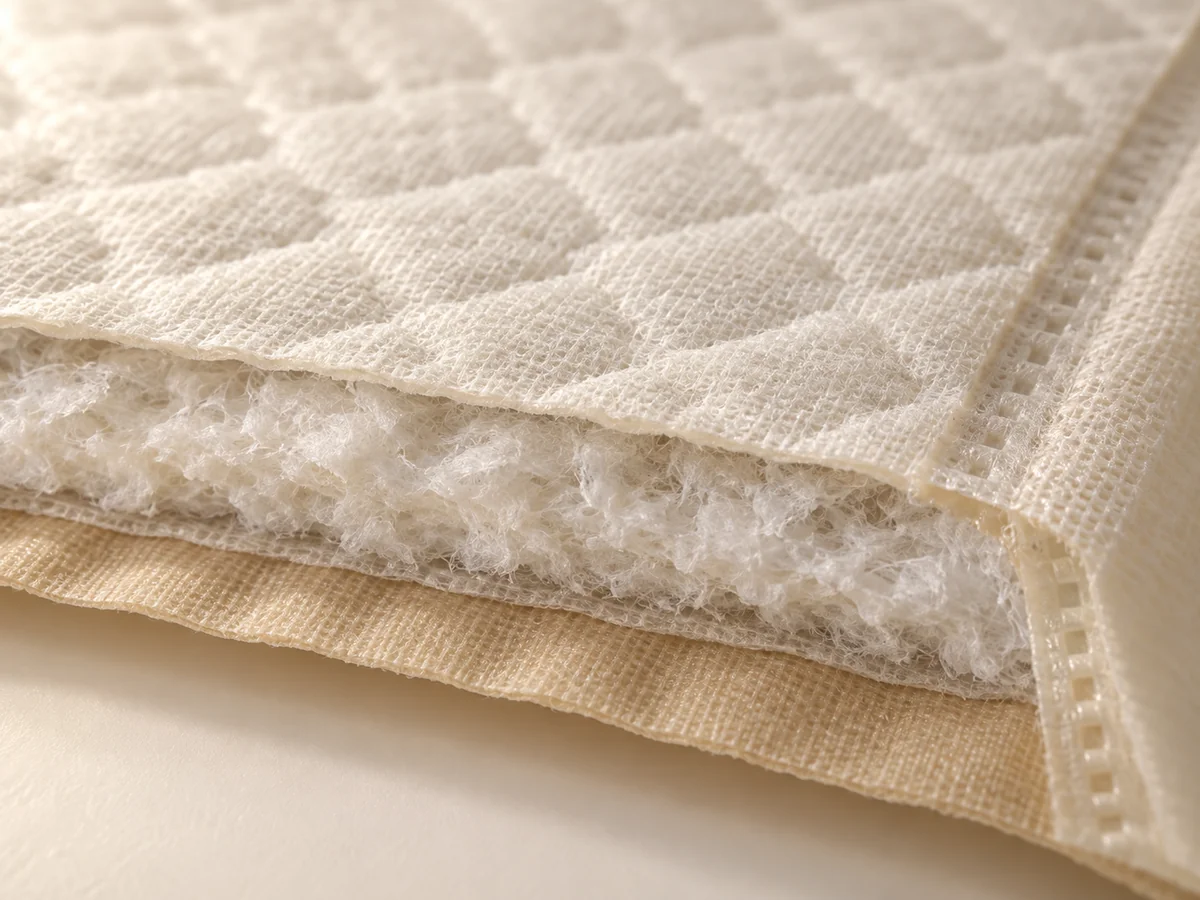
A disposable pad is a fluff pulp and superabsorbent polymer core under a non-woven top sheet, sealed to a liquid-barrier backing, sometimes with an activated-carbon layer. It is sold by size and absorbency and reordered often, so it anchors repeat orders. The claim to control is absorbency: state the test volume and method for each size. The cost to control is freight, because a pad ships as air unless the carton is compressed. A disposable diaper uses the same core in a shaped format.
Washable pads: a sewn textile
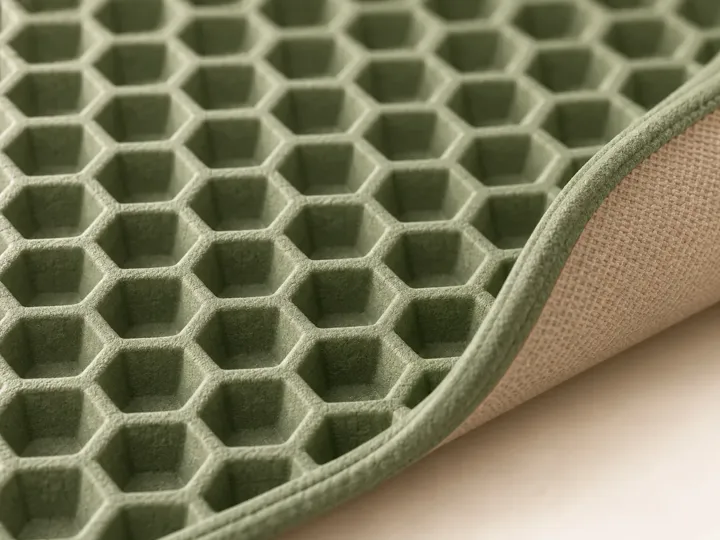
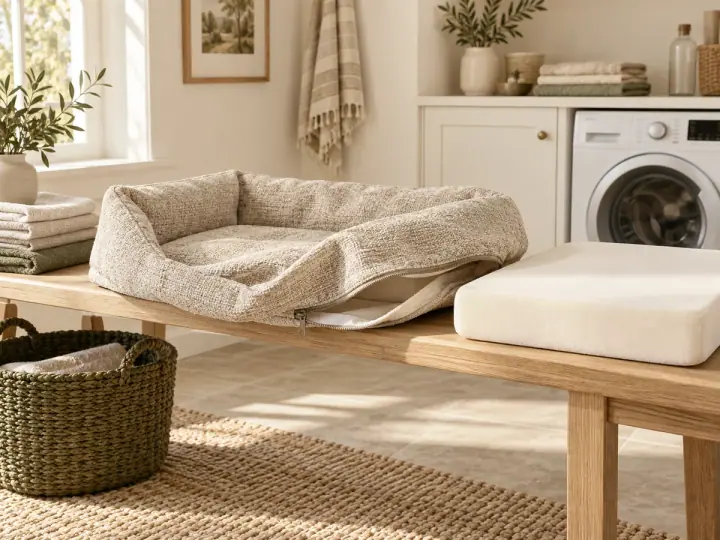
A washable pad is layered: a soft top fabric, an absorbent middle layer and a waterproof backing, usually bound at the edges and sometimes given an anti-slip underside. It is cut and sewn, and its value rests on the number of washes it survives. State the wash temperature, drying method and anything to avoid, and test absorbency and leakage again after the agreed number of wash cycles, not only on the new sample.
Cost per use is a calculation, not a claim
A washable pad costs more per unit and less per use only if it survives enough washes. Work out the cost per use from the unit price, the tested number of washes and a realistic laundry cost, and compare it with the price per disposable pad. Do not print a saving that the wash test does not support.
Green claims need evidence
In the US, the Federal Trade Commission’s Green Guides warn against unqualified general environmental claims. In the EU, Directive (EU) 2024/825 prohibits generic environmental claims such as “eco-friendly”, “green” or “biodegradable” without recognised excellent environmental performance, from 27 September 2026. Describe a specific, documented attribute instead, such as a stated recycled content or a tested number of reuses.
Which to develop first
For most private-label ranges the disposable pad comes first: it is a consumable, it sells in sizes, and it pairs with diapers. A washable pad is worth adding when your customers ask for reuse and you have a wash-cycle result to stand on. Catidog quotes disposable pads in common formats of 45 × 60, 60 × 60 and 60 × 90 cm, with or without an activated-carbon layer, at a typical 100–500 units per product.

Disposable and washable pee pads compared
| Disposable pads | Washable pads | |
|---|---|---|
| Construction | Fluff pulp and SAP core, non-woven top, PE backing | Textile top, absorbent middle layer, waterproof backing |
| How it is made | Converting line | Cut and sewn |
| Sold on | Absorbency per size | Washes survived |
| Claim to substantiate | Absorbency: test volume and method | Absorbency and leakage after stated wash cycles |
| Care | Single use | Stated wash temperature and drying method |
| Freight | Bulky unless compressed | Folds flat |
| Repeat orders | Frequent | Occasional |
| Claim to avoid | Unqualified “eco-friendly” or “biodegradable” | Unqualified “eco-friendly” or cost-saving claims |
Hygiene products in our catalogue.
Training pads — materials, customization and sample checks Disposable dog diapers — materials, customization and sample checksSources and research context
This comparison sets out construction and specification choices from our own development practice, with the external guidance cited below. It is not a laboratory performance test of finished products.
- American Kennel Club · How to potty train your puppy and prevent accidents indoors (updated July 2026)
- U.S. Federal Trade Commission · Environmental Claims: Green Guides
- Directive (EU) 2024/825 · Empowering consumers for the green transition (applies from 27 September 2026)
TURN THE ANSWER INTO AN OEM BRIEF