THE QUICK ANSWER
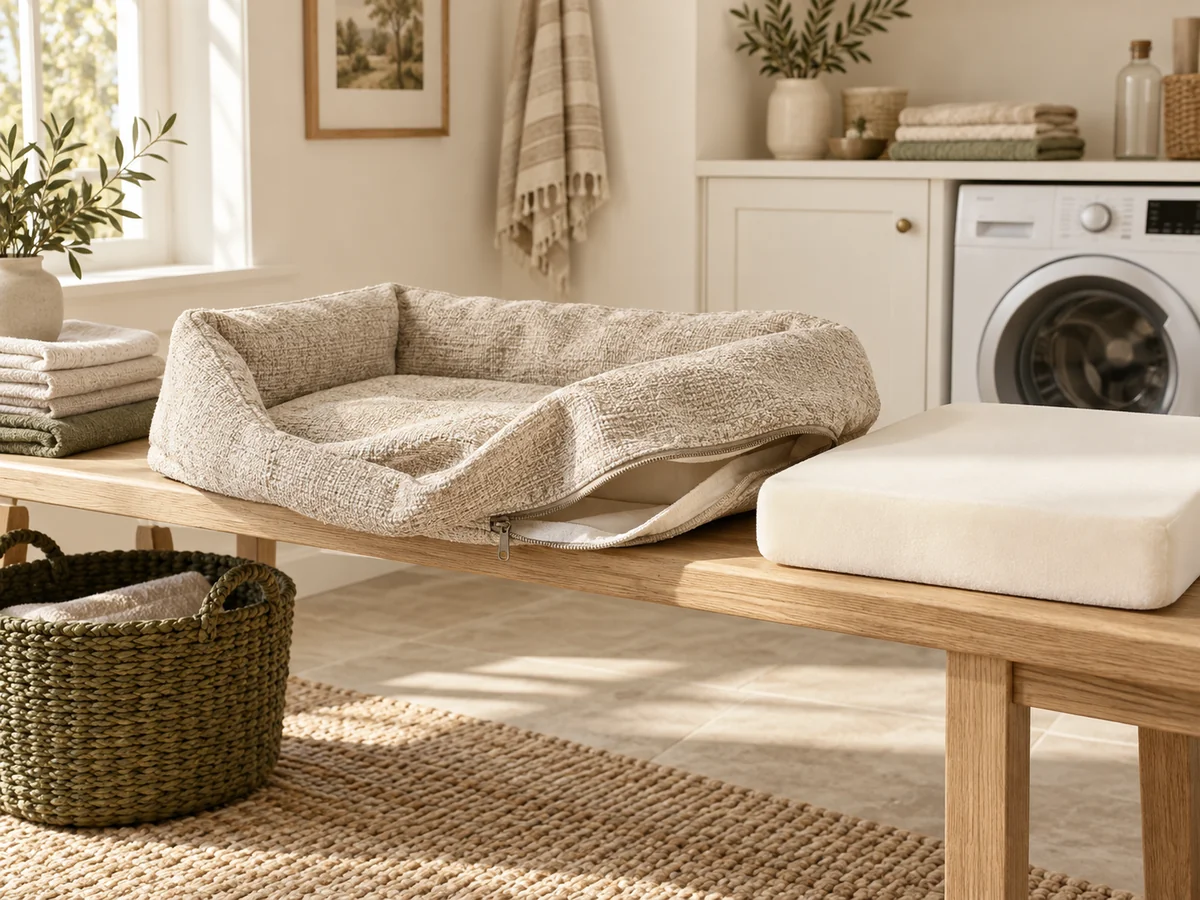
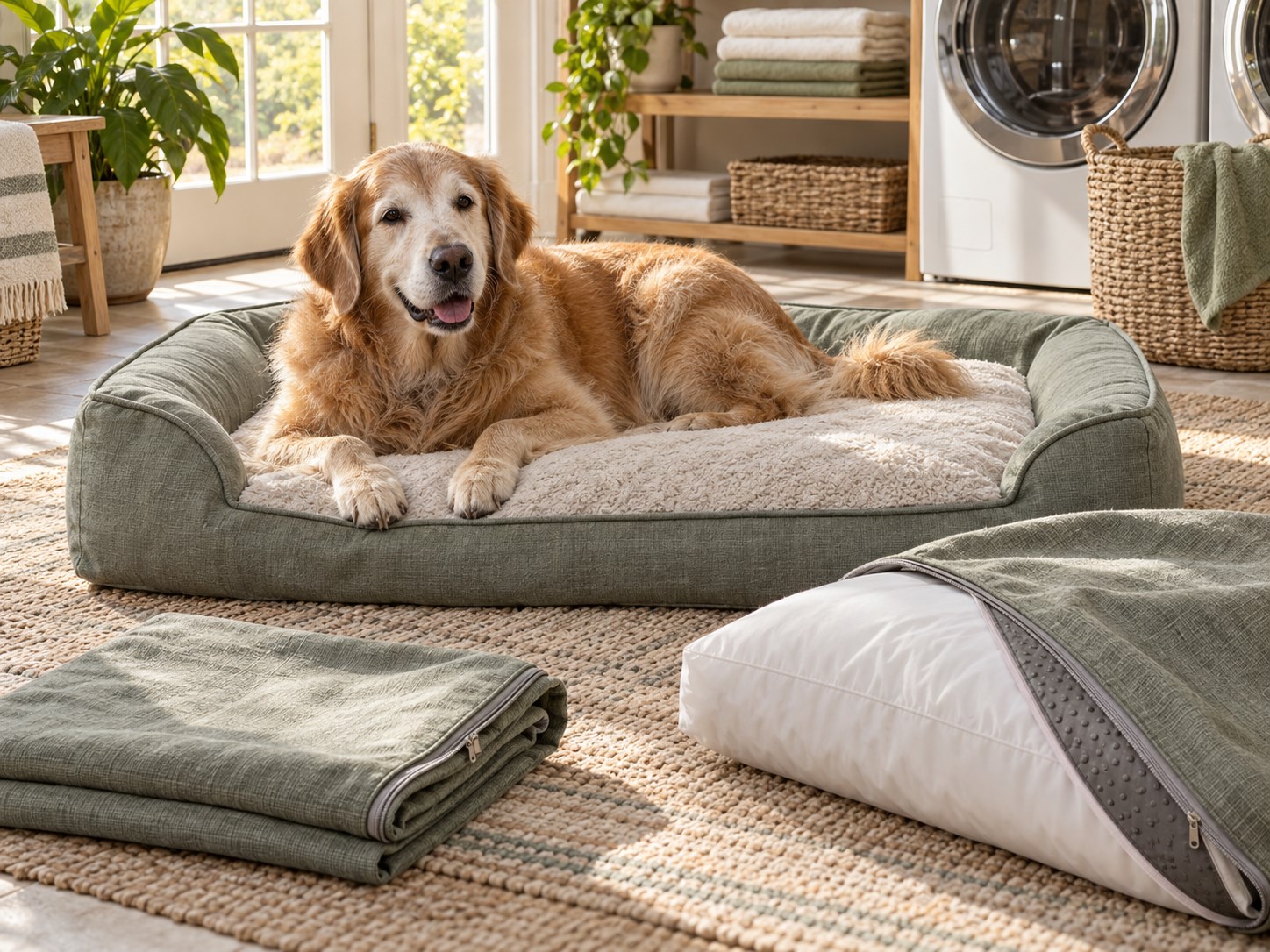
Put fill weight in grams, per size, on the purchase order beside the shell fabric and the finished dimensions. Without a stated weight there is no figure to compare an incoming unit against, so a flatter reorder stays a matter of opinion. At approval, record fill weight per size, fill type and construction, the base and rim weights separately, the loft method you will repeat on arrival, and which unit you kept as the reference.
Fill weight is the line a bed specification often leaves out when it reaches us
In the specifications we are asked to quote from, a dog bed is usually fixed in everything you can see. The shell fabric has a weight. The finished dimensions are given to the centimeter. The zipper has a size and a color reference. The fill is often one word: polyester. Our own development record for a washable dog bed carries six items: external size, internal sleeping area, bolster height, fill weight, packed carton volume and finished weight. Fill weight sits on that list for the same reason external size does. It is a number, it varies, and it changes the product. A specification that names the fabric but not the fill weight has no figure to compare an incoming unit against. That is the whole of the problem. It is not that anyone did anything wrong. It is that one input was never written down, and an input that was never written down cannot be checked.
Why a flatter reorder is hard to raise
Fill leaves no trace on the parts you inspect. The shell measures the same. The zipper is the same zipper. Loft is the symptom visible without opening an insert, and loft is only comparable when the method behind it was fixed in advance, which is why the method belongs in the specification rather than in the hands of whoever opens the carton. Do the comparison on your own records, not on a published benchmark. Take X, the fill weight in grams recorded at approval for a given size. Take Y, the weight of fill in an incoming unit of the same size. X minus Y is the difference in grams between the approved unit and the incoming one. If you want that difference in money, ask for the fill to be broken out in the written quotation. This article cannot tell you what a kilogram of fibre costs.
Five lines to write into the specification at approval
One: fill weight in grams, stated per size, with the tolerance you will accept written beside it. Two: fill type and construction, meaning virgin or recycled polyester fiber, staple or ball fiber, and whether the insert is loose fill or a sewn pad. Three: distribution, with the base and the bolster or rim given as separate weights. Total fill weight does not tell you how the fill is divided between the two, and a bed can meet its total figure and still be thin in the sleeping area. Four: the loft height recorded at approval, with the measuring method and the recovery period written out in full. Five: the reference unit you kept from the approved run, identified by size, date, purchase order number and holder. Line three adds work at approval, because someone weighs two sections instead of one bed. It is also the only one of the five that tells you where a reduction was taken.
Fix the loft method before you need it
Two loft figures are comparable only when they were produced the same way, so state the method in the specification. Unpack the bed and let it recover uncompressed for a stated period before measuring. The length of the period matters less than using the same one every time. Pick one, write it into the specification, and apply it to the reference unit as well. Lay a rigid straightedge across the bed and measure to the surface below at named points: the center of the sleeping area, then the top of the rim at four positions around it. Record the center figure and the average of the four rim figures separately. Measure the reference unit on the same day, in the same room, by the same method. Without equal recovery time and an identical method the two numbers are not a comparison, and a difference between them tells you nothing about fill weight.
Keep a reference unit you can weigh
Pull one unit per size out of the approved run and keep it as your own reference. Store it flat, uncompressed, out of sunlight and bagged, with a tag carrying the SKU, the size, the purchase order number, the approval date and the recorded fill weight. Then weigh it and write the figure down together with the scale you used. Total unit weight includes shell, zipper and label, so it is a blunt figure and it moves for reasons other than fill. It is still a figure, and it is available on the day a container opens, before the goods move on. Set the action threshold from that record rather than from a number in an article. Decide in advance how far an incoming unit may sit from the reference before you hold the pallets and open an insert. Whether a supplier also retains a matching unit, and for how long, is a question for the written quotation. Do not assume it.
Treat a fill change as a change to the quotation
Fill weight and packed carton volume travel together. Our own development note for a washable dog bed states it plainly: fill weight and carton compression must be confirmed for freight quoting. So handle fill as a commercial term rather than a production detail. Ask for the packed carton dimensions and the units per carton in the same quotation as the unit price, so that a change to either is visible as a change to the quotation. Then write the procedure into the purchase order: any change to fill weight, fill type or pack compression is quoted in writing, with the new figure and the new unit price, before production starts. That term needs no benchmark to work. It needs one number both sides agreed to first.
If you are already two runs in
You cannot specify backwards, but you can build the baseline today out of stock you already own. Pull one unit per size from the earliest run still in your warehouse and one from the current run. Let both recover for the same period. Measure loft at the same points with the same straightedge. Weigh both whole, on the same scale. Then open one of each. Cut the insert seam, take the fill out, and weigh it dry, base and rim separately where the construction allows. You now have two fill weights in grams, per size, taken from your own goods rather than from a published figure. If the earlier figure belongs to the run you want back, that is your specified weight going forward. Put it on the next purchase order with a tolerance, the loft method and the recovery period attached. The cost of the check is two beds and an afternoon.
A useful comparison
| What to record | Where it belongs | How a later run is checked against it |
|---|---|---|
| Fill weight in grams, per size | Purchase order and specification | Empty one insert and weigh the fill dry |
| Accepted tolerance | Purchase order | Gives the comparison a pass/fail line you set in advance |
| Fill type and construction | Specification | Compare against the reference unit and the written description |
| Base weight and rim weight, stated separately | Specification | Weigh each section, not only the finished bed |
| Loft height plus the method and the recovery period | Specification | Repeat the same method after the same recovery period |
| Reference unit kept from the approved run: size, date, holder | Approval record | Measure and weigh the incoming unit beside it, same day |
| Total unit weight on a named scale | Approval record | Re-weigh on arrival, before the goods move on |
| Packed carton dimensions and units per carton | Quotation | Re-measure a sealed carton from the new run |
| Change procedure for fill and pack | Purchase order terms | Quoted in writing, with the new figure, before production |
Explore private-label product options.
Bolster dog bed — materials, customization and sample checks Crate mat — materials, customization and sample checks Pet blanket — materials, customization and sample checksSources and research context
This guide sets out our own product development practice rather than external research. It makes no market, clinical or comparative-performance claim, and every figure named here is confirmed per order in the written quotation and specification.
How we research and writeTURN THE ANSWER INTO AN OEM BRIEF