THE QUICK ANSWER
Write the exit criterion before the sample is cut: one sentence per round, naming what that round settles and what evidence closes it. Settle construction and dimensions first, fill weight and loft second, branding and pack-out last, so a later round cannot quietly reopen an earlier measurement. Ask the quotation for included revision scope, fees and turnaround. We publish no round count, because revision scope is product-specific. A round with no written criterion cannot pass.
Write one sentence per round, before the first sample is cut
A sample reviewed as an object collects every open opinion in the project. One reviewer comments on fabric hand, another on bolster height, a third asks where the label sits, and the factory answers all of it in one revision. Four things changed at once, so no result can be attributed to a change. The next sample then exists to remove that ambiguity rather than to prove anything new. The fix is written before the first sample is authorized. For each round, write one sentence naming what that round settles and what evidence closes it. Comments falling outside that sentence are logged against a later round instead of being actioned now. Map the rounds onto the sample labels already in use here — material swatch, fit sample, logo sample, pre-production sample — so both sides call the same item the same thing.
The first round settles construction and dimensions, and nothing else
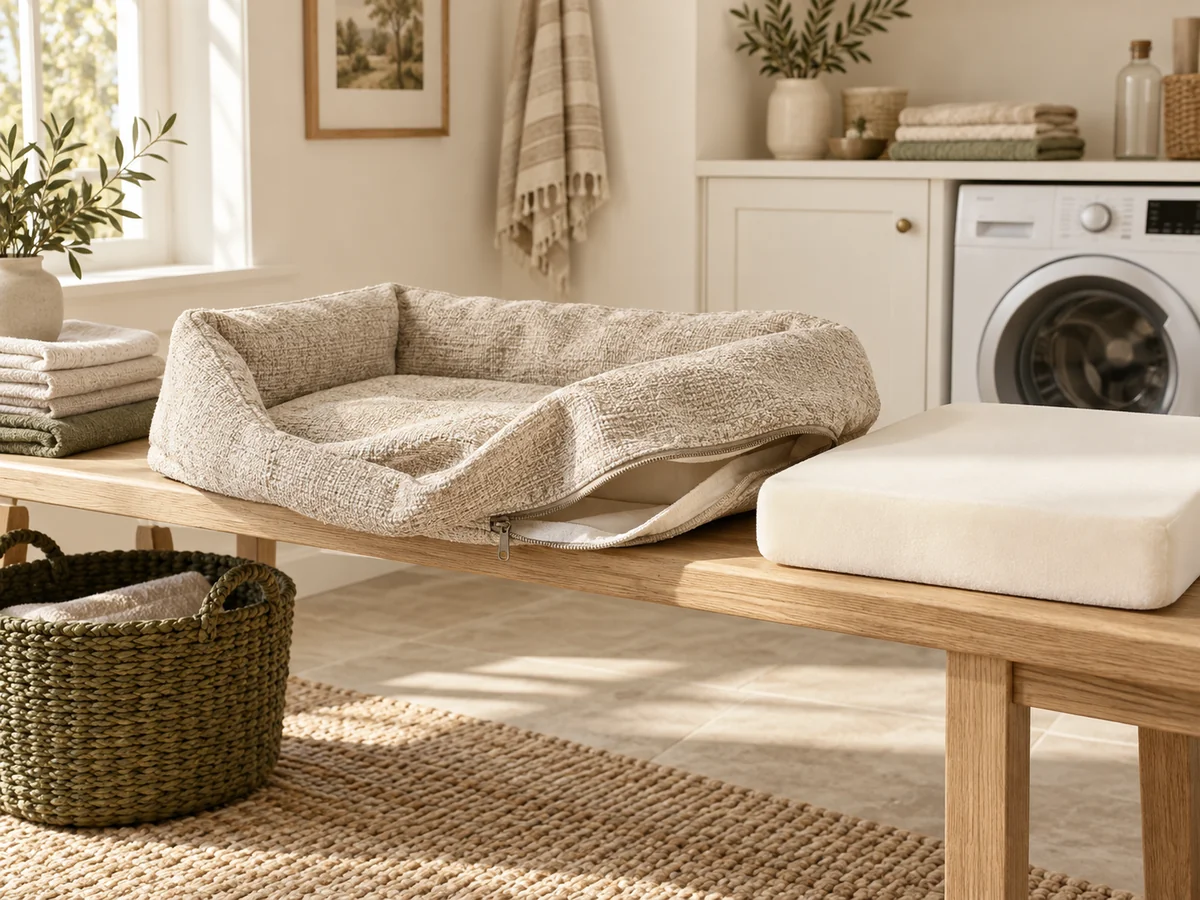
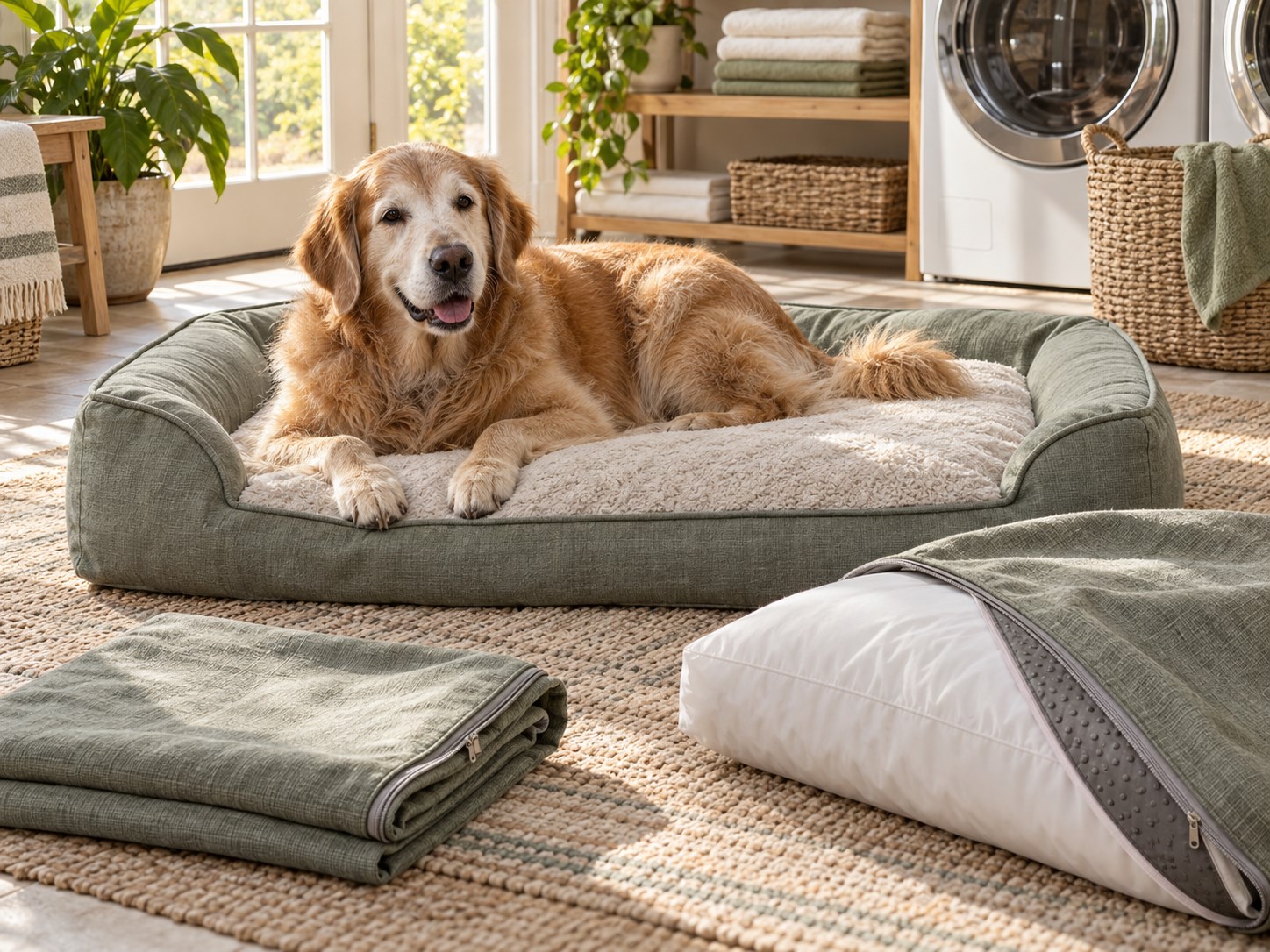
For a removable-cover bed, the first round proves the pattern, not the product. Write the exit criterion as a measurable sentence: external size, internal sleeping area and bolster height per size, each to a stated tolerance, measured flat and unloaded, with the measuring method and the settling period named in the same sentence. Soft goods measure differently depending on how the item is laid out and who is pulling, so the method carries as much weight as the figure. Our bed development sheet already names those fields, so ask for values and tolerances against them rather than inventing a form. State in the same sentence what this round is not deciding: fill weight is indicative, the shell fabric may be a substitute, label artwork is not reviewed. One community thread we cite shows owners treating a removable cover and a washable bed as different things, so check cover removal and refit here rather than at the end.
The fill round is settled in grams and millimetres, or not at all
Firmer is not a specification. Put the criterion in units. Fill weight per size in grams, weighed as the bare insert, to a tolerance both sides write down, on a scale either side can repeat. Loft measured at a fixed set of named points on the bolster, each point recorded rather than the best one, after a settling period stated in the criterion. The failure that reopens the first round works like this. The buyer asks for firmer, the factory adds fill, the bolster grows, and the cover that fitted before now strains at the corners. Two things changed and one was requested. So this round's criterion has to state whether the cover pattern is allowed to move with the fill. If it is, the earlier measurements are open again and should be rechecked before the next sample is cut.
The branding round is also the pack-out round
By this round the bed is dimensionally frozen, so it covers what prints and what ships. Check the woven label position in the seam, the printed care label content by component, and artwork placement against the approved file. Then measure the pack: unit pack size, master carton quantity, carton dimensions and gross weight. FedEx explains that dimensional weight accounts for package volume, and carriers may compare actual weight with dimensional weight, so a bed quoted from an unpacked sample can be quoted wrong. Compression belongs here because it can undo the fill round. Our packaging guide sets the method: record the compression method, the packed duration used for evaluation, and the recovery checks after unpacking. Agree the acceptance criteria for that check before approval. Whether recovered loft is acceptable is a product decision made in advance, not a verdict improvised on the sample.
Ask for revision scope, fees and turnaround before authorizing anything
Four things belong in the quotation before any sample is authorized: how many revision rounds are included, the charge for an additional round, what counts as a revision rather than a correction, and whether any sample fee is credited to a bulk order. Assume no refund or credit policy; ask for it in writing. We publish no round count, because revision rounds and approval criteria stay product-specific. Then budget the calendar. Our published planning range is a stock-item custom sample within 7 days and a fully custom sample within 15 days, after the required details are confirmed. Those days cover preparing the sample. They do not include courier transit, customs clearance or your own review days, and the review days are the ones nobody schedules. Count backwards from the launch date and check whether the plan survives the number of rounds you have written down.
What a failed round is allowed to change
A failed round repeats the failed criterion. It does not reopen the rest of the bed. Write the carry-forward rule into the specification: every measurement approved in an earlier round stands unless a change is listed in writing with a reason and a named owner. Without that rule each round renegotiates the one before it, and no fixed reference is left to measure against. Name one approver per round. When release is collective, no individual has to state that the criterion was met. Separate two verdicts as well. If the sample meets the written criterion and you still do not want the bed, the brief was wrong, not the sample. Reopen the brief, change the criterion, and authorize the next sample knowing that is what you are paying for. Cutting another sample against the same criterion returns the same bed.
The record that closes the question
Keep one row per round rather than one email thread. Record the round number, the specification revision it was cut against, the dates it was cut and received, the exit criterion in full, the measured result, pass or fail, the changes authorized for the next round, and the named approver. Our sample guidance already asks for version numbers on both the specification and the sample comments, and this row is where those numbers live. Photograph the sample that passes and tie the photograph to that specification revision. The row answers the question that reopens a closed project, which is what the last round was supposed to prove. At handover it becomes the production reference, so the approved bed is defined by measurements and a version number rather than by a sample on a desk.
A useful comparison
| Round | What it settles | Exit criterion to write down | What it is not deciding |
|---|---|---|---|
| Before the first sample | Commercial scope | Included revision rounds, charge per additional round, definition of a revision, whether any sample fee is credited to a bulk order | Any product detail |
| Construction round | Pattern and dimensions | External size, internal sleeping area and bolster height per size, each to a stated tolerance, measured flat and unloaded, method and settling period named; cover removes and refits without forcing the zipper | Fill weight, final shell fabric, label artwork |
| Fill round | Fill weight and loft | Grams per size with a tolerance, weighed as the bare insert; loft at a fixed set of named points, every point recorded; whether the cover pattern may move with the fill | Label placement, carton, retail pack |
| Branding and pack-out round | Print and ship | Label position and care content by component; carton dimensions and gross weight; compression method, packed duration and recovery checks, with acceptance criteria agreed before approval | Anything already approved earlier |
| Every round | The record | Round number, specification revision, dates cut and received, measured result, pass or fail, changes authorized, named approver | Nothing — this row is never skipped |
Explore private-label product options.
Bolster dog bed — materials, customization and sample checks Crate mat — materials, customization and sample checks Pet blanket — materials, customization and sample checksSources and research context
Sources reviewed 2026-09-14. Community excerpts are anecdotes. Manufacturer guidance applies to that manufacturer’s products. Shortlists are editorial comparisons without hands-on comparative testing or verified sales rankings.
- Reddit · r/dogs · Washable and removable-cover crate beds (August 2026)
- FedEx · What is dimensional weight?
TURN THE ANSWER INTO AN OEM BRIEF