THE QUICK ANSWER
Choose a brush for coat length, density and purpose; choose clippers or a grinder according to the dog’s tolerance and the handler’s skill; and buy a paw-cleaner cup only when it improves on rinsing or wiping for the dirt you actually encounter. Introduce every tool gradually and stop before discomfort becomes a restraint problem.
Choose the brush by coat and purpose
A rubber mitt or short-bristle brush can lift loose hair from many short coats. Pin brushes, slickers and metal combs can support longer or denser coats when used gently and in the right sequence. A de-shedding tool removes undercoat rather than replacing ordinary brushing. Ask a groomer which layers the tool should reach; do not pull tight mats close to skin or cut them blindly.
Check the brush on a small area
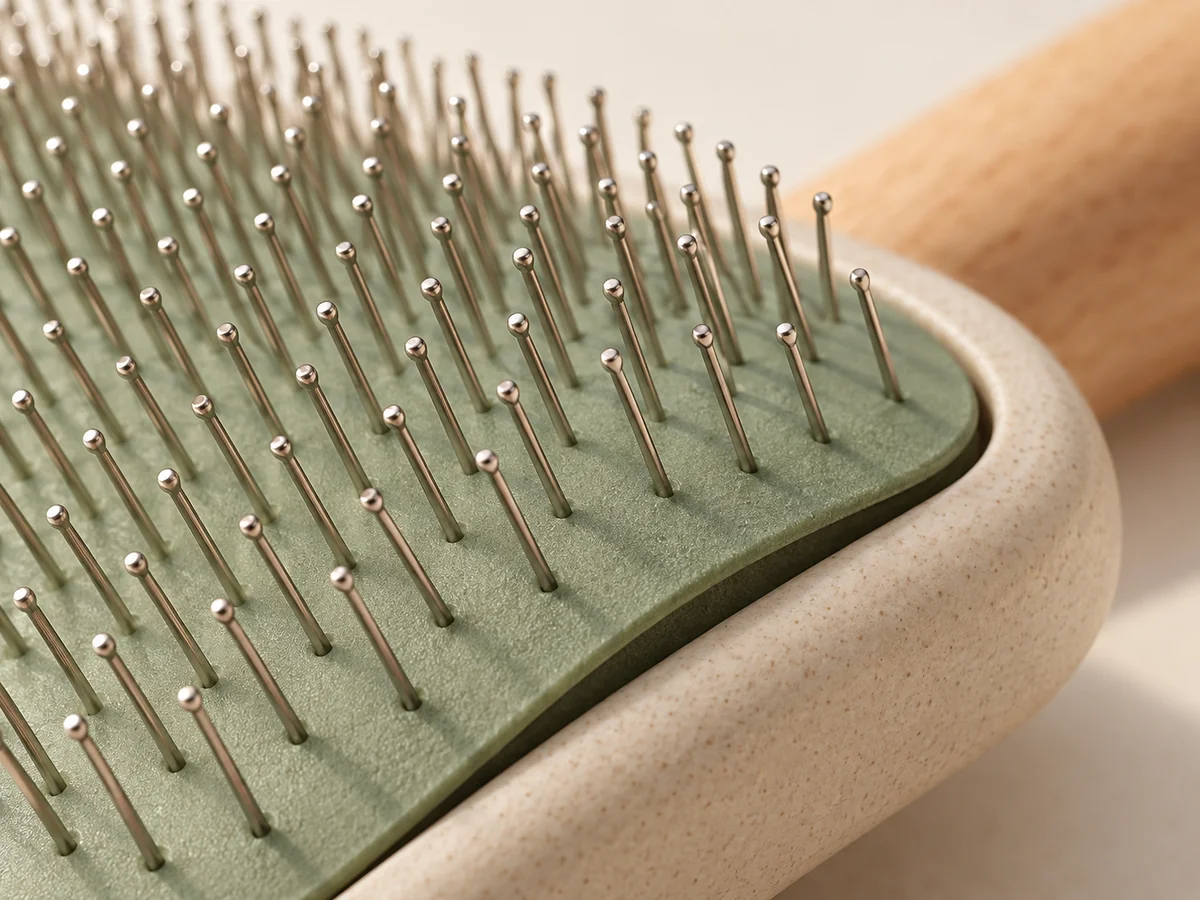
Part the coat so you can see the skin, use light pressure and inspect the pin tips and pad before use. The correct tool should move through the intended coat layer without scratching, repeated snagging or forcing the dog to remain still. Tool labels such as gentle or professional do not replace tip finish, pin geometry and a supervised trial.
Clippers or a grinder?
Clippers are quiet and quick but make one decisive cut; a grinder removes material gradually but adds noise, vibration, heat and the risk of catching coat. Some dogs prefer the pressure of clippers and others the slower grinder. Keep hair clear, work in short sessions and learn where the quick is before either method. A professional demonstration is a sensible first step.
When a paw-cleaner cup helps
A cup with flexible internal fingers may loosen mud around pads when a dog accepts placing and moving the paw inside. It adds water, handling and another item to disassemble and clean. For light dirt, a damp towel or shallow rinse may be faster and easier to inspect. Never twist the limb to fit the tool or continue when the dog shows pain.
Clean and store the tools
Remove hair and residue after use, follow material-specific washing instructions and dry parts completely. Do not share contaminated tools between animals without appropriate cleaning. Replace cracked cups, bent or sharp brush pins, dull clipper blades and grinder parts that no longer operate as the manufacturer describes.
A useful comparison
| Task | Useful starting tool | Stop and reassess when |
|---|---|---|
| Short-coat loose hair | Rubber mitt or short bristle brush | Skin reddens or the tool drags |
| Long or dense coat | Appropriate pin or slicker brush plus comb | A mat is tight to skin |
| Nail shortening | Clippers, grinder or file after introduction | The dog struggles, the tool heats or the quick is uncertain |
| Mud between pads | Towel, rinse or correctly sized cup | The limb must be twisted or the skin is sore |
Explore private-label product options.
Slicker brush — materials, customization and sample checks Nail clipper — materials, customization and sample checks Drying towel — materials, customization and sample checksSources and research context
Community excerpts are anecdotes. Manufacturer guidance applies to that manufacturer’s products. Shortlists are editorial comparisons without hands-on comparative testing or verified sales rankings.
- American Kennel Club · Dog grooming at home: brushing, bathing and nail care
- American Kennel Club · Improve your dog's nail care routine
- r/dogs · Comparing a paw-cleaner cup with ordinary wiping
TURN THE ANSWER INTO AN OEM BRIEF