THE QUICK ANSWER
Choose woven nylon or polyester webbing for a light, soft leash with the widest choice of colors, patterns and woven branding, and for sets that must match a harness and collar from the same dye lot. Choose coated webbing, a woven polyester core sealed in a PVC or TPU coating, for leads that get wet and muddy, such as long lines and beach or farm leashes, because the coating does not soak up water and wipes clean. Coated webbing usually costs more per metre and needs its own joining method, and both kinds need the webbing, the joints and the hook tested to a stated load.
What each material is
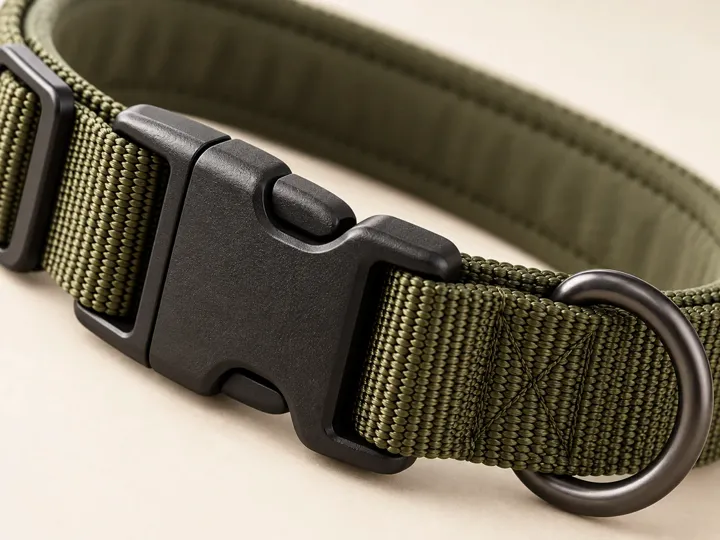
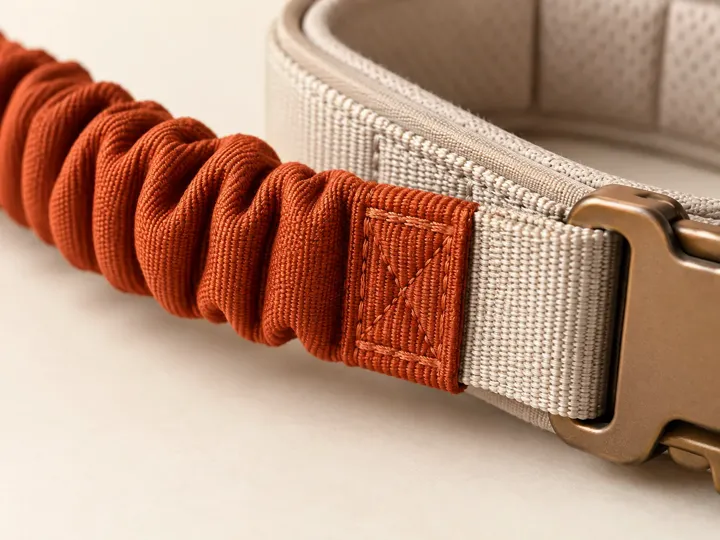
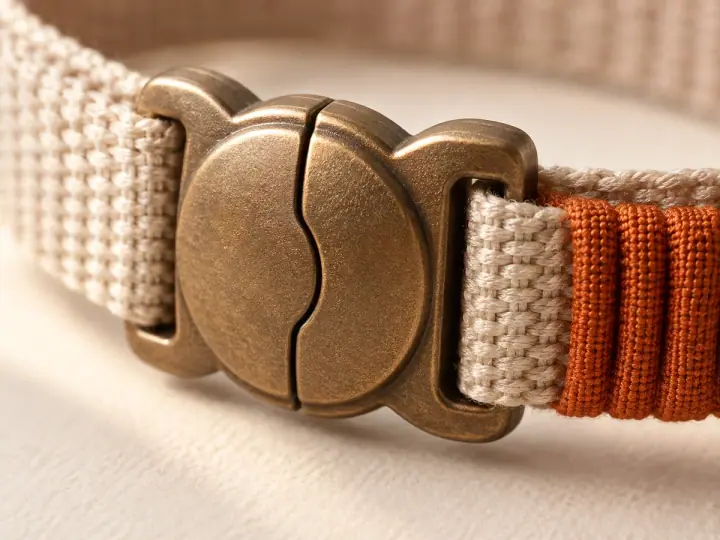
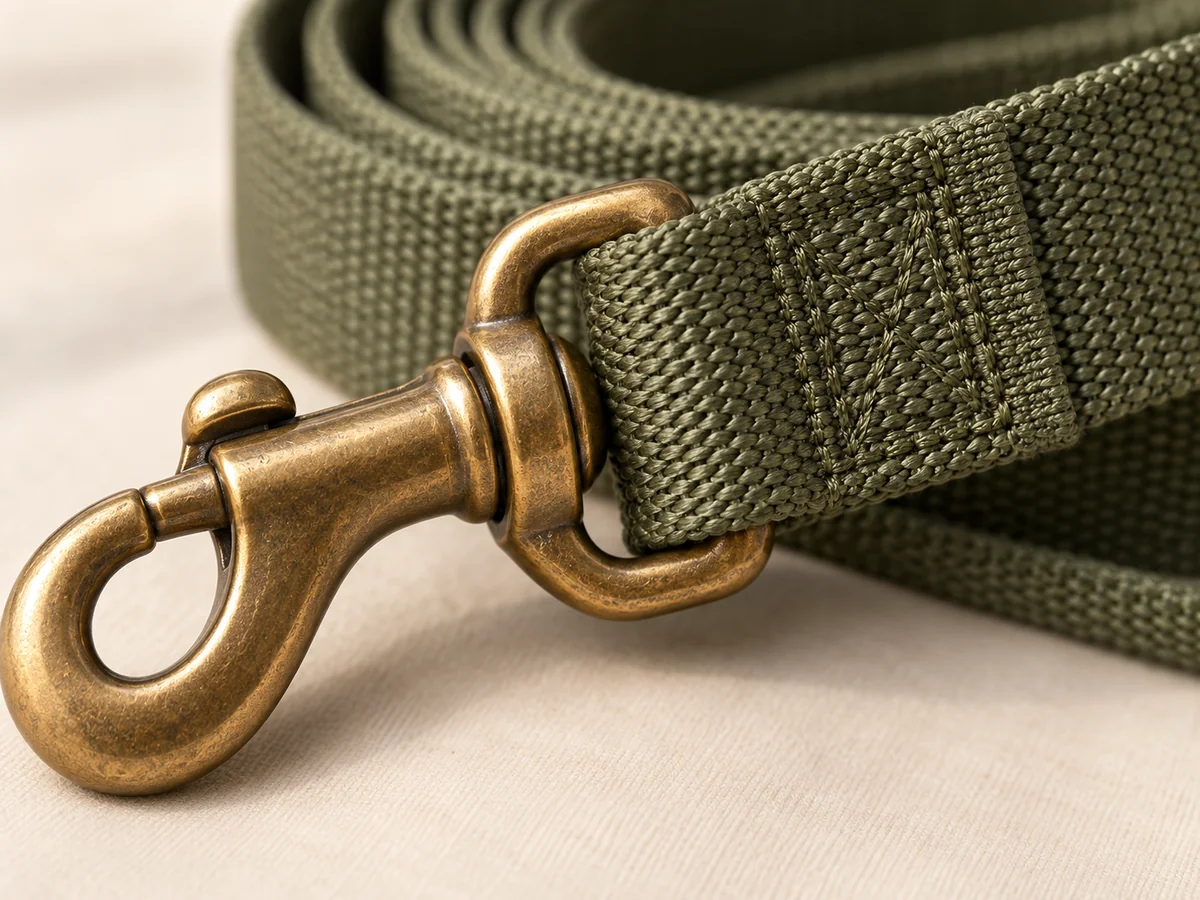
Woven webbing is nylon or polyester yarn woven flat or tubular, dyed, and heat-sealed at the cut ends. Coated webbing is a woven polyester core sealed in a polymer coating, usually PVC or TPU; BioThane is one brand of it. Because the core is sealed, a cut edge does not fray and the surface does not take up water.
Water, dirt and smell
Woven webbing absorbs water and dirt and has to dry; nylon usually takes up more water than polyester. Coated webbing sheds water and mud and is wiped clean, which is why long lines that drag through wet grass are often coated. Ask the mill for a water pickup figure for plain webbing, and describe a coated lead as one that does not absorb water rather than with an unqualified waterproof claim.
Feel, weight and grip
Woven webbing is lighter and softer in the hand and can be padded at the handle. Coated webbing is firmer and heavier per metre and its smooth surface feels different when wet, so ask for the coating texture and the hand feel to be approved on the sample. If you sell in cold climates, check how stiff the coated sample becomes in the cold.
Color and branding
Woven webbing offers the widest range: dyed colors matched to a harness and collar from one dye lot, jacquard patterns, printing and woven labels. Coated webbing comes in the coating’s colors, so branding usually moves to a printed or embossed handle tab, a rivet-on badge or the packaging. Confirm the color minimum per roll before planning a palette.
Joints, hardware and testing
Woven webbing is joined by stitching, usually a box-and-cross pattern at load points. Coated webbing is stitched with a thread and needle suited to the coating, or joined with rivets or screw posts. Either way, specify a breaking-strength test for the webbing (ASTM D6775 is one method), a load test for each sewn or riveted joint and a stated rating for the hook, and record them against the approved sample.
Which to choose
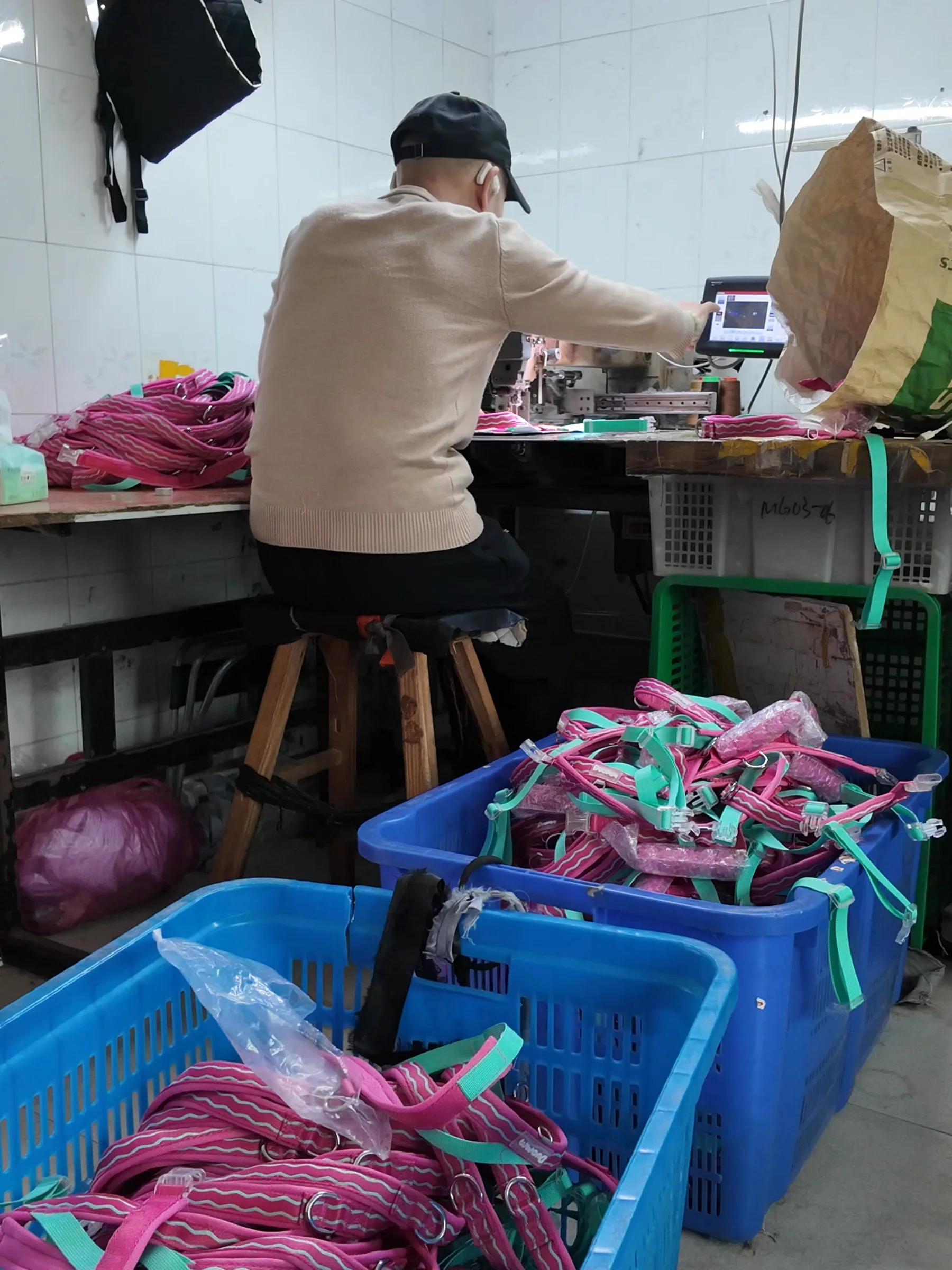
Woven webbing suits everyday city leashes, matching harness, collar and leash sets, hands-free running leads and any range sold on color. Coated webbing suits training long lines, wet-climate and outdoor leads and buyers who want a leash that cleans with a cloth. Many walking ranges carry both: the set in woven webbing and the long line coated. Catidog develops both at a typical 100–500 units per product.
Woven and coated webbing compared
| Woven nylon or polyester | Coated webbing (PVC or TPU) | |
|---|---|---|
| Construction | Woven yarn, dyed, heat-sealed ends | Woven polyester core sealed in a coating |
| Water and dirt | Absorbs water and dirt; must dry | Does not absorb water; wipes clean |
| Feel and weight | Light and soft | Firmer and heavier per metre |
| Color and branding | Wide color range, jacquard, print, woven labels | Coating colors; printed tab, badge or packaging |
| Joints | Box-and-cross stitching | Suited stitching, rivets or screw posts |
| Typical uses | City leashes, matching sets, running leads | Long lines, wet and outdoor leads |
| Tests to specify | Webbing breaking strength, joint load, hook rating | Webbing breaking strength, joint load, hook rating, cold stiffness |
The leads this decision applies to.
Standard dog leash — materials, customization and sample checks Training long line — materials, customization and sample checks Hands-free waist leash — materials, customization and sample checksSources and research context
This comparison sets out construction and specification choices from our own development practice, with the external guidance cited below. It is not a laboratory performance test of finished products.
How we research and writeTURN THE ANSWER INTO AN OEM BRIEF