THE QUICK ANSWER
For EU-bound pet textiles, verify the finish chemistry, intended use, applicable date and component evidence. A polyester or PU label does not prove PFHxA compliance. Ask your importer or adviser to confirm the exact product scope before approving the material.
What changed in October, and what did not
PFHxA (perfluorohexanoic acid) belongs to the wider group of per- and polyfluoroalkyl substances (PFAS). Norway’s environment authority published a reminder on 24 September 2026 about restrictions applying to specified consumer uses from 10 October 2026. Denmark’s regulator distinguishes clothing and related accessories from other consumer textiles, for which it gives 10 October 2027. Those categories are not interchangeable. Neither notice establishes a blanket ban on every PFAS in every pet accessory. Treat a pet garment, bed cover or travel textile as a classification question: record the intended use and obtain a written scope decision rather than copying a deadline from human outdoor clothing.
Norwegian Environment Agency · PFHxA consumer-use reminder · 24 September 2026
Fibre, coating and repellent treatment are separate fields
A fibre declaration identifies the textile substrate. A coating description identifies another layer. A water- or stain-repellent treatment can be a further input. The German Federal Institute for Risk Assessment explains that fluorinated textile treatments and fluorochemical-free water-repellent technologies both exist; the latter do not automatically provide the same oil and dirt repellency. For procurement, ask which layer delivers the requested function and whether any additional treatment is applied. A beading-water photograph cannot identify that chemistry. Keep functional acceptance checks separate from chemical documentation, and do not use a successful water test as evidence that a restricted substance is absent.
German Federal Institute for Risk Assessment · PFAS questions and answers · checked 26 October 2026
Apply the question to the actual Catidog construction
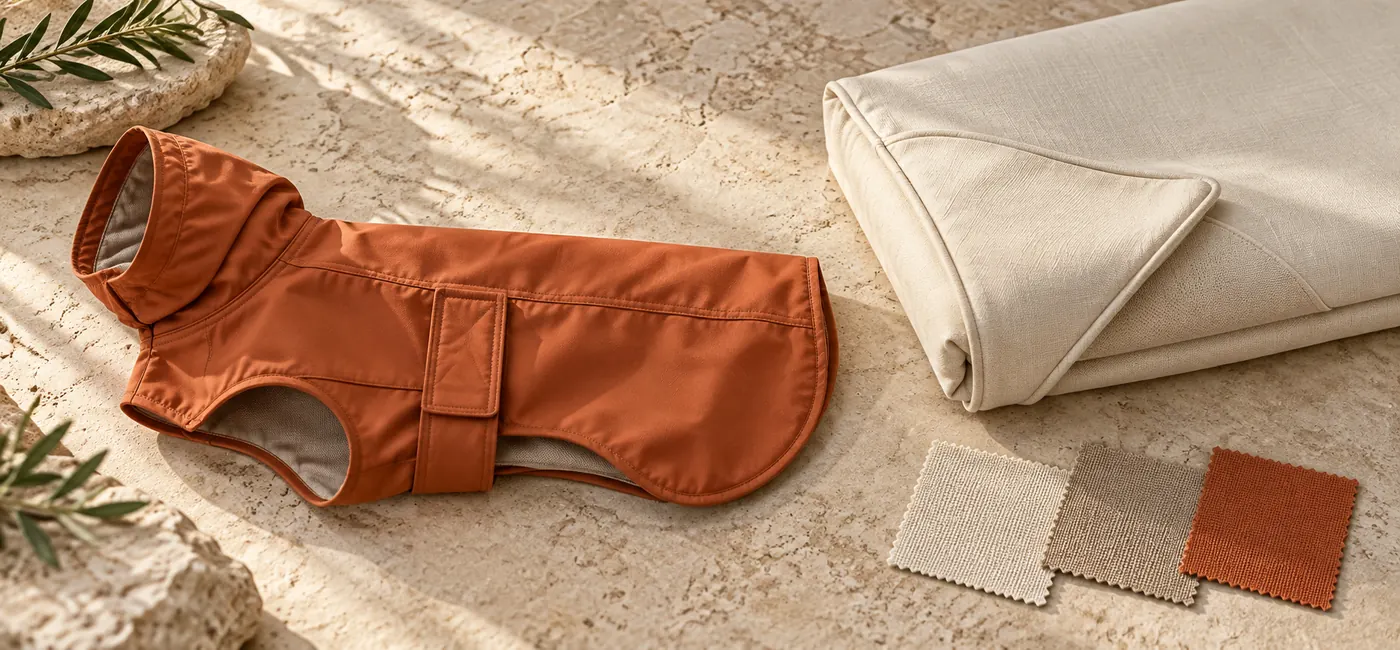
Our published raincoat reference specifies a coated polyester shell, with options such as polyurethane (PU) coating, and mesh or taffeta lining. The washable-bed reference lists polyester or linen-look outer fabric with virgin or recycled fibre filling. The blanket reference lists coral fleece, sherpa fleece or recycled polyester fabric. These are three different construction starting points in our material records reviewed on 10 October 2026. None is a PFHxA test result. For the raincoat, name the shell, coating and lining separately; for a bed, distinguish outer cover from filling; for a blanket, identify the selected fabric and any finish. The quotation and approved specification must name the actual selection.
Ask for a declaration that can be matched to a batch
Request the material code, component location, supplier identity, finish or treatment description, declaration date and the production batch or purchase reference it covers. Ask what the declaration actually asserts: no intentional addition, compliance with a named restriction, or a measured result for named substances. These statements answer different questions. A general letter covering a mill’s entire range is not enough to identify your selected shell fabric. Keep the original declaration and its version beside the bill of materials. If the finish supplier, coating recipe or fabric source changes, flag the evidence for review before accepting the substitute.
Agree the laboratory question before paying for a report
Ask the laboratory to identify the restriction, substances, sample preparation, reporting limits and components it will assess. Denmark’s regulator describes limits measured in homogeneous material; a result for an unspecified mix of shell, lining and fill cannot be assumed to answer the same question. Confirm with the laboratory how materials should be separated and what the result can establish. Record the report number, sample description and specification revision together. Testing fees, sample quantities and timing require a separate written agreement. We do not publish a universal test package or claim that our textile range has passed PFHxA testing.
Danish Environmental Protection Agency · PFHxA factsheet · checked 26 October 2026
Recheck function when a finish changes
Removing or replacing a finish is a material change, so reopen the agreed functional review for that component. Write the required outcome in observable terms: the wetting condition, care routine and assessment method both sides will use. Do not promise unchanged water, oil or stain performance from a chemistry declaration. Review the proposed shell with its seams, lining and branding, because a material swatch does not represent every detail of an assembled raincoat. Freeze the accepted material code and record any limits in the product brief. The acceptance thresholds belong to the project; this guide supplies no invented performance rating.
Set the boundary before writing a product claim
This guide concerns evidence planning for EU-bound pet textiles, not a legal classification of every pet product or a finding about any finished sample. Confirm national requirements and the placing-on-market date for the exact sales route. “PFHxA compliant,” “no intentionally added PFAS” and “PFAS-free” must not be used interchangeably. Decide the intended statement first, then check whether the available evidence supports its full scope. If the evidence is incomplete, describe the confirmed construction and care instructions instead of adding a chemical-absence claim. Send the material question with your inquiry so we can review the required documentation and confirm the project details.
Material evidence checklist: use one row per component
| Record | Ask for | Do not infer |
|---|---|---|
| Shell or cover | Material code, fibre and coating description | Chemical compliance from a fibre name |
| Repellent finish | Treatment identity and dated declaration scope | PFAS absence from water beading |
| Lining or fill | Separate component and supplier references | Coverage by a shell-only report |
| Laboratory evidence | Sample ID, method, limits and covered substances | Whole-range approval from one sample |
| Material change | New code, revised declaration and function review | Continued validity of the previous report |
Questions buyers ask
Does polyester mean PFHxA-free?
No. Polyester describes the fibre, not every coating, finish or other component. Ask for evidence tied to the selected material and intended statement.
Does the October 2026 date cover every pet textile?
Do not assume that. The regulator guidance distinguishes specified clothing uses from other consumer textiles. Confirm the exact pet-product classification and applicable date in writing.
Is a water-repellent test a chemical test?
No. A functional review assesses the agreed behaviour under stated conditions. It does not identify all chemicals in the fabric or establish a restricted-substance result.
Can a mill certificate cover the whole finished product?
Only rely on the scope it actually identifies. Match materials, components, dates and sample references; separately assess any uncovered coating, lining, print or trim.
What should I send Catidog for a textile review?
Send the product, target market, intended function, proposed material and the exact claim or restriction you need addressed. We will review the requirements and confirm documentation, sampling scope and commercial details.
Evidence and scope
Regulator guidance was checked on 26 October 2026. Construction references are Catidog’s published material records reviewed on 10 October 2026. Product classification and current order-specific evidence still require confirmation.
- Norwegian Environment Agency · PFHxA consumer-use reminder · 24 September 2026
- Danish Environmental Protection Agency · PFHxA factsheet · checked 26 October 2026
- German Federal Institute for Risk Assessment · PFAS questions and answers · checked 26 October 2026
Publication note: first published on 26 October 2026.
How we research and writeRelated products and reading
Raincoat shell, lining and branding optionsWashable-bed cover and filling referenceBlanket fabric and label referenceBuild the wider component traceability fileDefine the separate care and water-resistance reviewPlan materials and customizationUse the buyer resource checklistsCheck common purchasing questionsDiscuss this requirement
Send the textile, destination and intended finish claim. We will review the requirements and confirm the details.
Request a Quote