THE QUICK ANSWER
Start private-label dog apparel with the bandana, which carries the print at the lowest cost, then the pet hoodie for year-round wear and the raincoat, whose size run does the work. The winter coat, knit sweater and cooling vest follow: fill, knitting and an evaporative claim each add a decision a first range can wait for. All six are in Catidog’s catalogue, typically from 100–500 units per product.
THE NUMBERS
- 6 products
- in Catidog’s apparel catalogue, ranked here by their role in a first private-label range. Catidog apparel catalogue
- 100–500 units
- typical minimum per product, confirmed in the quotation by color, size split, customization and packaging. Catidog commercial terms
- 7 / 15 days
- to prepare a stock-item custom sample and a fully custom sample. Catidog commercial terms
- 45°F (7°C)
- below which the American Kennel Club suggests considering a coat for a short-haired dog; healthy large dogs with thick coats generally do not need one. AKC winter care tips
How this list is ranked
Dog apparel is a size-run business: the more a garment depends on fit, the more a size chart decides its returns. The list starts with the product that barely depends on fit, moves through cut-and-sew garments, and ends with the products that need a different factory or carry a performance claim. Each entry names the first decision and the risk to control. This is an editorial ranking from our own development practice, not a sales ranking.
1. Dog bandana: the cheapest way to carry a logo
The lowest-cost item in any range and usually the one that carries the print. Decide the print method and the fold construction first, because those set both the unit cost and the minimum. Check print wash-fastness, edge fray and the color match to the rest of the set.
2. Pet hoodie: short or long sleeves
A soft jersey hoodie developed in short-sleeve and long-sleeve constructions, worn beyond one season. Settle the sleeve length, back-length grading, chest ease and cuff opening before sampling so the garment moves comfortably across the whole size run. Review movement at the shoulder, sleeve clearance, wash shrinkage and seam recovery.
3. Dog raincoat: the size run does the work
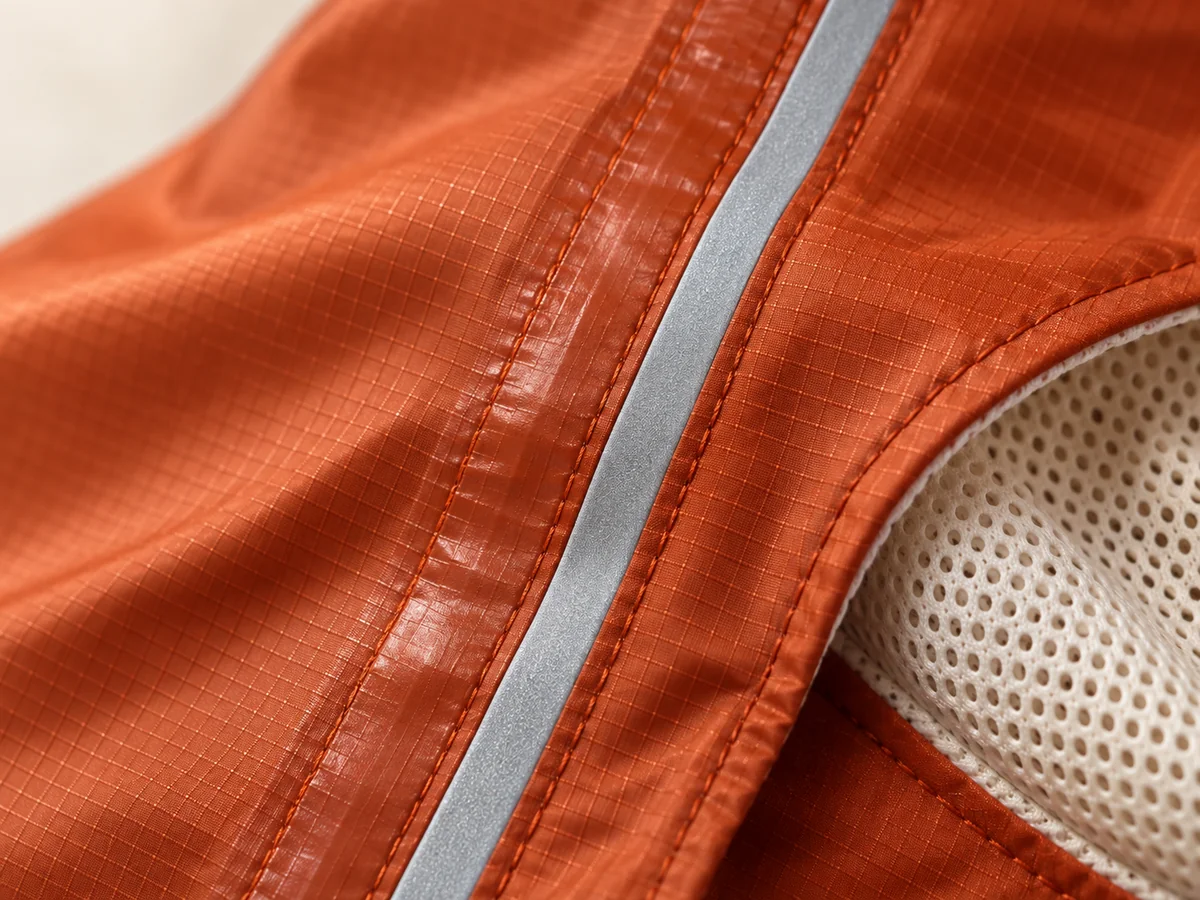
Rain gear lives or dies on the size run rather than the fabric. Decide the back-length grading, belly coverage and whether a harness opening is cut in, because that changes the pattern, not the trim. Check coverage in motion, how the closure holds and the seam water path.
4. Dog winter coat: fill decides the price
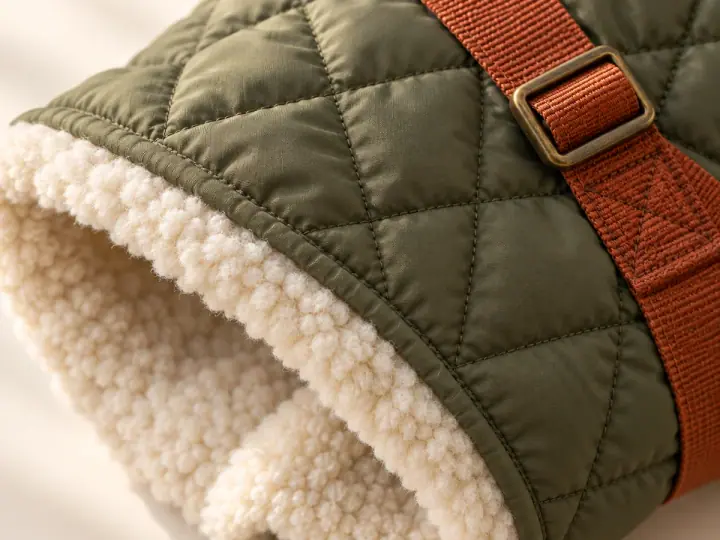
A padded coat is quoted on fill weight and shell denier before anything else, and both belong on the label because a buyer comparing two coats cannot see either. It is seasonal, and not every dog needs one, so size the order to the cold-weather audience. Review loft after compression, closure hold and wash recovery.
5. Dog knit sweater: knit is a different factory
A knit sweater is not a cut-and-sew product, so its minimum and lead time behave differently from the rest of the range. Settle the gauge, the yarn blend and the leg-opening grading before comparing any price, and check recovery after stretch, pilling and wash shrinkage.
6. Dog cooling vest: say how it works, not how well
An evaporative vest is a fabric decision with a claim attached. Specify the fabric construction and the wetting method, and describe the mechanism rather than a performance figure you cannot support. Check water retention by weight, drip and closure hold.
What Catidog needs to quote the range
Send the garments you want from this list, the size chart or target breeds, fabrics and colors, the print or logo method, the packaging and the destination. Typical minimums are 100–500 units per product, confirmed by product, color, size split, customization and packaging. Stock-item custom samples are prepared within 7 days and fully custom samples within 15 days; standard bulk production runs within 15 days of the agreed production trigger, and orders ship by sea freight, air freight or express courier.

A useful comparison
| Rank | Product | Role in the range | Decide first | Risk to control |
|---|---|---|---|---|
| 1 | Dog bandana | Print carrier | Print method and fold | Print wash-fastness |
| 2 | Pet hoodie | Year-round | Sleeve length and grading | Shoulder movement |
| 3 | Dog raincoat | Weather | Back-length grading | Coverage in motion |
| 4 | Dog winter coat | Seasonal | Fill weight and shell | Seasonal demand |
| 5 | Dog knit sweater | Knitwear | Gauge and yarn blend | Different MOQ and lead time |
| 6 | Dog cooling vest | Claim-led | Fabric and wetting method | Performance claims |
The ranked products, in order.
1. Dog bandana — materials, customization and sample checks 2. Pet hoodie — materials, customization and sample checks 3. Dog raincoat — materials, customization and sample checks 4. Dog winter coat — materials, customization and sample checks 5. Dog knit sweater — materials, customization and sample checks 6. Dog cooling vest — materials, customization and sample checksSources and research context
Sources reviewed 2026-09-25. Community excerpts are anecdotes. Manufacturer guidance applies to that manufacturer’s products. Shortlists are editorial comparisons without hands-on comparative testing or verified sales rankings.
- American Kennel Club · Winter care tips
- American Kennel Club · Do dogs need sweaters? (updated March 2026)
TURN THE ANSWER INTO AN OEM BRIEF