THE QUICK ANSWER
Not every dog needs either. Boots are most useful when paws need protection from ice, salt, heat or abrasive terrain; a raincoat can help a dog that gets cold or uncomfortable when wet and can reduce drying work. Fit, gradual introduction, free movement and post-walk checks matter more than appearance.
When boots are worth trying
Consider the walking surface, temperature, de-icing chemicals, duration and the dog’s paw condition. Boots can form a barrier on salted, icy, hot or rough ground, but they must stay on without constricting the paw or changing gait. If the main issue is light dirt on a mild surface, rinsing and drying may be the simpler control.
Fit and introduce boots gradually
Measure the paw while it bears weight and use the target brand’s chart; front and rear paws may differ. Test indoors, check that toes can spread, watch for twisting or rubbing and build wear time gradually. Remove the boots after the walk, inspect the paws and dry any trapped moisture. Persistent limping or skin injury needs professional advice.
When a raincoat adds practical value
A raincoat can reduce wetting for short-coated, small, senior or cold-sensitive dogs and for long-coated dogs that otherwise require extensive drying. It is optional for a comfortable dog on a brief mild-weather walk. The garment should support the planned outing rather than extend exposure beyond what the dog tolerates.
Raincoat features that affect use
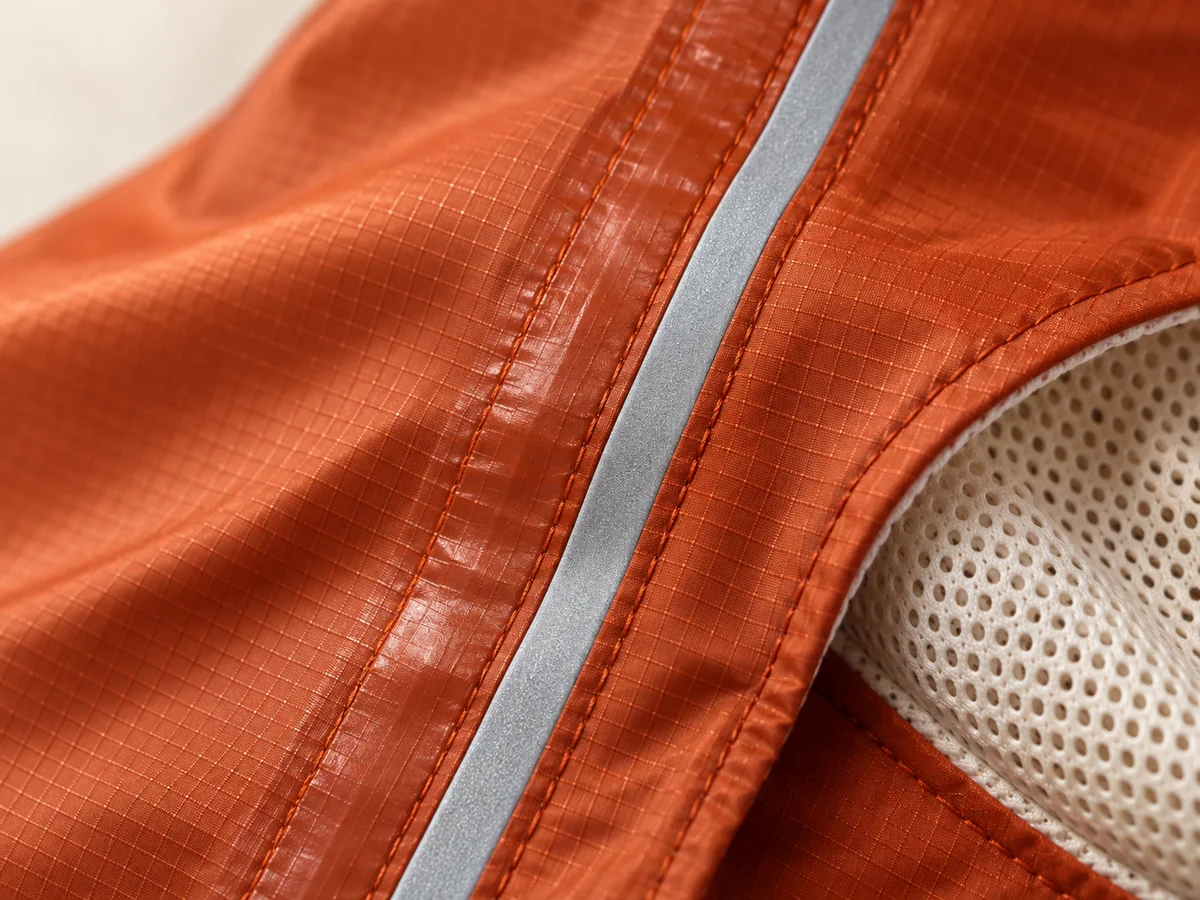
Check back and belly coverage, neck and leg clearance, closure position, harness access, reflective details and whether the fabric and seams match the claimed water protection. The dog must be able to walk, turn, urinate and defecate freely. Remove wet garments after use and follow the care label so moisture is not held against the coat.
Do not use clothing as unattended protection
Winter guidance recommends slow introduction and supervision because dogs vary in tolerance. Clothing does not replace shelter, route planning, shorter exposure or paw cleaning. Stop when the dog shows distress, restricted movement, overheating, persistent cold or skin irritation.

A useful comparison
| Condition | First response | Gear question |
|---|---|---|
| Salted or icy pavement | Short route and clean paws after the walk | Will a fitted boot stay secure and keep salt out? |
| Cold rain | Match walk length to the dog | Does the coat cover without restricting movement? |
| Light mud | Towel or rinse may be sufficient | Does extra gear reduce work enough to justify cleaning it? |
| Rough trail | Inspect route and paws | Does the sole provide grip without changing gait? |
Explore private-label product options.
Dog raincoat — materials, customization and sample checks Dog winter coat — materials, customization and sample checks Dog fleece jacket — materials, customization and sample checksNew on this topic.
Fleece jacket, knit sweater or padded coat: which dog winter layer to private label firstSources and research context
Community excerpts are anecdotes. Manufacturer guidance applies to that manufacturer’s products. Shortlists are editorial comparisons without hands-on comparative testing or verified sales rankings.
- American Kennel Club · How to teach your dog to wear winter clothes
- American Kennel Club · 10 winter safety steps for dog owners
TURN THE ANSWER INTO AN OEM BRIEF